Monstera adansonii
Adanson's monstera · Swiss cheese vine · Monkey mask
- Family
- Araceae
- Native to
- Central and South America, and the Caribbean
- Habit
- Hemiepiphytic climber
- Also known as
- Dracontium pertusum L., Calla pertusa (L.) Kunth, Monstera pertusa (L.) de Vriese
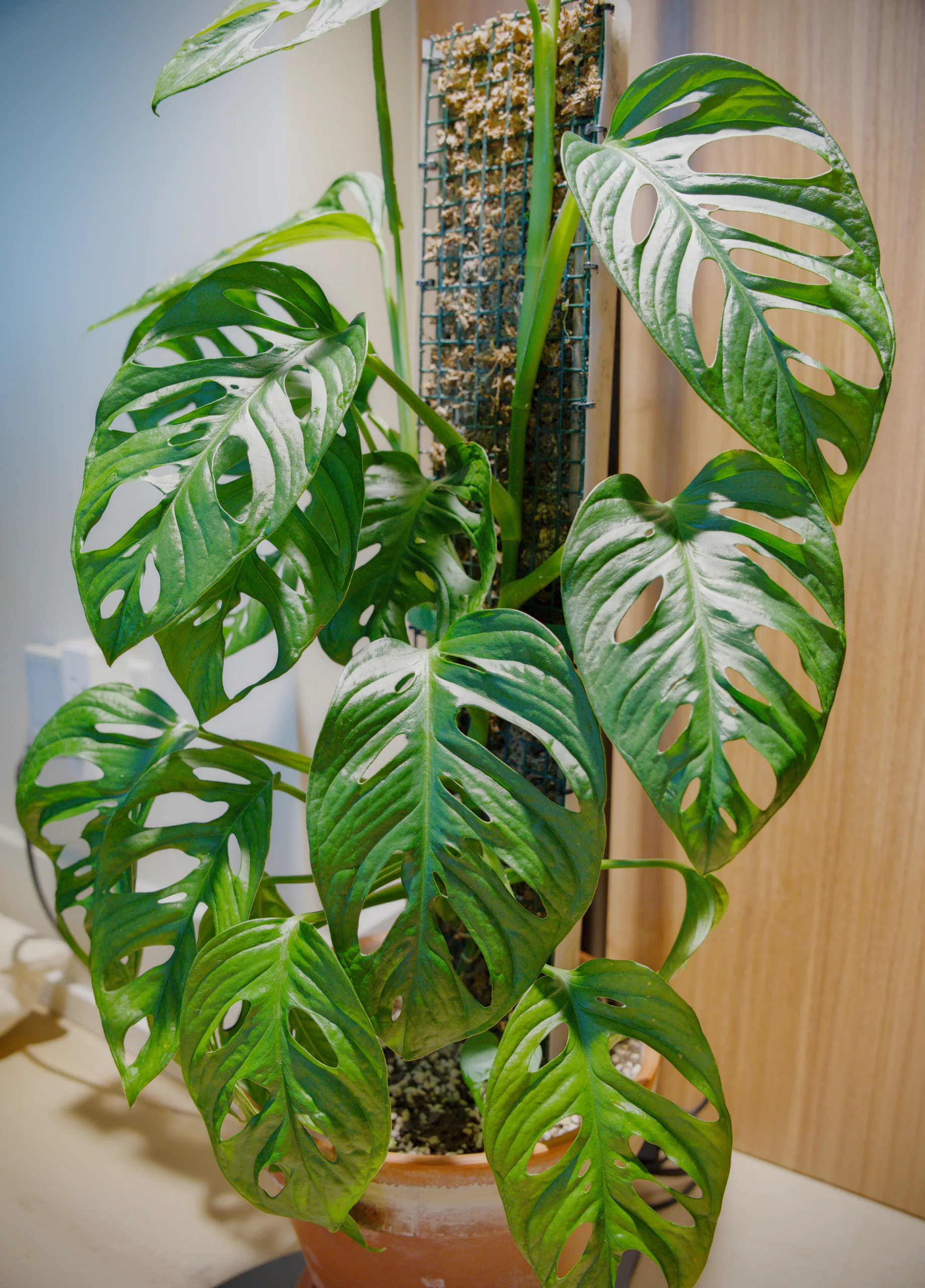
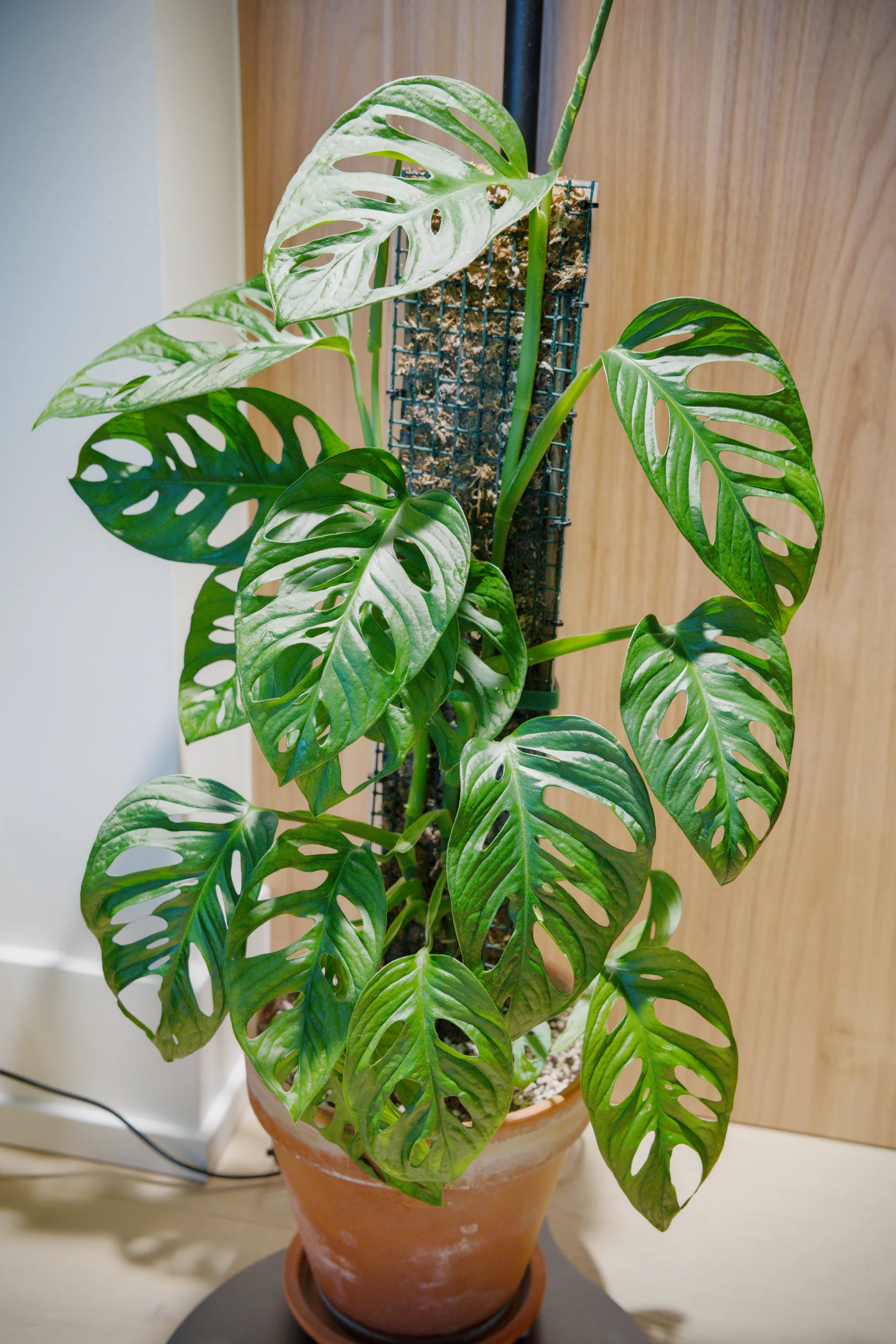
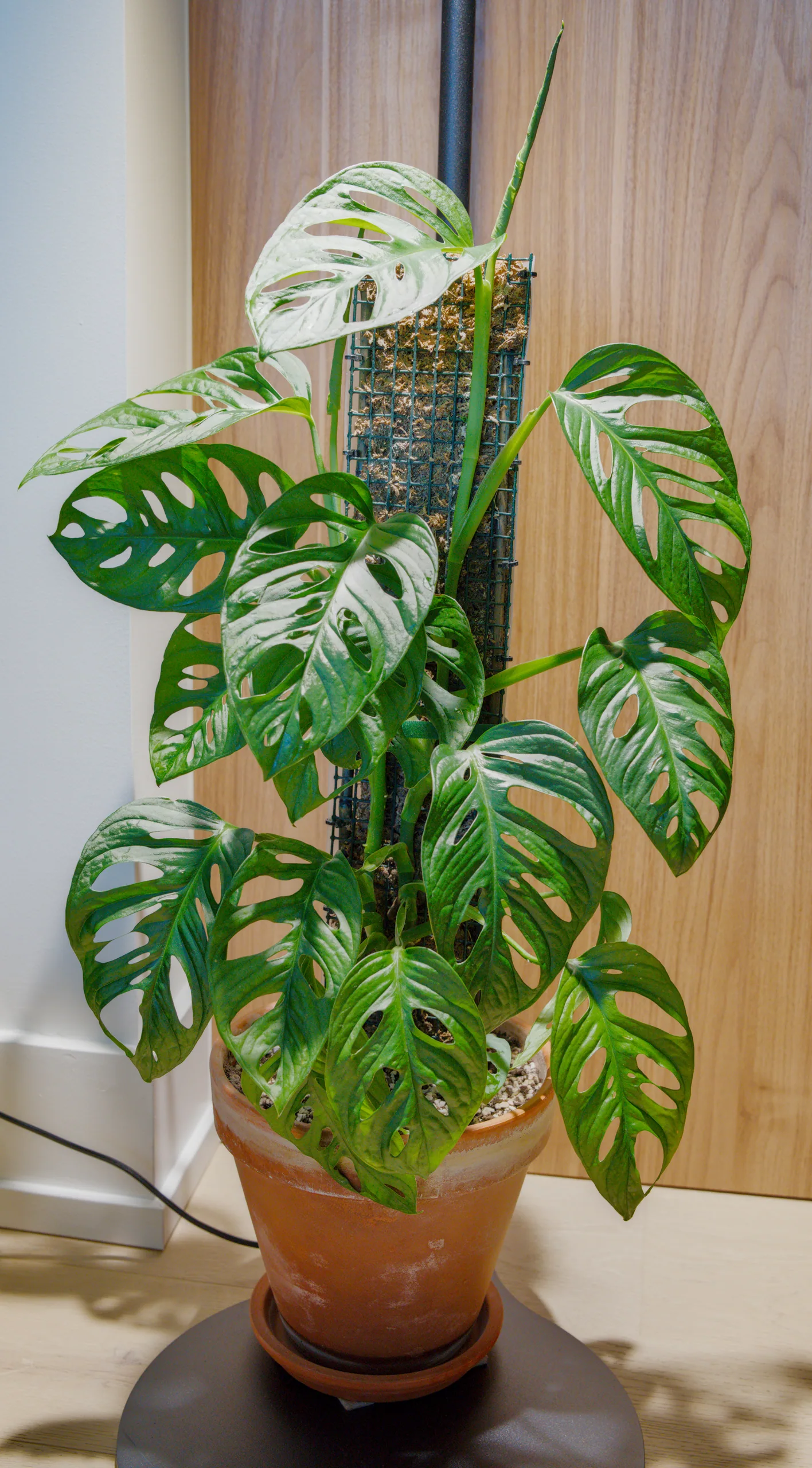
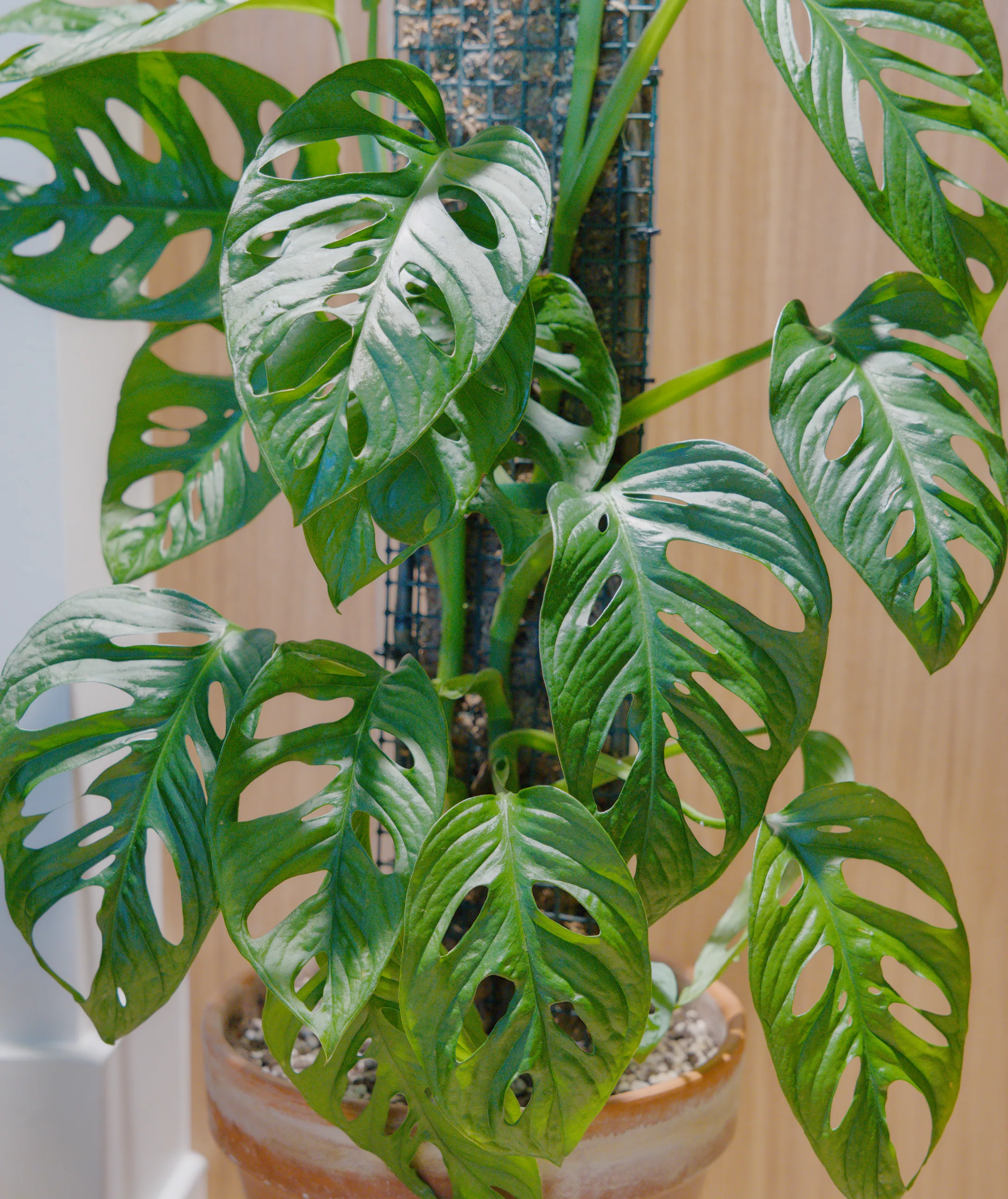
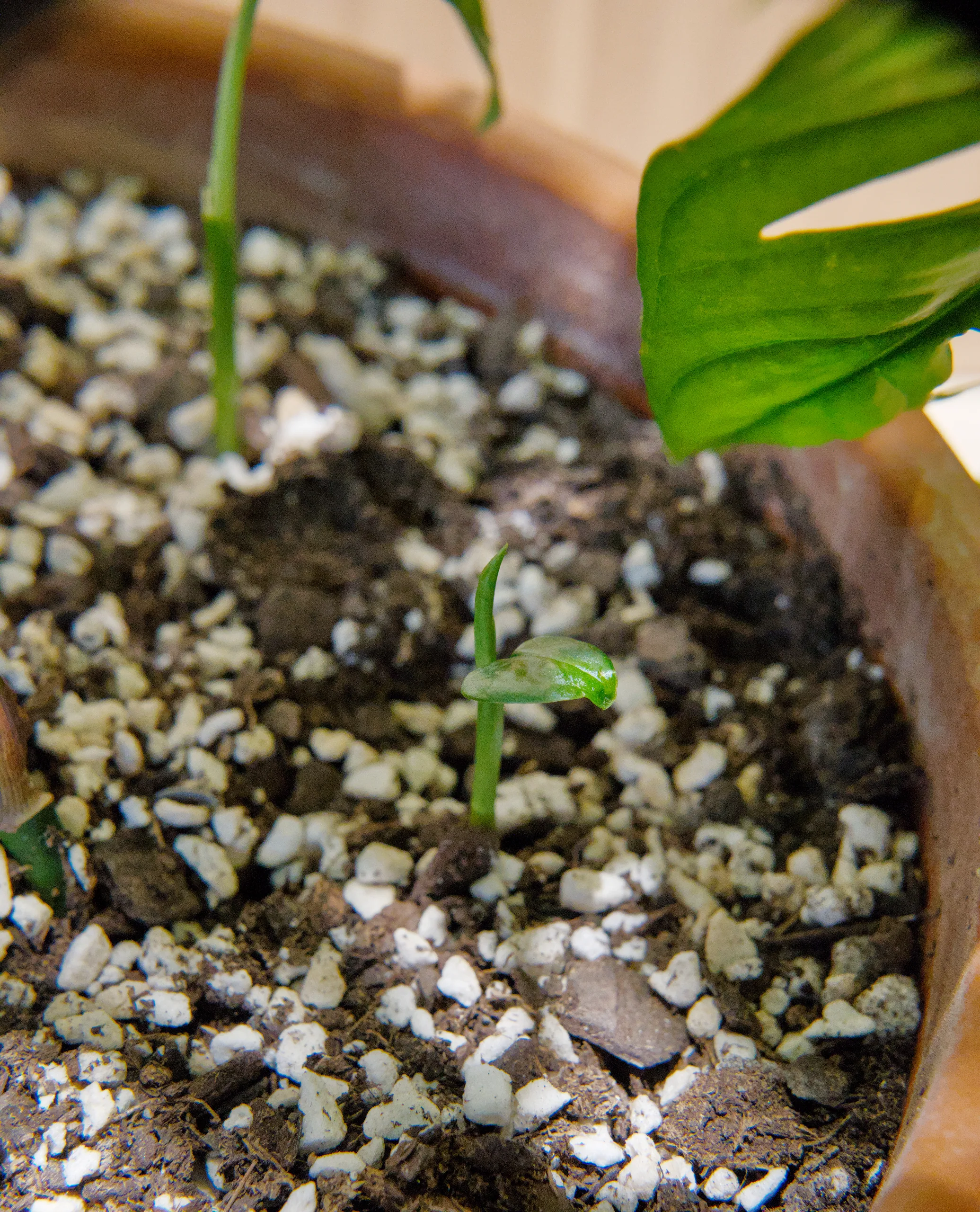
My plant
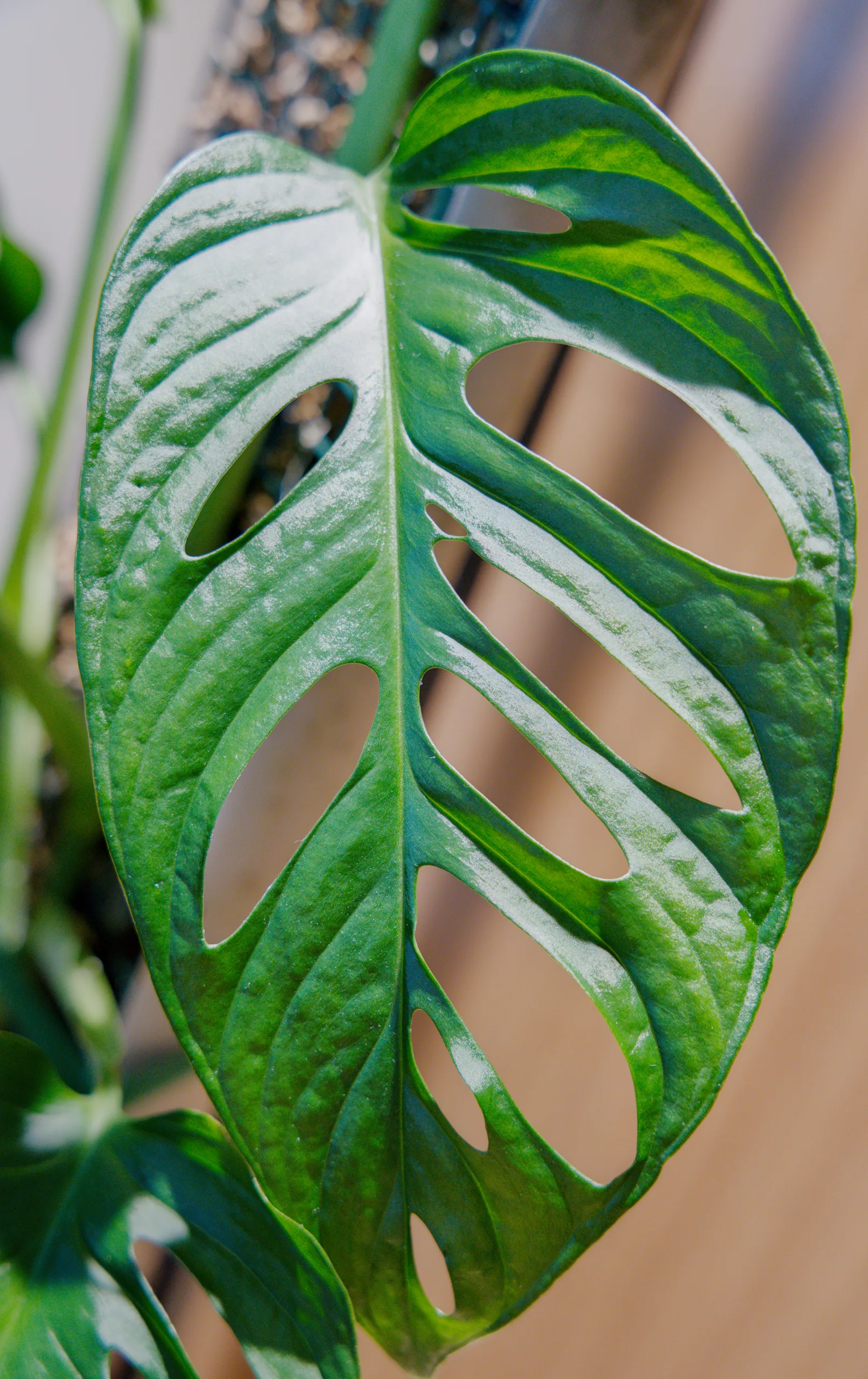
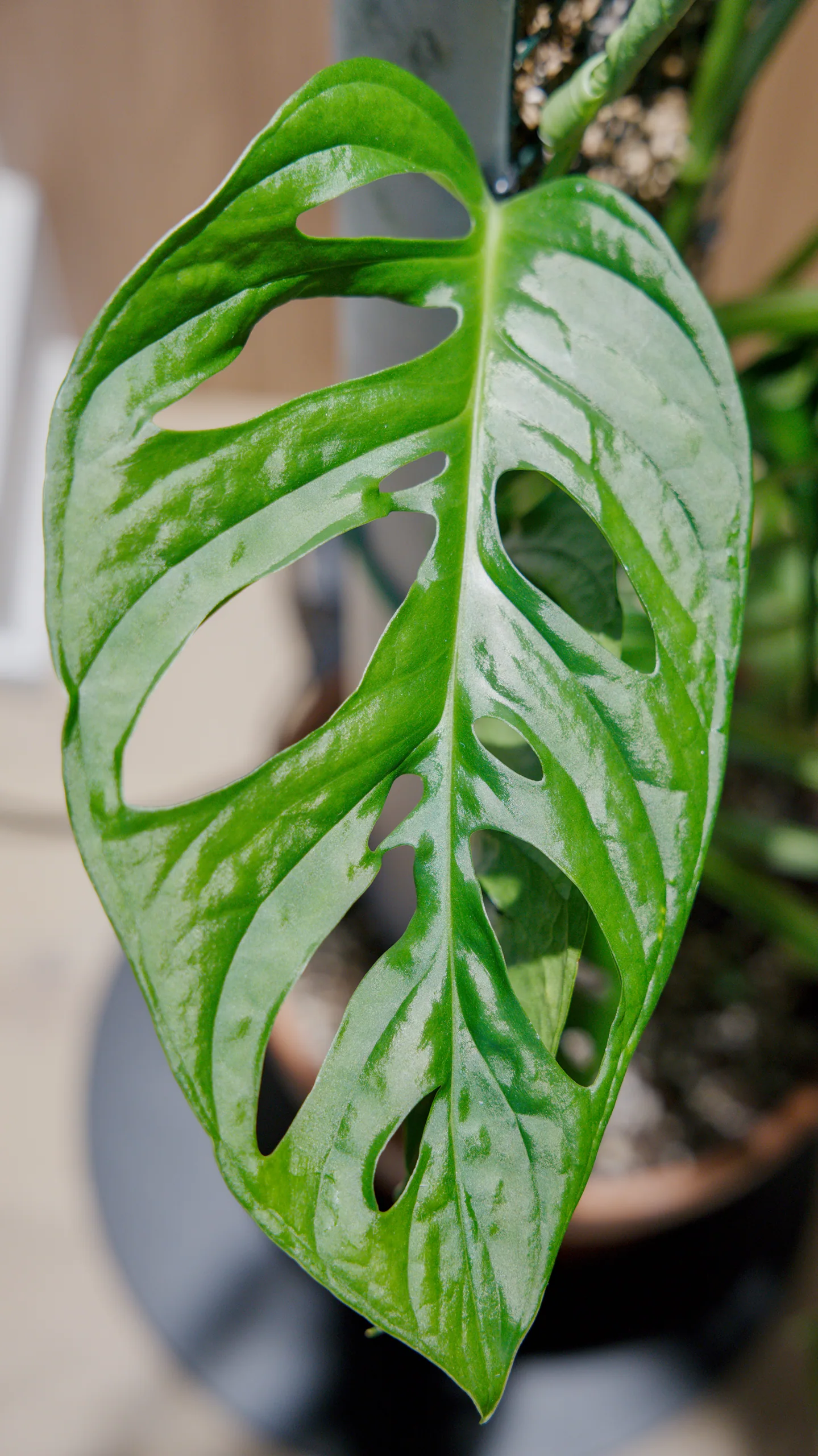
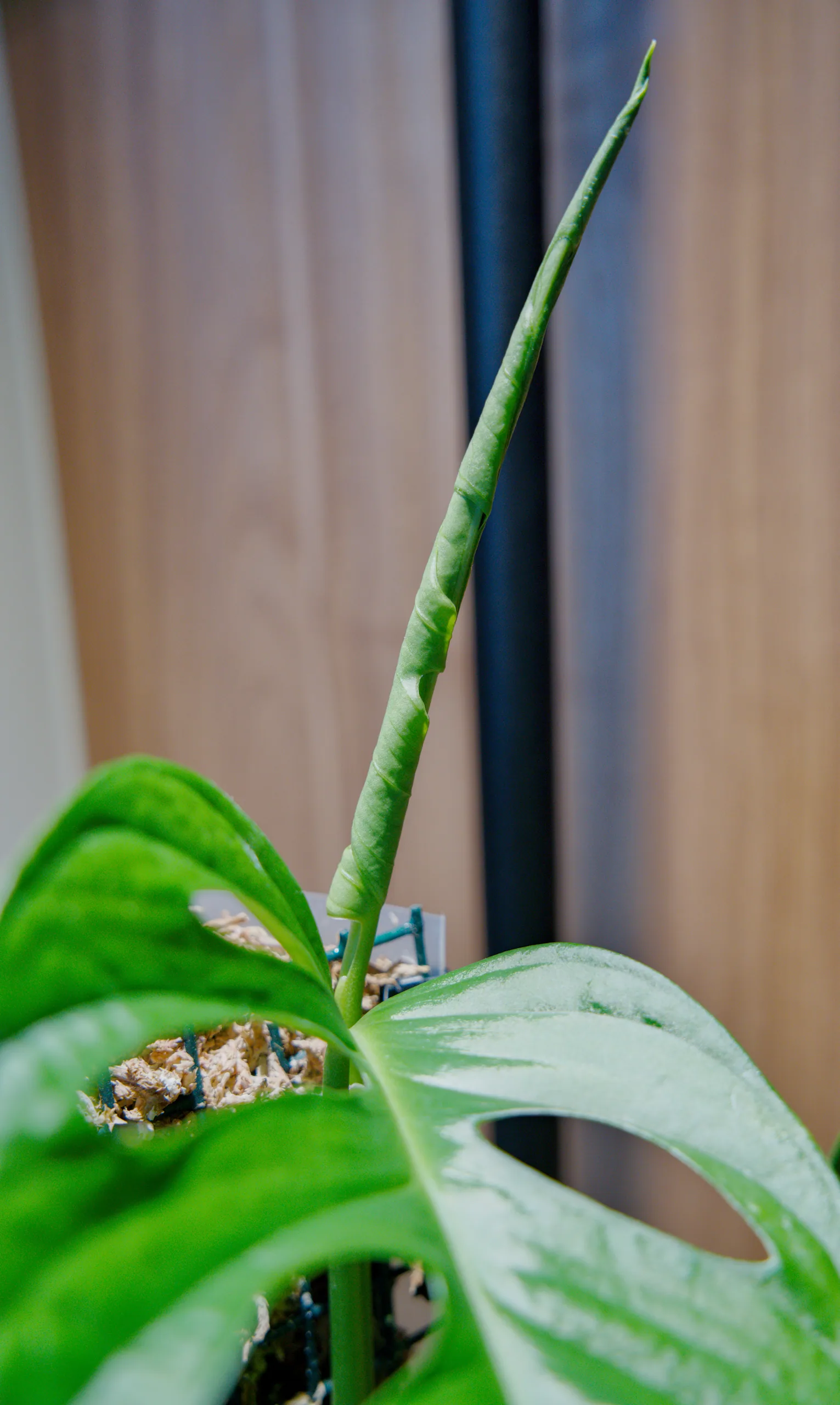
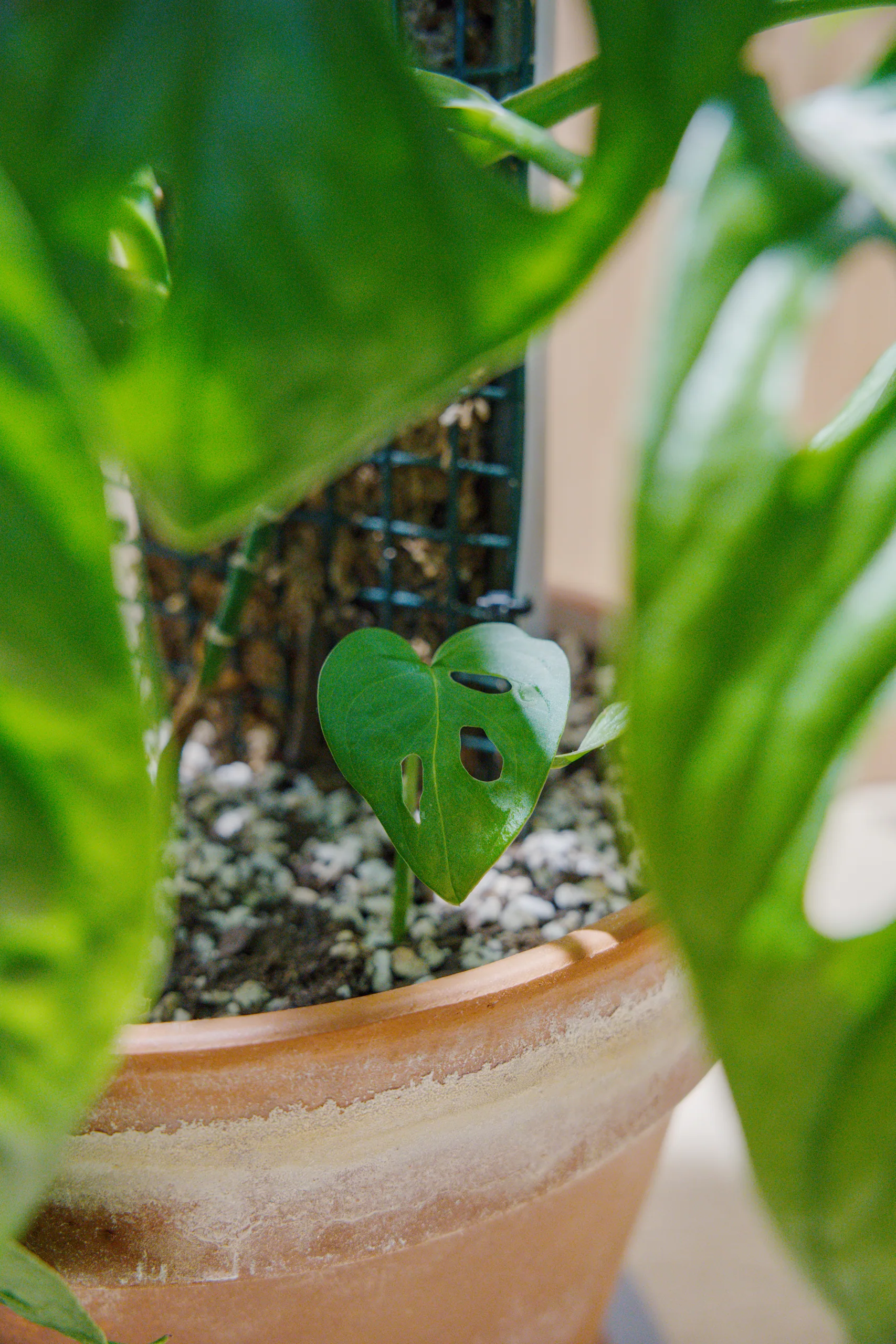
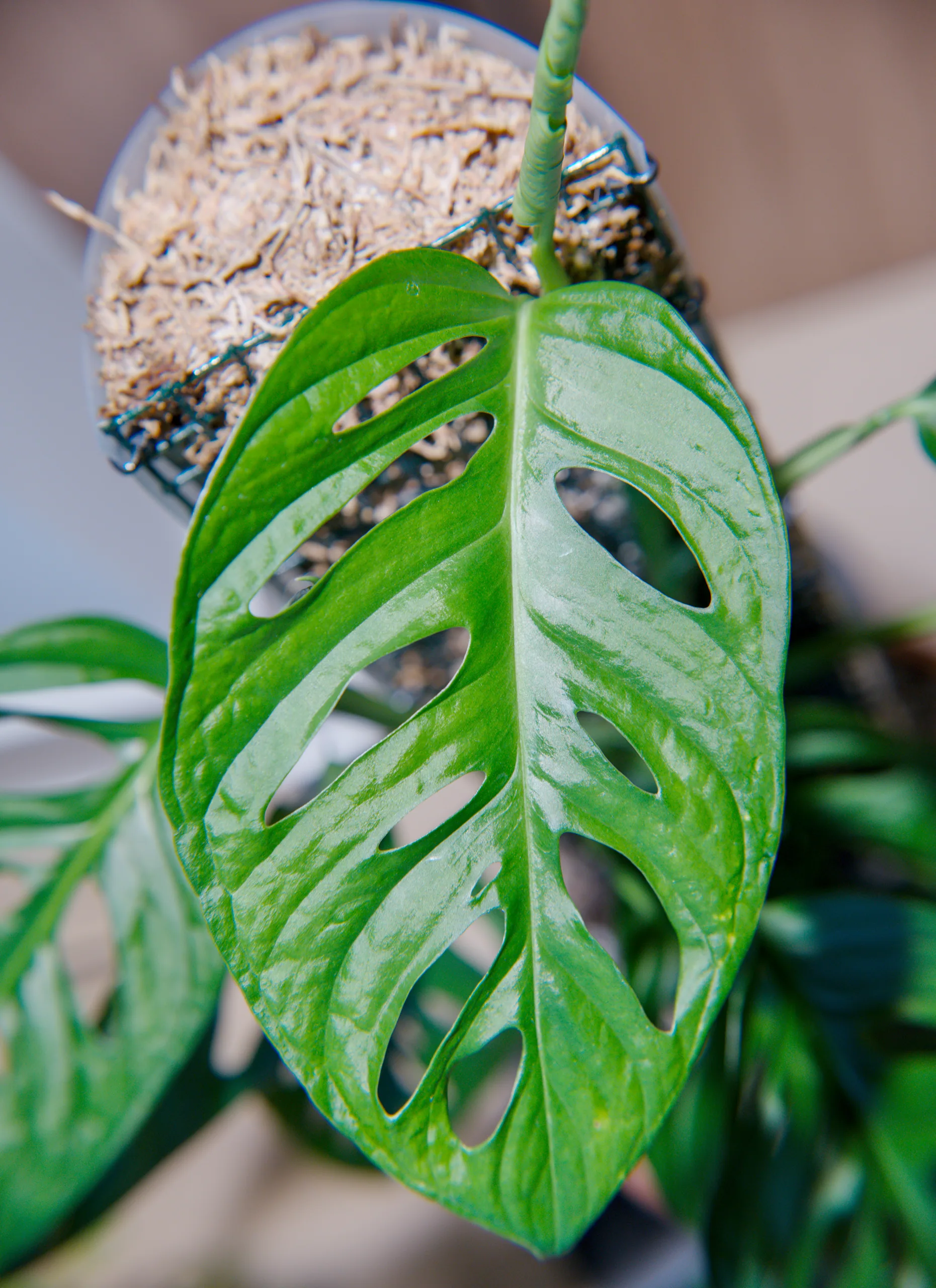
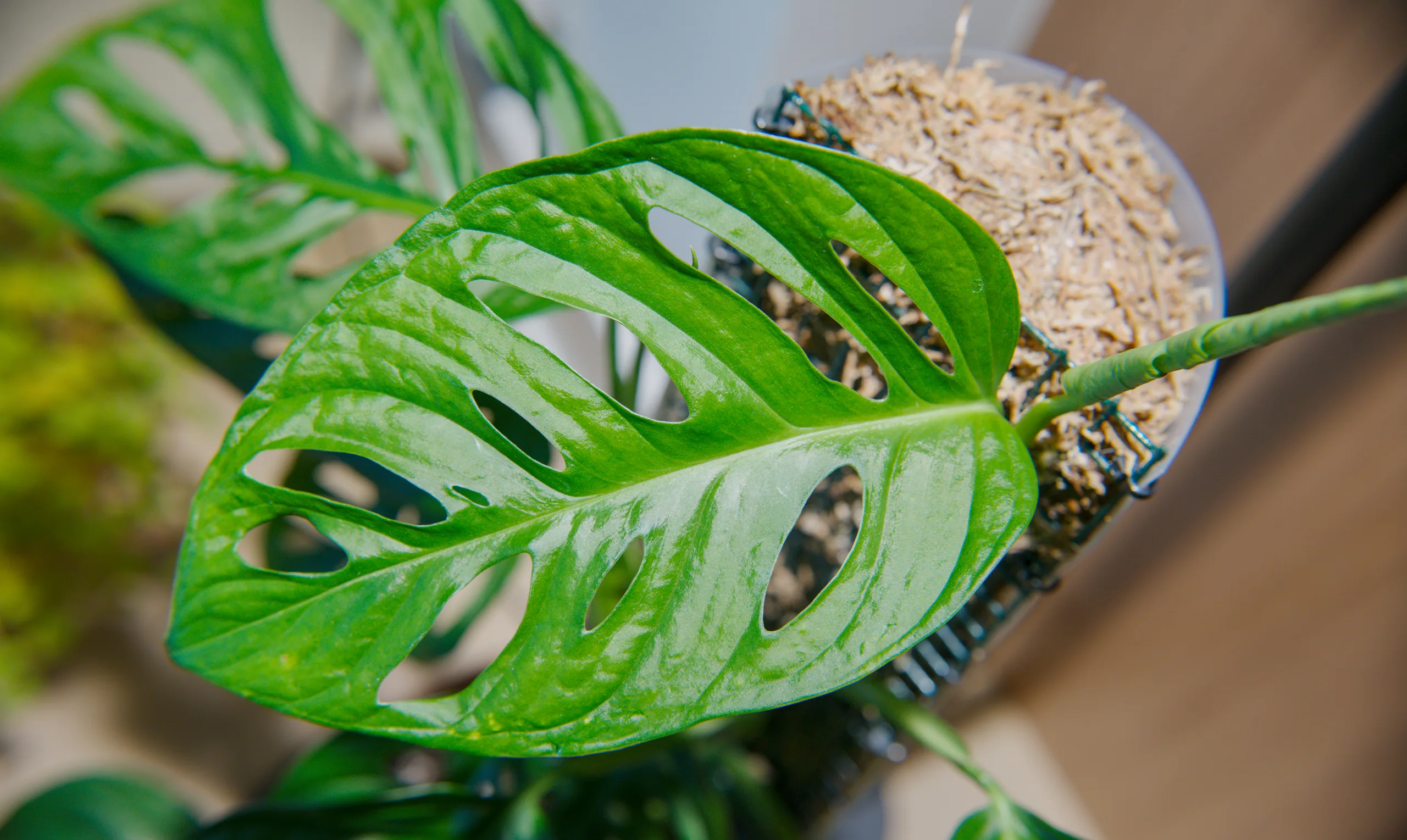
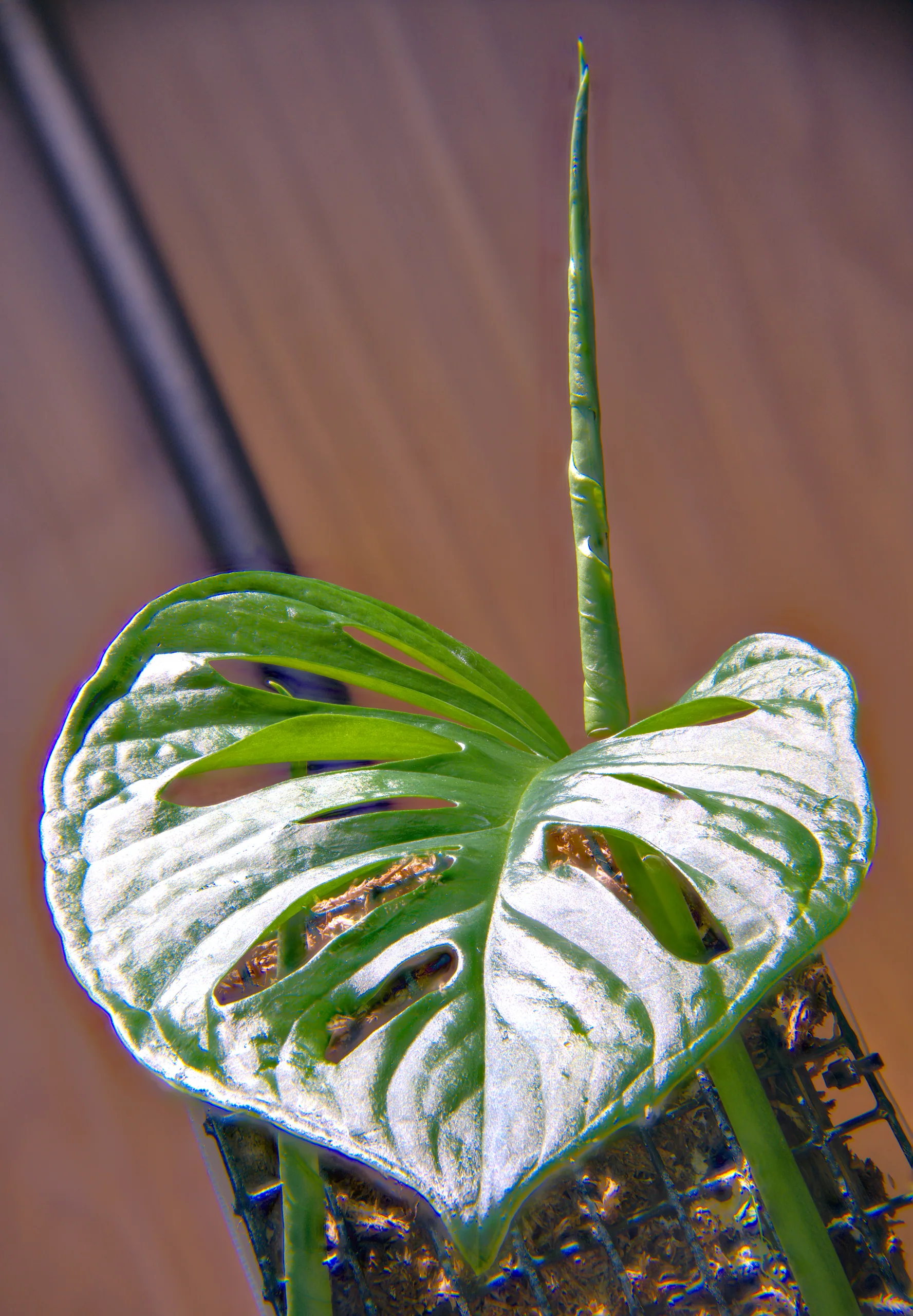
Where it comes from
Most of tropical America. Kew lists it as native from Nicaragua and Costa Rica down through Panamá, Colombia, Venezuela, the Guianas, Ecuador, Peru and Bolivia, across nearly all of Brazil, and out into the Caribbean on Trinidad and the Leeward and Windward Islands.1 That is a very different kind of range from the single-island plants elsewhere on this site.
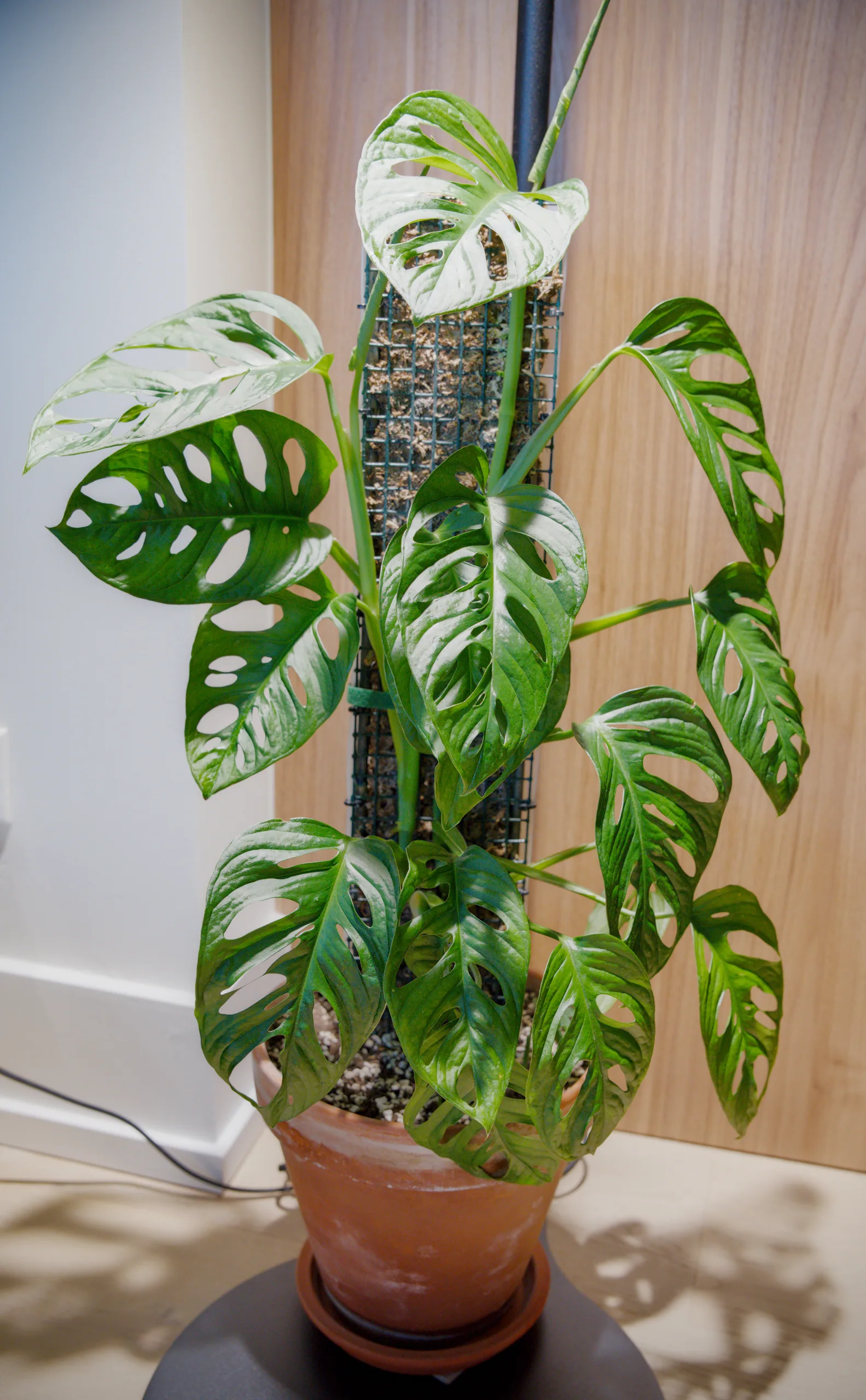
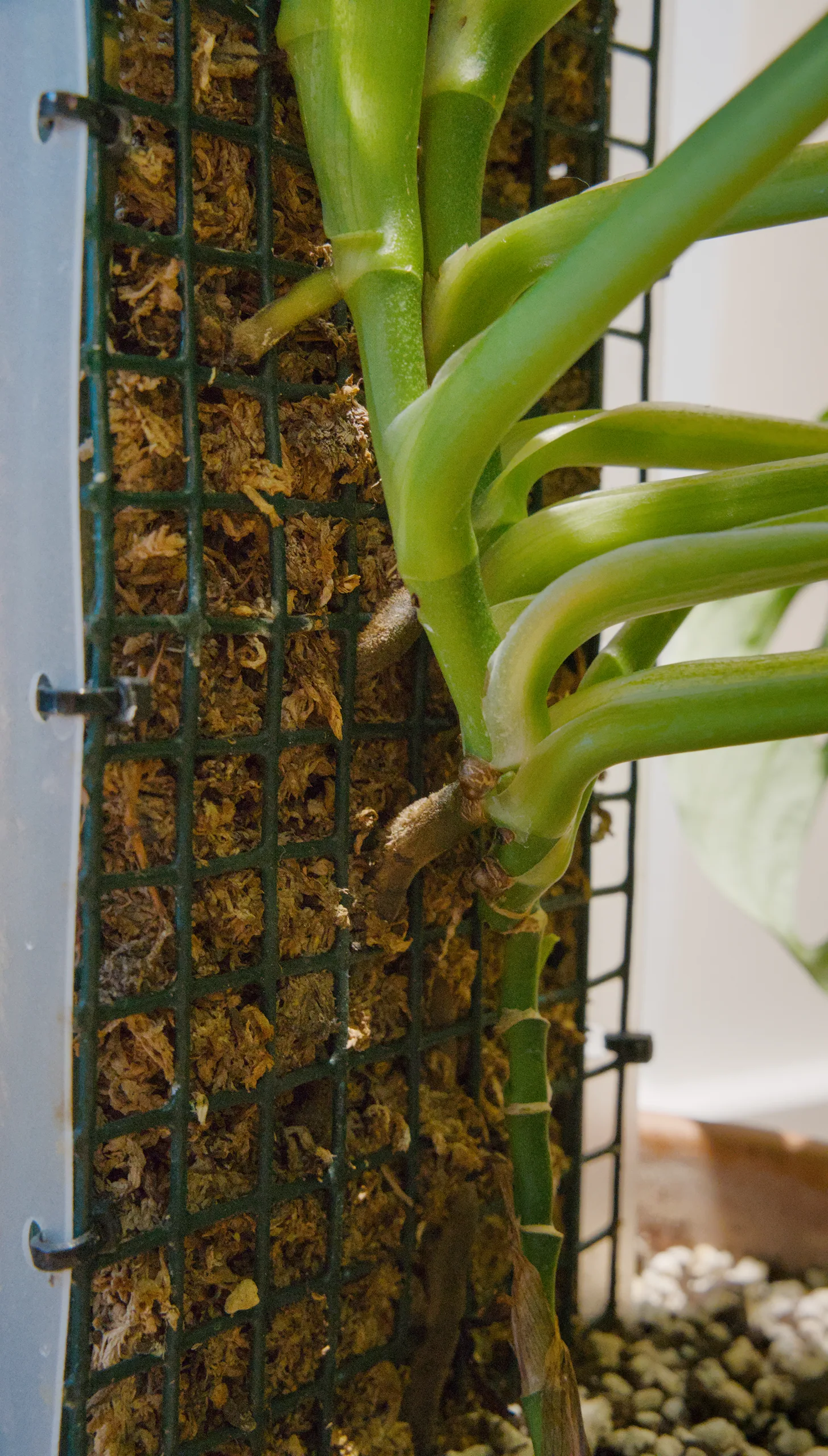
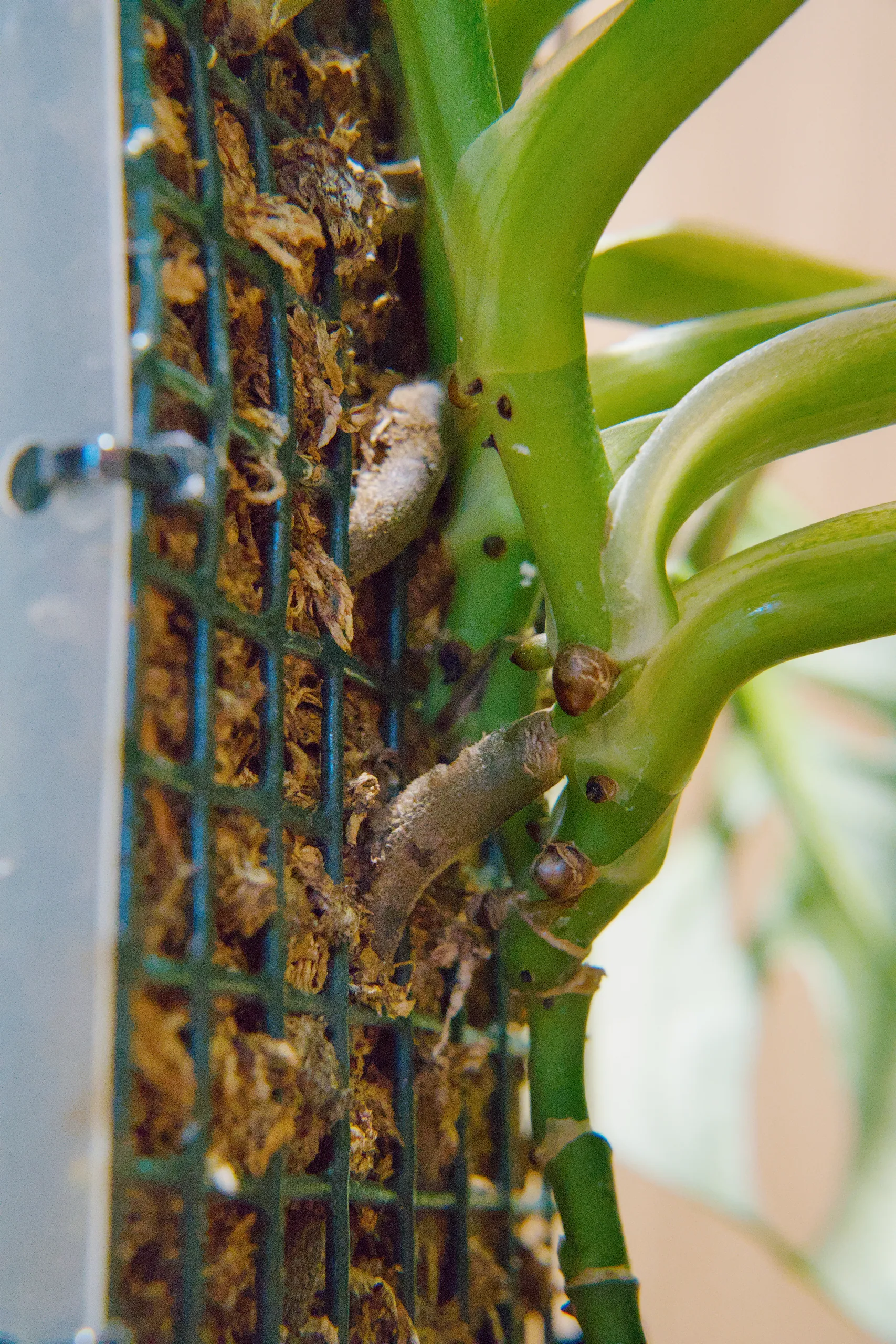
It is a hemiepiphytehemiepiphyteA plant that lives half its life on the ground and half up a tree: it germinates on the forest floor, climbs a trunk, and may lose its ground roots entirely.Glossary: it germinates on the forest floor, finds a trunk, climbs, and may eventually lose touch with the ground altogether. A plant on a moss pole is doing the second half of that, which is why it behaves so differently with something to climb than without.
Kew recognises four subspeciessubspeciesA population within a species, distinct enough to name and consistent enough to recognise, but still able to interbreed with the rest.Glossary — adansonii, blanchetii, klotzschiana and laniata — and the trade ignores the distinction entirely.1 If provenance matters to you: laniata is the Central American and Amazonian one, so a plant from a Central American nursery line is most likely that; blanchetii is endemicendemicFound naturally in one place and nowhere else.Glossary to eastern Brazil and has the most holes; klotzschiana is the widespread Brazilian one with the fewest.2
Naming and description
Heinrich Wilhelm Schott published the name on 23 October 1830, in the Wiener Zeitschrift für Kunst, Litteratur, Theater und Mode — a Viennese arts and fashion magazine, which is an odd place for a botanical description to live.3 The epithetepithetThe second word of a botanical name — the deliciosa in Monstera deliciosa. It belongs to the species, and it never stands on its own.Glossary honours Michel Adanson, and the dedication is tighter than it looks: Adanson is the man who coined the genusgenusThe rank above species: a group of species close enough to share a name. Monstera and Philodendron are genera; the first word of a botanical name is the genus.Glossary name Monstera in 1763, and this species is its type.34
The plant very nearly had a better name. Linnaeus had described it in 1753 as Dracontium pertusum — “pierced” — and by the usual rules that older epithetepithetThe second word of a botanical name — the deliciosa in Monstera deliciosa. It belongs to the species, and it never stands on its own.Glossary should have carried over.5 It could not, because on the very same page in 1830 Schott had already used Monstera pertusa for a different, Asian plant, now a synonymsynonymA botanical name that is no longer the accepted one for a plant, usually because the same species was described twice. Old books and plant labels are full of them.Glossary of Rhaphidophora pertusa.6 So Schott knowingly gave Linnaeus’s plant a new epithetepithetThe second word of a botanical name — the deliciosa in Monstera deliciosa. It belongs to the species, and it never stands on its own.Glossary instead. When de Vriese tried to use Monstera pertusa for it anyway in 1839, the name was occupied, and Kew records his attempt as an illegitimate later homonymhomonymThe same botanical name published twice for two different plants. The later one is illegitimate and has to be replaced, whatever its merits.Glossary.7 The descriptive name was blocked by an unrelated plant; the commemorative one stands.
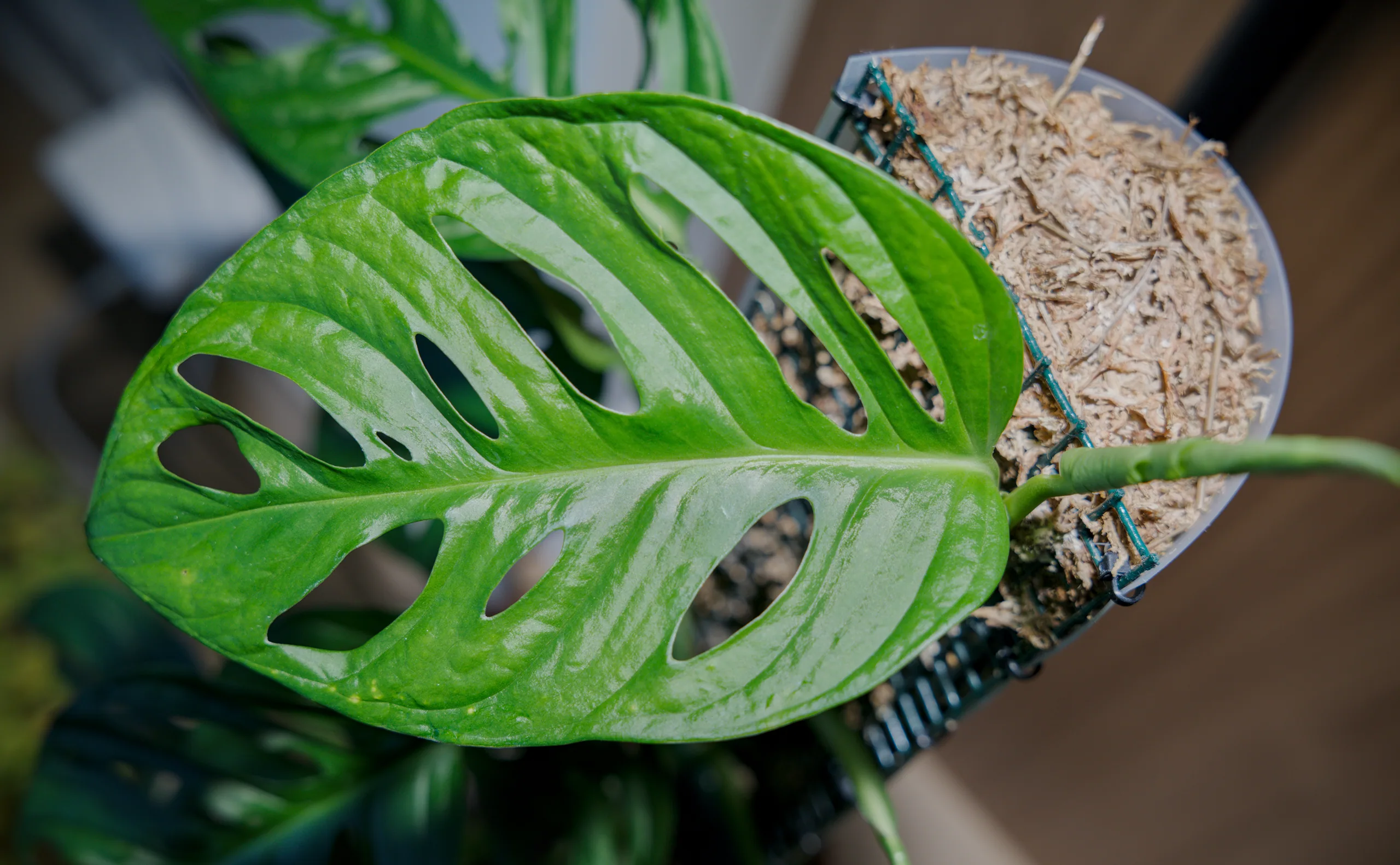
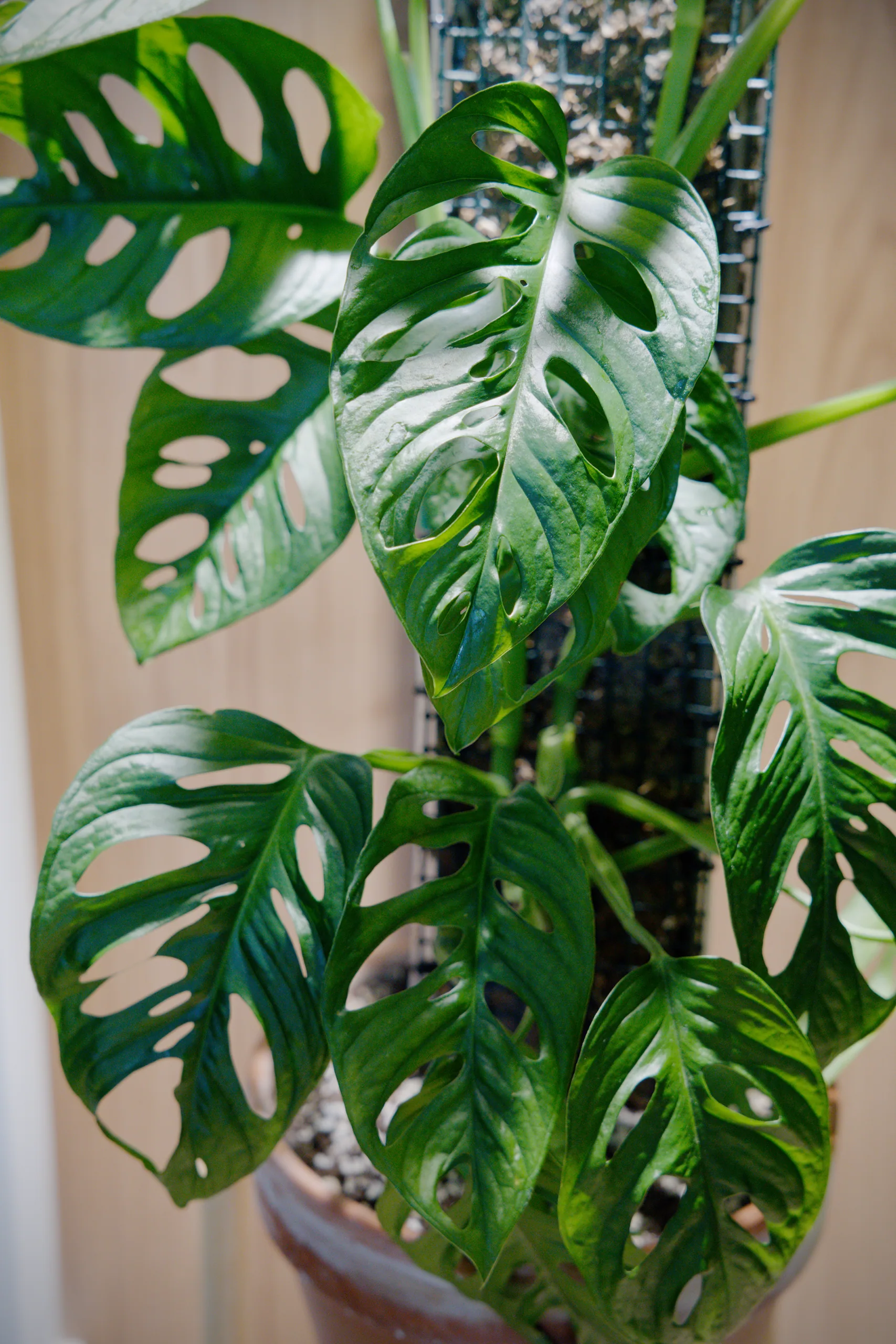
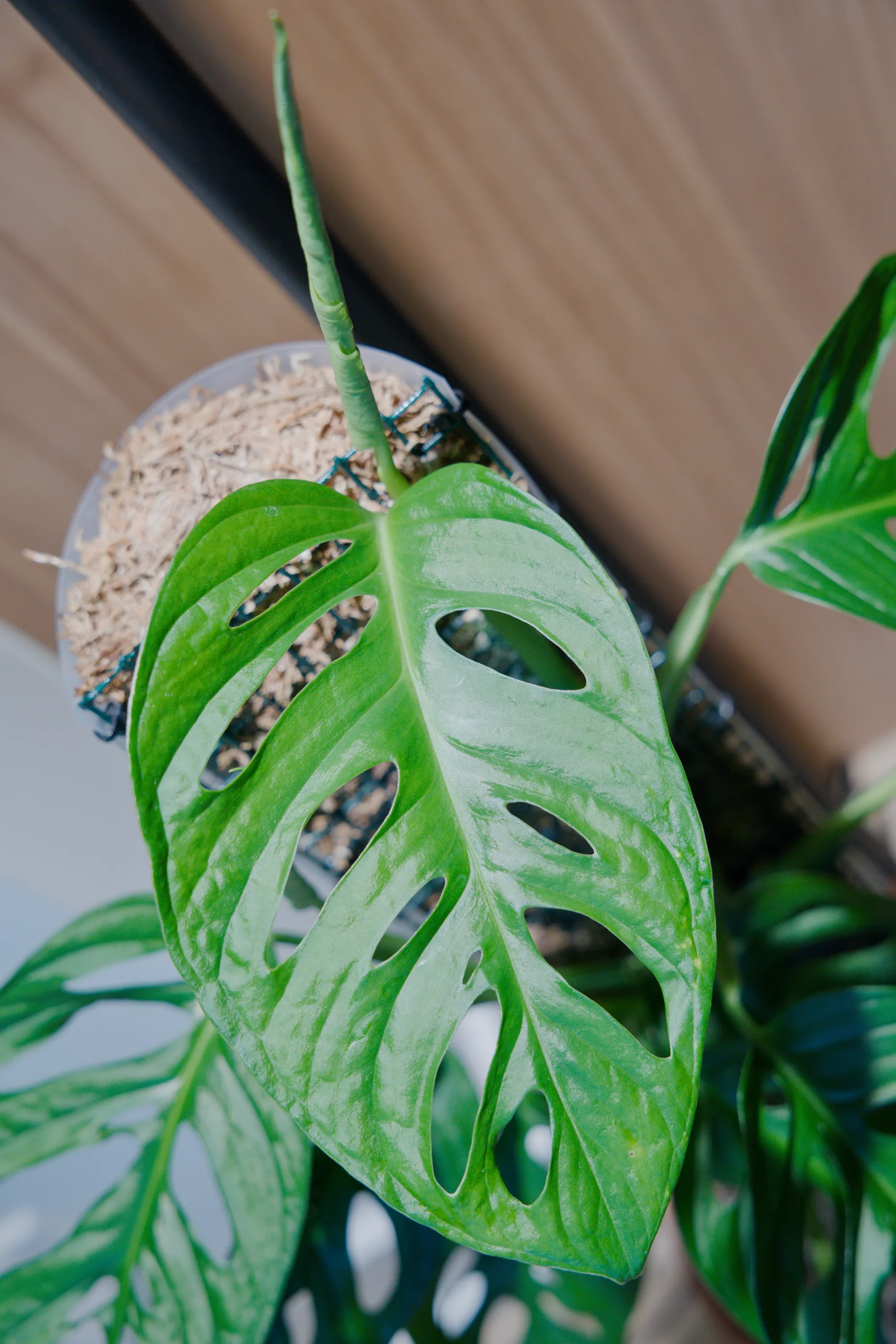
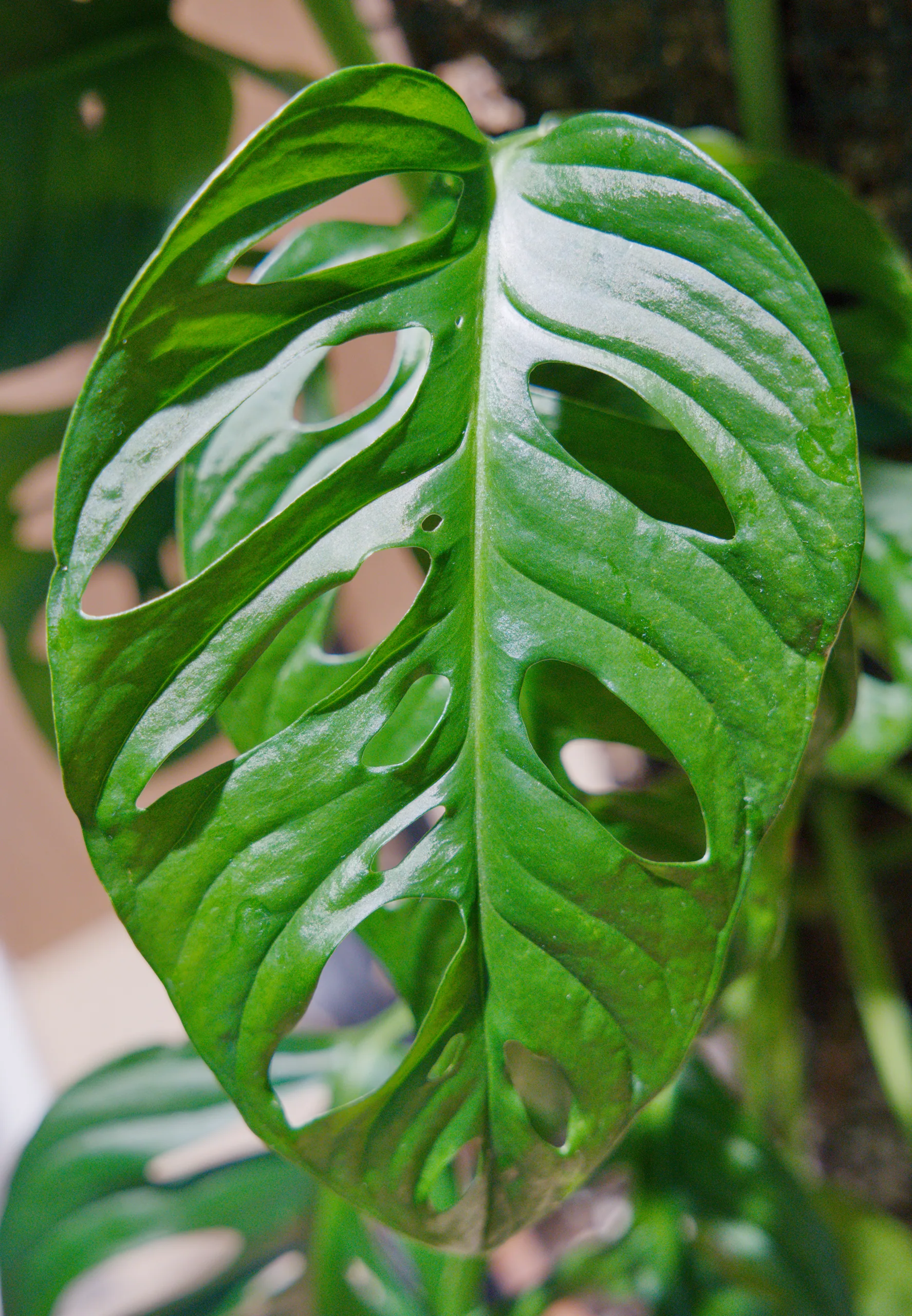
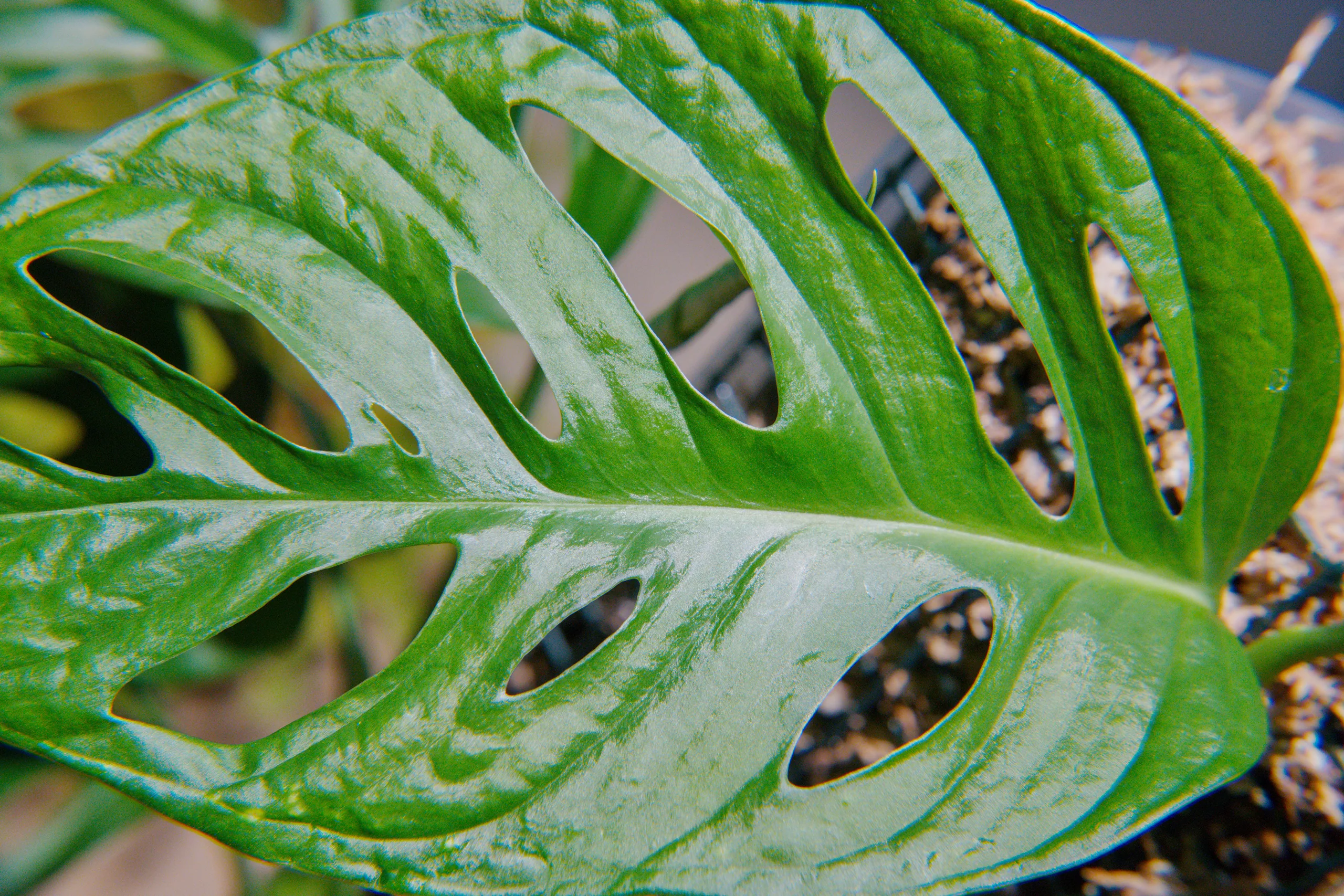
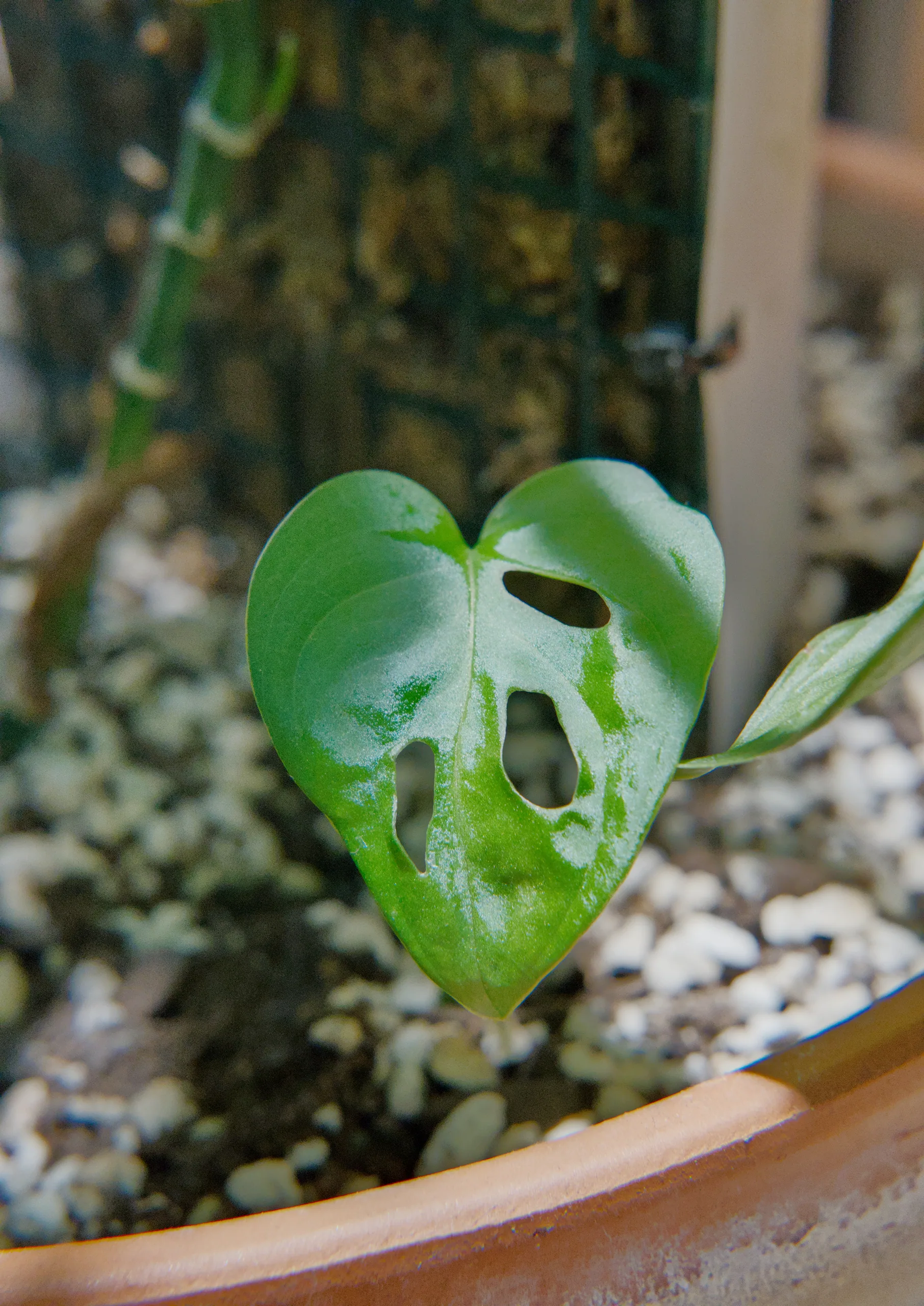
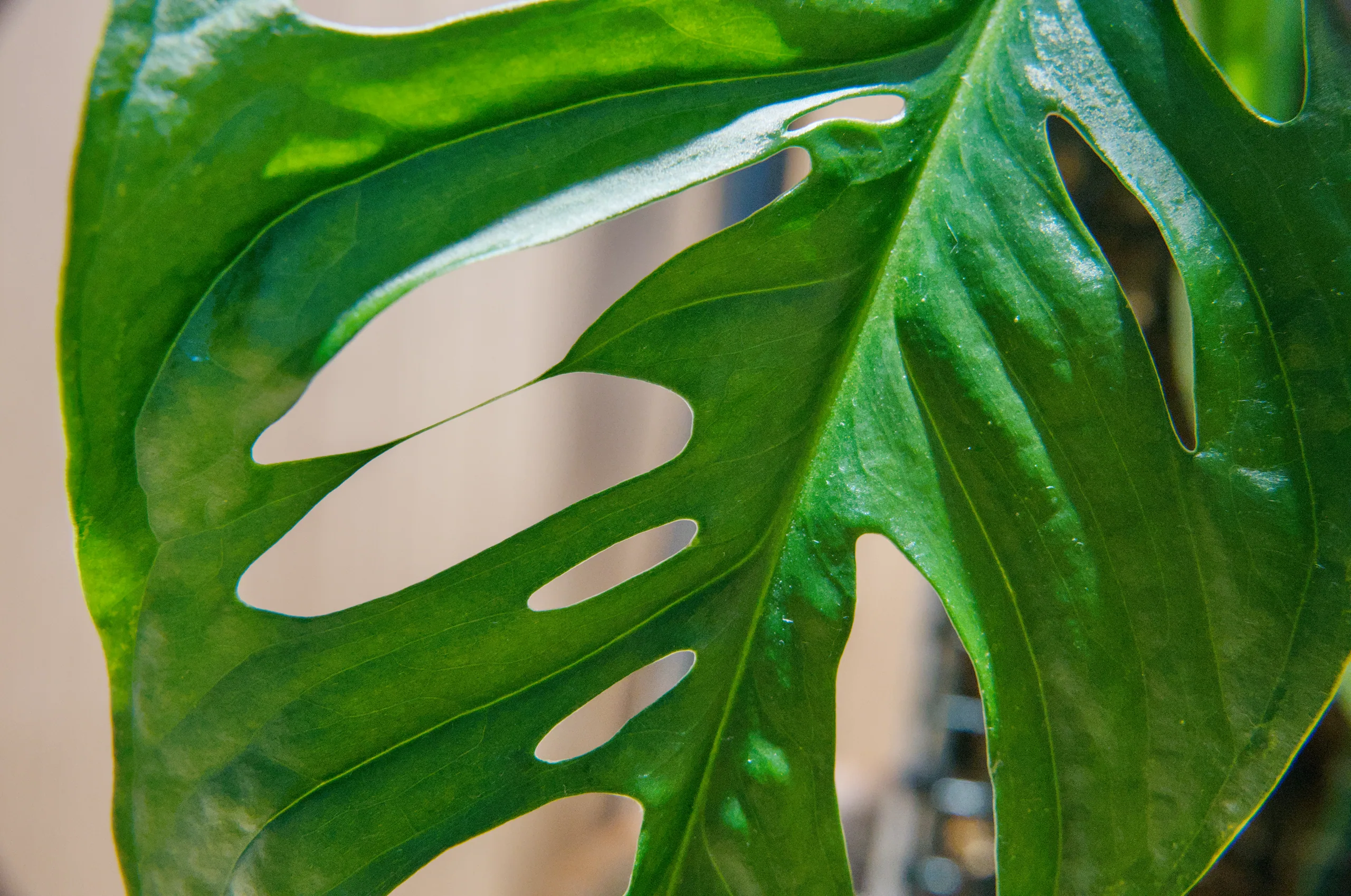
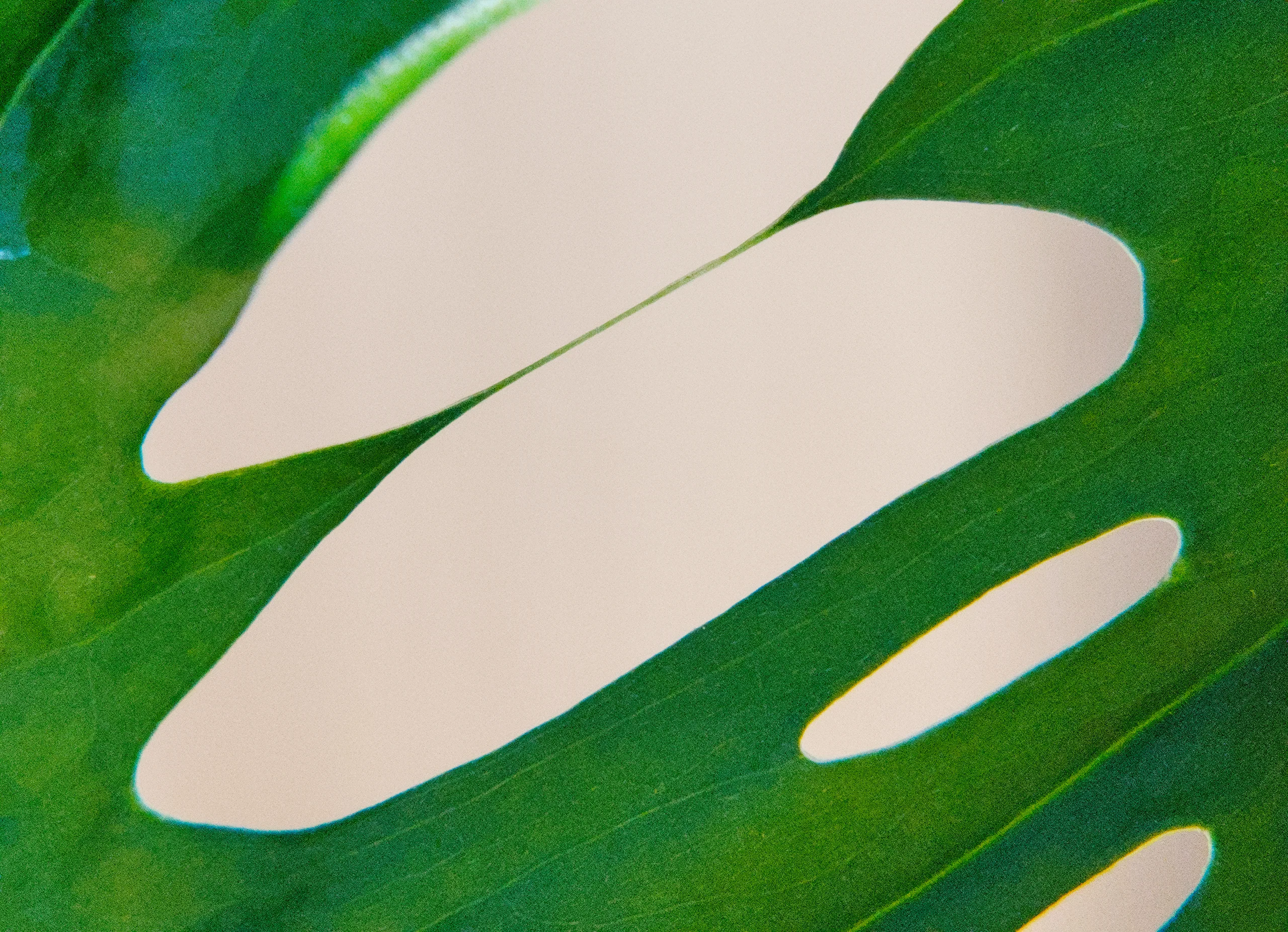
The leaves are the reason anyone grows it: oval, and perforated with elongated holes between the side veins that stay closed at the margin rather than splitting through to the edge the way M. deliciosa eventually does — a split leaf is what you get when a hole forms close enough to the margin to break through it.8 Young leaves are small with two or three modest holes; the fenestrationfenestrationThe holes and splits in a mature Monstera leaf. They are cut by cells dying on schedule inside the furled bud, not torn later, so a leaf never gains one after it opens.Glossary comes with maturity and with something to climb.9
Fun facts
- The holes may be a bet on sunfleckssunfleckA patch of direct sun that moves across the forest floor as the canopy shifts. Much of an understorey plant's light budget arrives in these brief flecks.Glossary. Christopher Muir’s 2013 paper models fenestrationfenestrationThe holes and splits in a mature Monstera leaf. They are cut by cells dying on schedule inside the furled bud, not torn later, so a leaf never gains one after it opens.Glossary across Monstera and argues the holes do not raise a plant’s average growth so much as reduce its variance: a perforated leaf covers a wider area with the same tissue, so it is less at the mercy of exactly where the flecks of sunlight land. The older explanations he reviews — rain drainage, cooling, camouflage from herbivores — either lack evidence or fail to explain why juvenile leaves have no holes. His own is a hypothesis with a test attached, and the test is still waiting.10
- The holes are made by cells being told to die. They form by programmed cell death in the developing leaf, laid down when the leaf primordiumprimordiumA leaf at its earliest stage, a millimetre or two of tissue in the bud. A Monstera's holes are already decided at this size.Glossary is only a millimetre or two tall, which is why a leaf’s hole count is fixed long before you see it.1112 What patterns the process is still largely unknown.12
- The name on the label is often somebody else’s plant. Narrow and wide forms of this species are sold under each other’s names, and the large, heavily perforated plant sold as ‘Esqueleto’ — long labelled M. epipremnoides — turned out on comparison with the wild species to be something undescribed, closer to M. lechleriana; ‘Esqueleto’ is a placeholder name for it.1314 A seller’s word for what a plant is carries less weight than it sounds.
- It is mildly toxic and can irritate skin. Calcium oxalatecalcium oxalateNeedle-shaped crystals carried through the tissue of most aroids. They are the whole of the toxicity to cats, dogs and children: painful rather than poisonous.Glossary crystals throughout; the sap can cause dermatitis, so gloves when cutting.9
Care
Plant care- Light
- Bright indirect. An east window, or a few feet back from a south or west one. Direct midday sun scorches the leaves; deep shade produces long internodes, small leaves and no fenestration.
- Water
- Water thoroughly once the top 2-5 cm of mix has dried, then let it drain completely. They tolerate a short dry spell far better than they tolerate sitting wet.
- Humidity
- Moderate to high. Numbers are hard to source; what is documented is that dry air browns the leaf edges. The link people draw between low humidity and fewer fenestrations is not — light is what decides that.
- Temperature
- 64-84 °F (18-29 °C). Growth stops around 50 °F (10 °C), and chilling damage — wilting, water-soaked patches — starts below about 50 °F (10 °C) without any frost. Keep them off cold glass and out of winter draughts.
- Substrate
- Chunky and free-draining — roughly equal parts orchid bark, perlite and coir. Straight potting compost holds too much water against the roots.
- Fertilizer
- A balanced feed at half strength every second or third watering through spring and summer. Little or none through winter.
- Propagation
- Stem cuttings with at least one node, ideally with an aerial root attached. Roots readily in water, sphagnum or straight into a chunky mix.
- Dormancy
- No true dormancy, but growth slows markedly in low light and cool temperatures. Cut back watering to match.
- Common problems
-
- Yellowing lower leaves are usually too much water or too little light, and rarely too little water
- Crisp brown edges point at dry air, or salts accumulated from feeding
- New leaves opening without fenestration usually means not enough light
- Spider mites and thrips establish quickly in dry air — check the undersides
- Every part carries calcium oxalate crystals: toxic to cats, dogs and children if chewed, and the sap can irritate skin
These photographs also live in the gallery .