Araceae
Monstera
Climbing aroids that fenestrate as they mature. Most of what is sold as a houseplant wants more light and a chunkier mix than it usually gets.
Native to Mexico to tropical America, including the Lesser Antilles
Species
How Monstera generally wants to be treated
Plant careSpecies pages start from this and record only where they differ.
- Light
- Bright indirect. An east window, or a few feet back from a south or west one. Direct midday sun scorches the leaves; deep shade produces long internodes, small leaves and no fenestration.
- Water
- Water thoroughly once the top 2-5 cm of mix has dried, then let it drain completely. They tolerate a short dry spell far better than they tolerate sitting wet.
- Humidity
- Moderate to high. Numbers are hard to source; what is documented is that dry air browns the leaf edges. The link people draw between low humidity and fewer fenestrations is not — light is what decides that.
- Temperature
- 64-84 °F (18-29 °C). Growth stops around 50 °F (10 °C), and chilling damage — wilting, water-soaked patches — starts below about 50 °F (10 °C) without any frost. Keep them off cold glass and out of winter draughts.
- Substrate
- Chunky and free-draining — roughly equal parts orchid bark, perlite and coir. Straight potting compost holds too much water against the roots.
- Fertilizer
- A balanced feed at half strength every second or third watering through spring and summer. Little or none through winter.
- Propagation
- Stem cuttings with at least one node, ideally with an aerial root attached. Roots readily in water, sphagnum or straight into a chunky mix.
- Dormancy
- No true dormancy, but growth slows markedly in low light and cool temperatures. Cut back watering to match.
- Common problems
-
- Yellowing lower leaves are usually too much water or too little light, and rarely too little water
- Crisp brown edges point at dry air, or salts accumulated from feeding
- New leaves opening without fenestration usually means not enough light
- Spider mites and thrips establish quickly in dry air — check the undersides
- Every part carries calcium oxalate crystals: toxic to cats, dogs and children if chewed, and the sap can irritate skin
In the collection
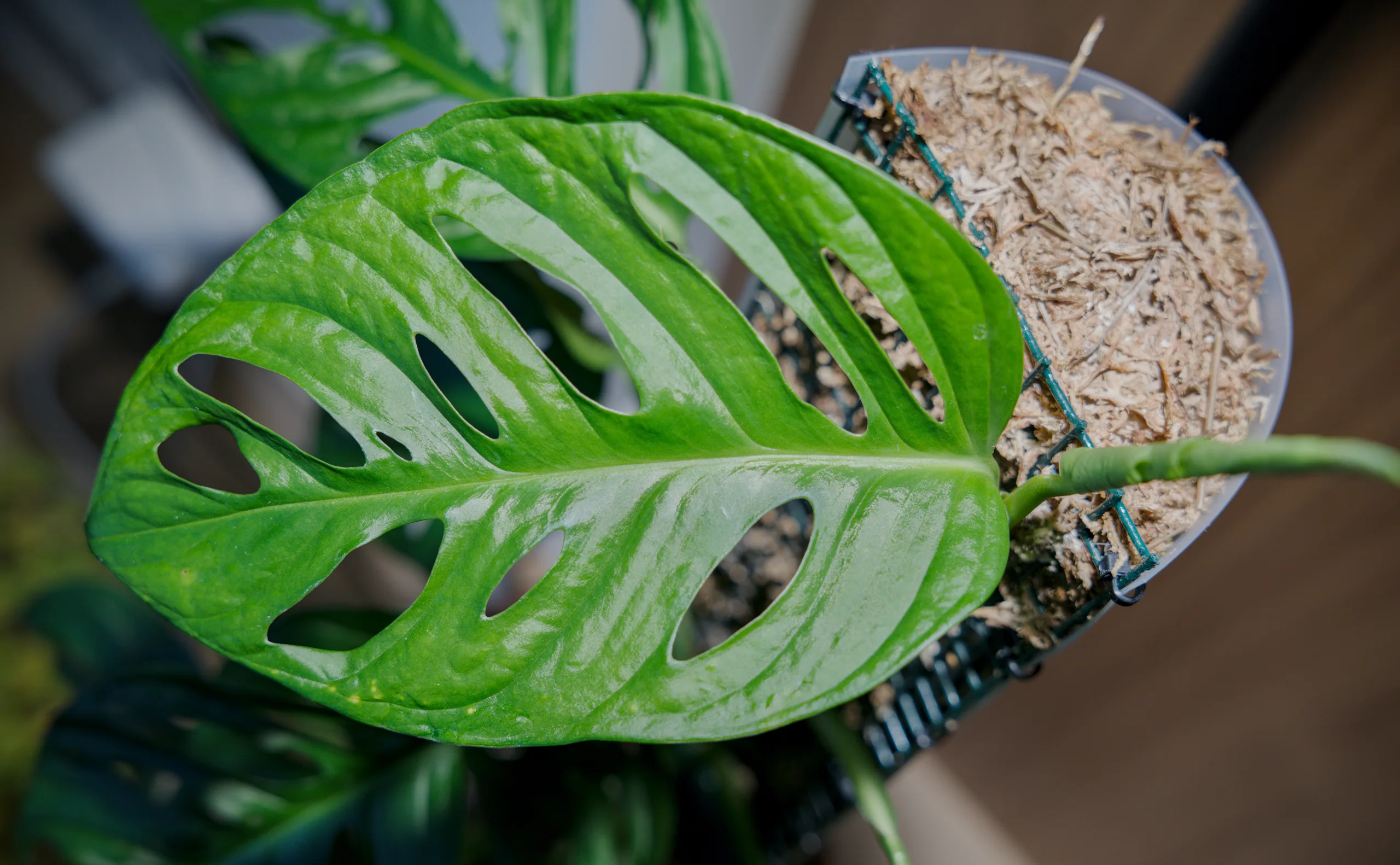
- Adansonii Monstera adansonii
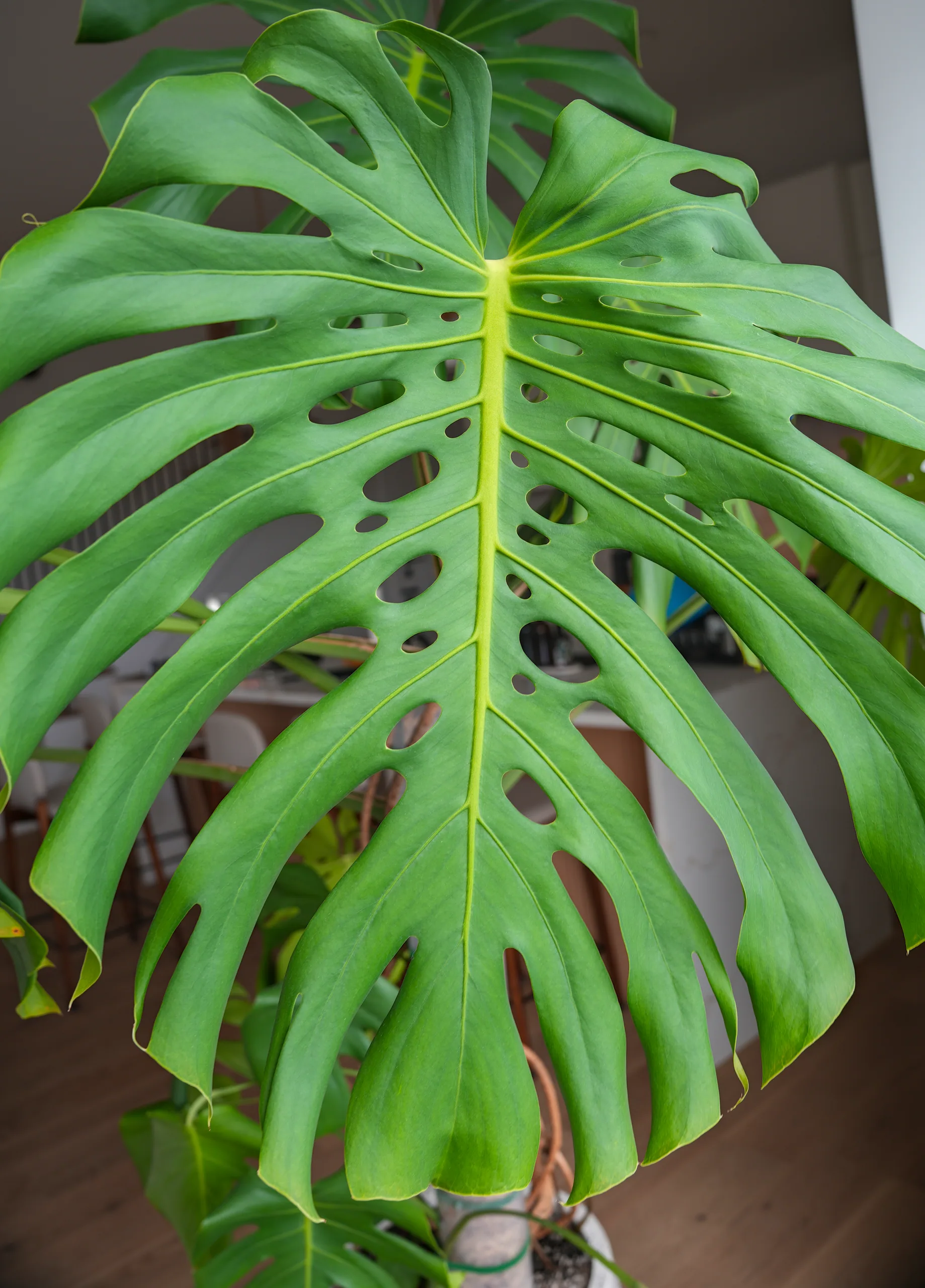
- Swiss cheese plant Monstera deliciosa
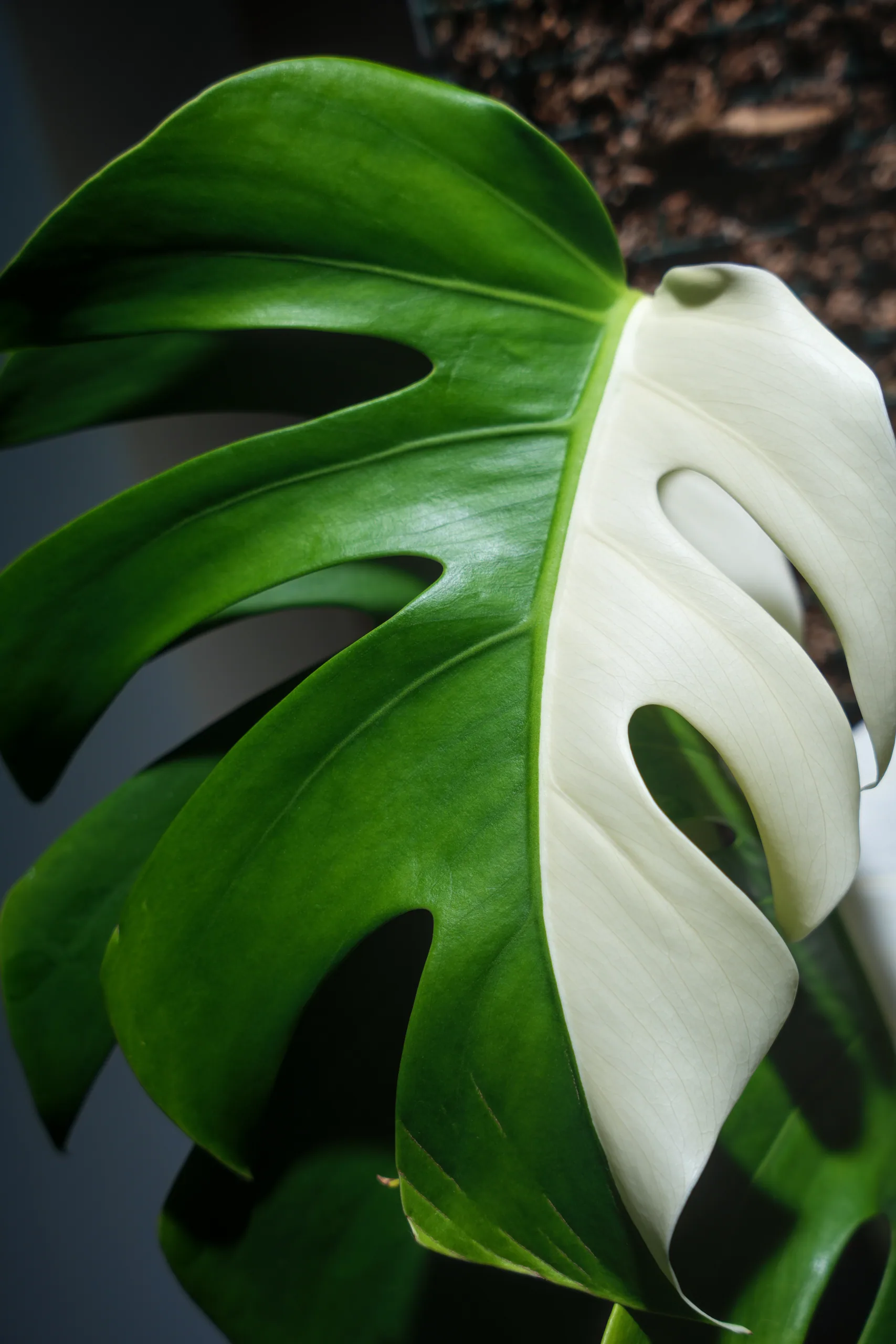
- Albo Variegata Monstera deliciosa 'Albo-Variegata'
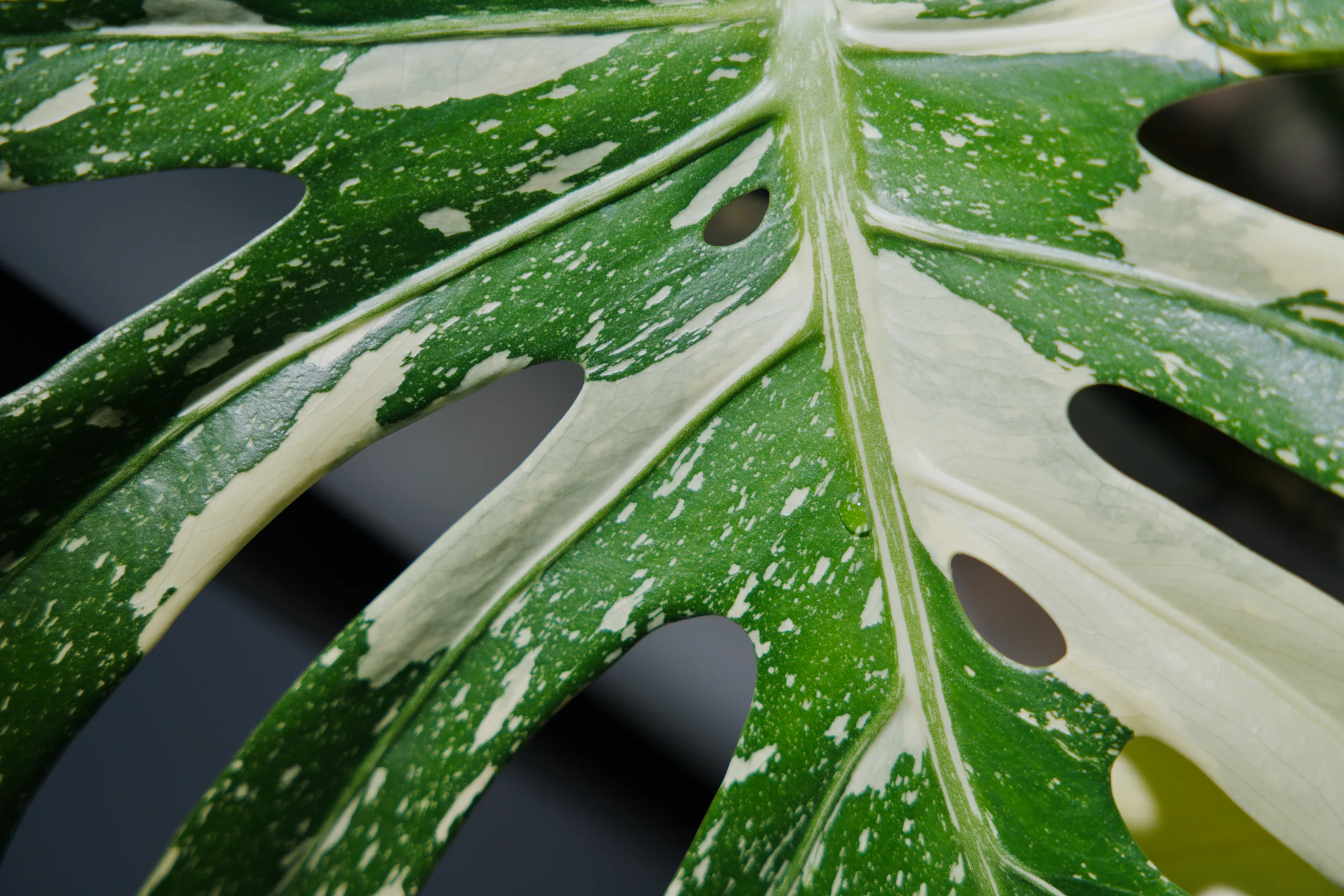
- Thai Constellation Monstera deliciosa 'Thai Constellation'