Monstera deliciosa 'Albo-Variegata'
Monstera albo · Albo variegata
- Family
- Araceae
- Native to
- Mexico to tropical America, including the Lesser Antilles
- Habit
- Hemiepiphytic climber
- Also known as
- Monstera deliciosa var. borsigiana albo-variegata (trade name)
My plant
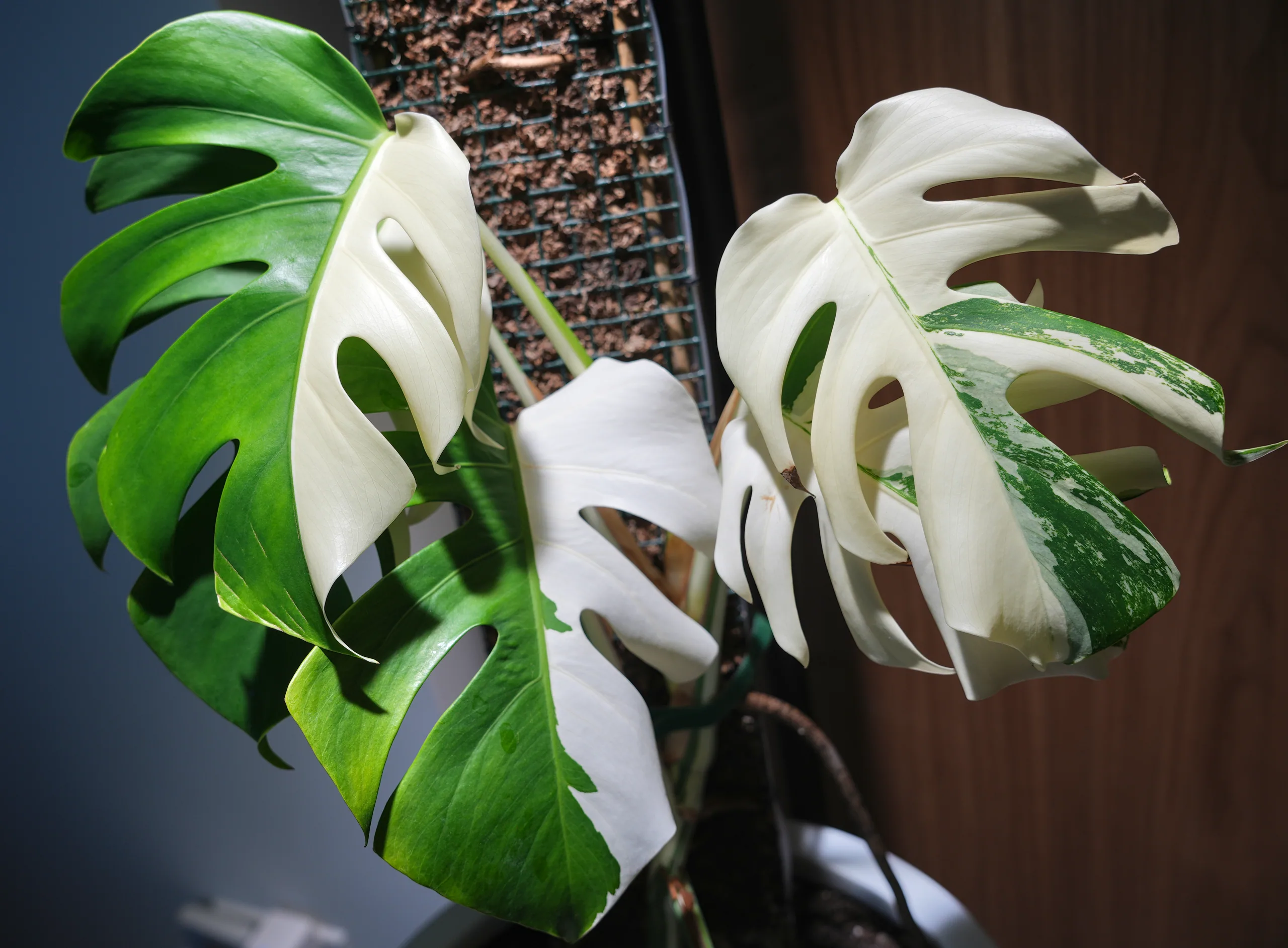
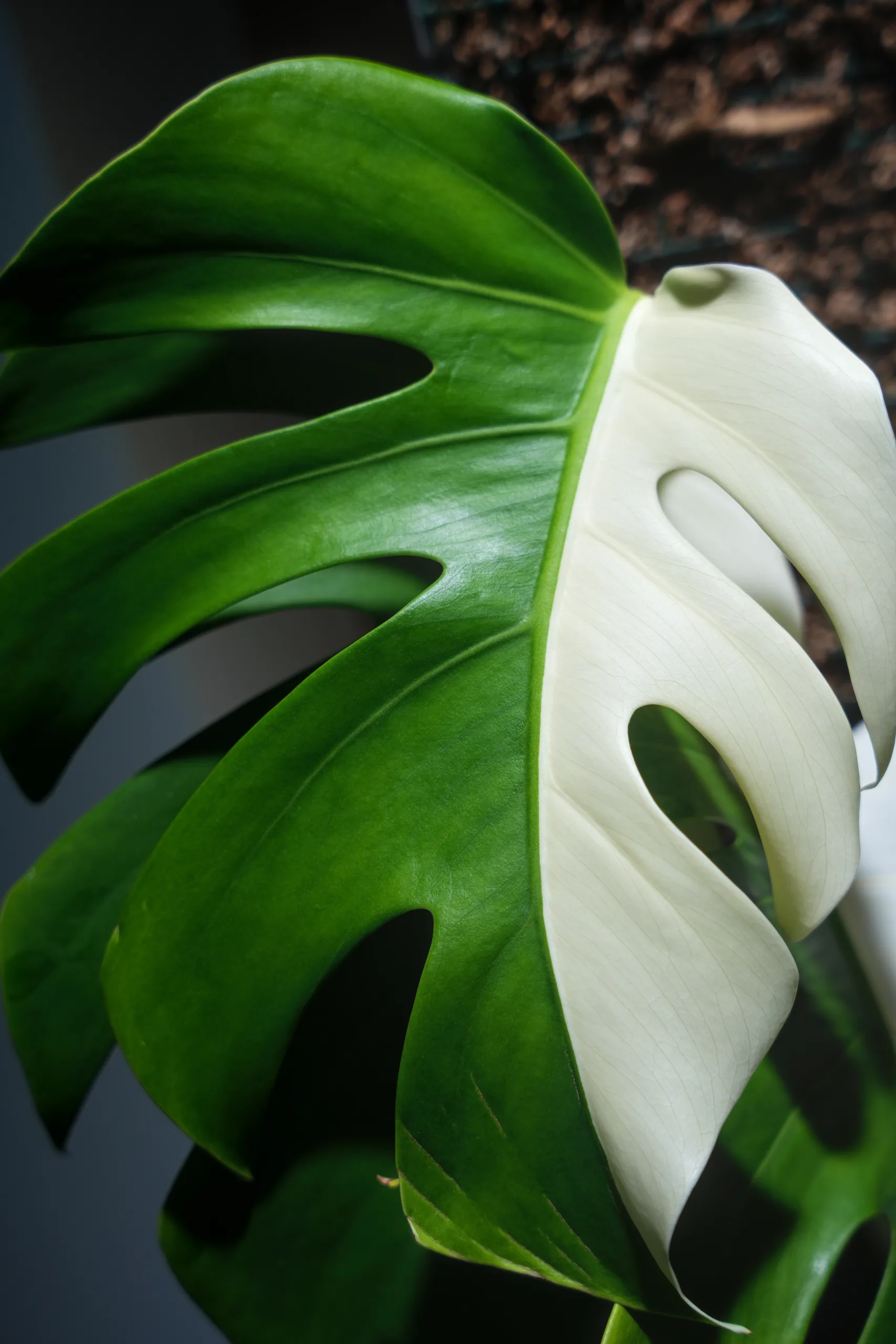
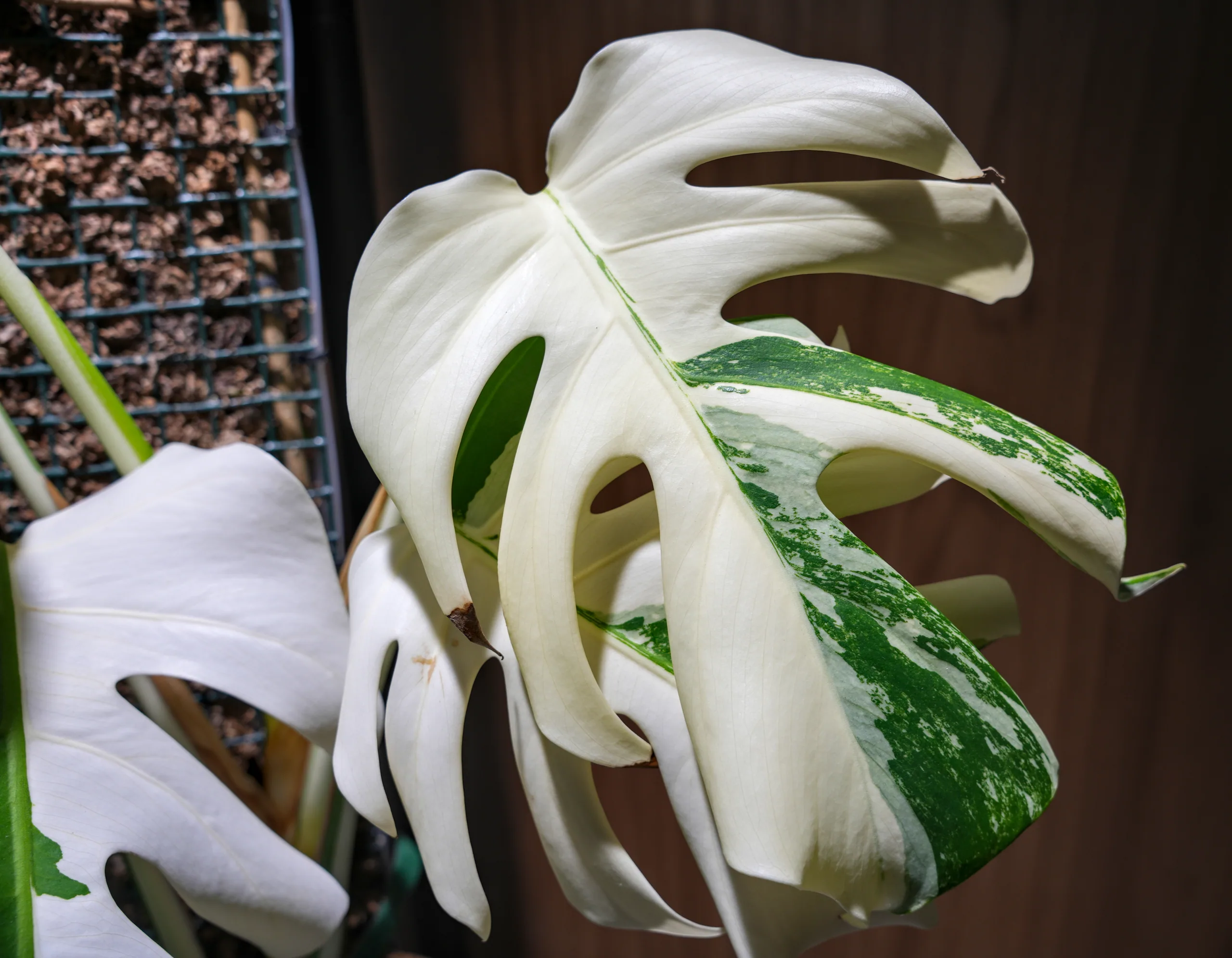
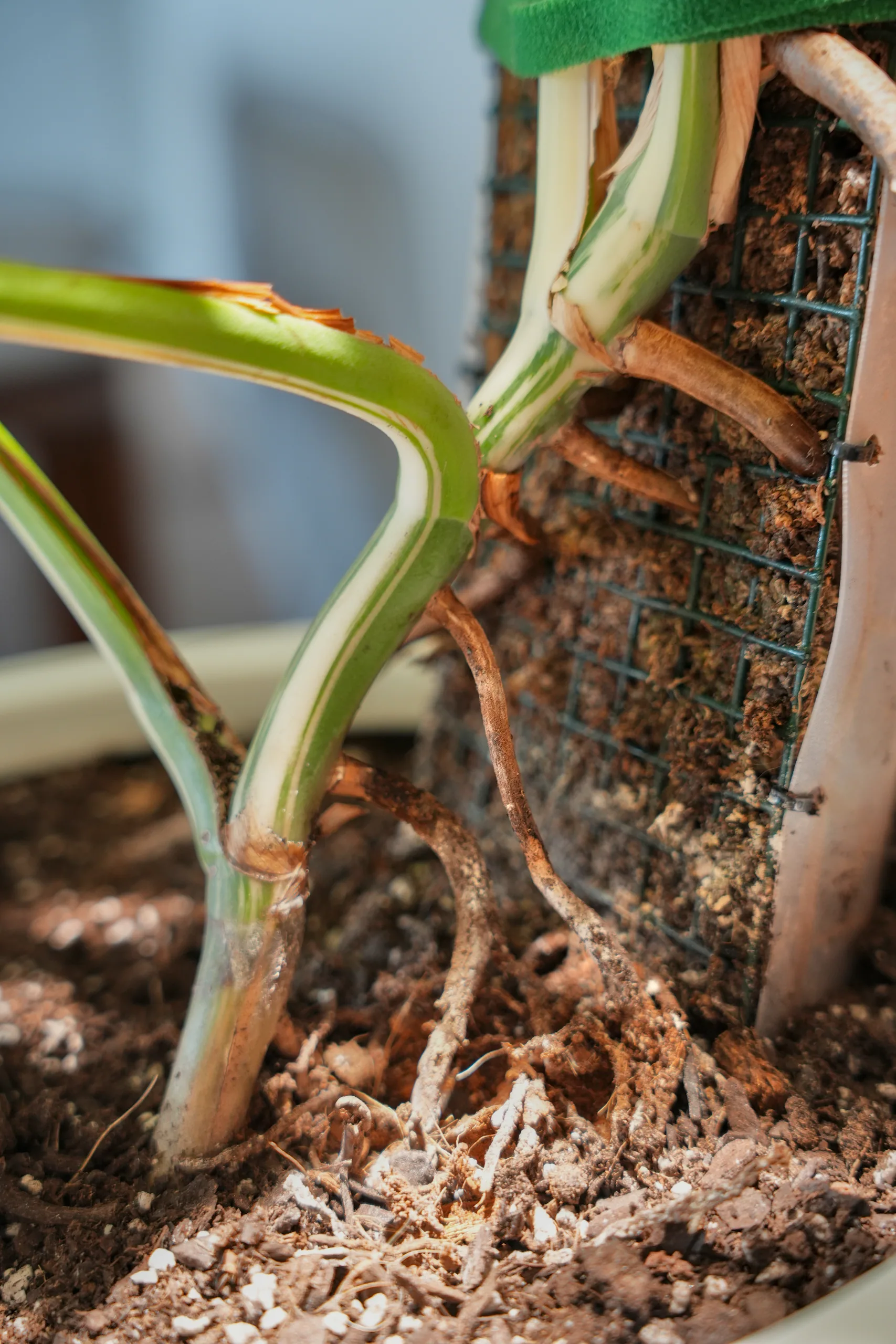
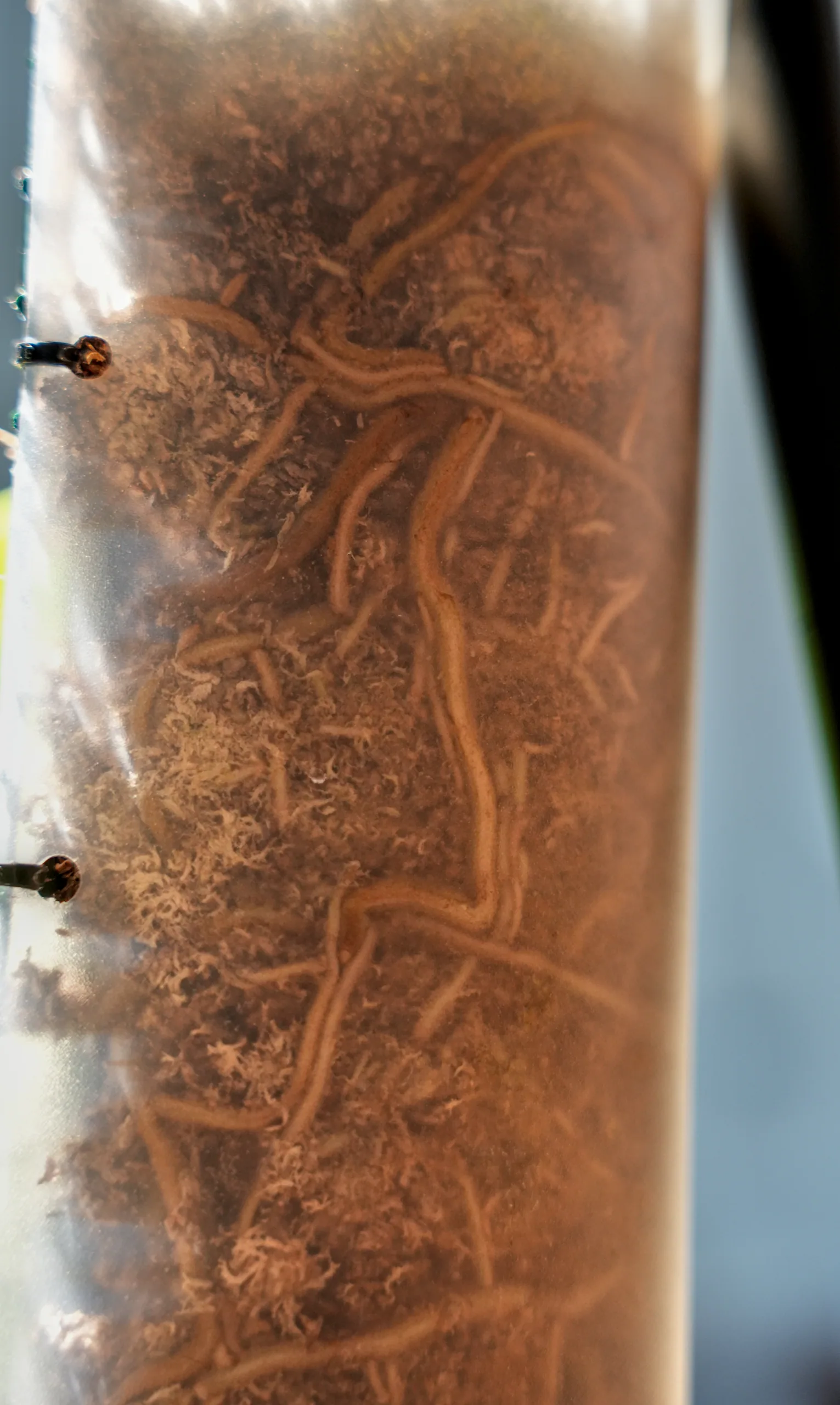
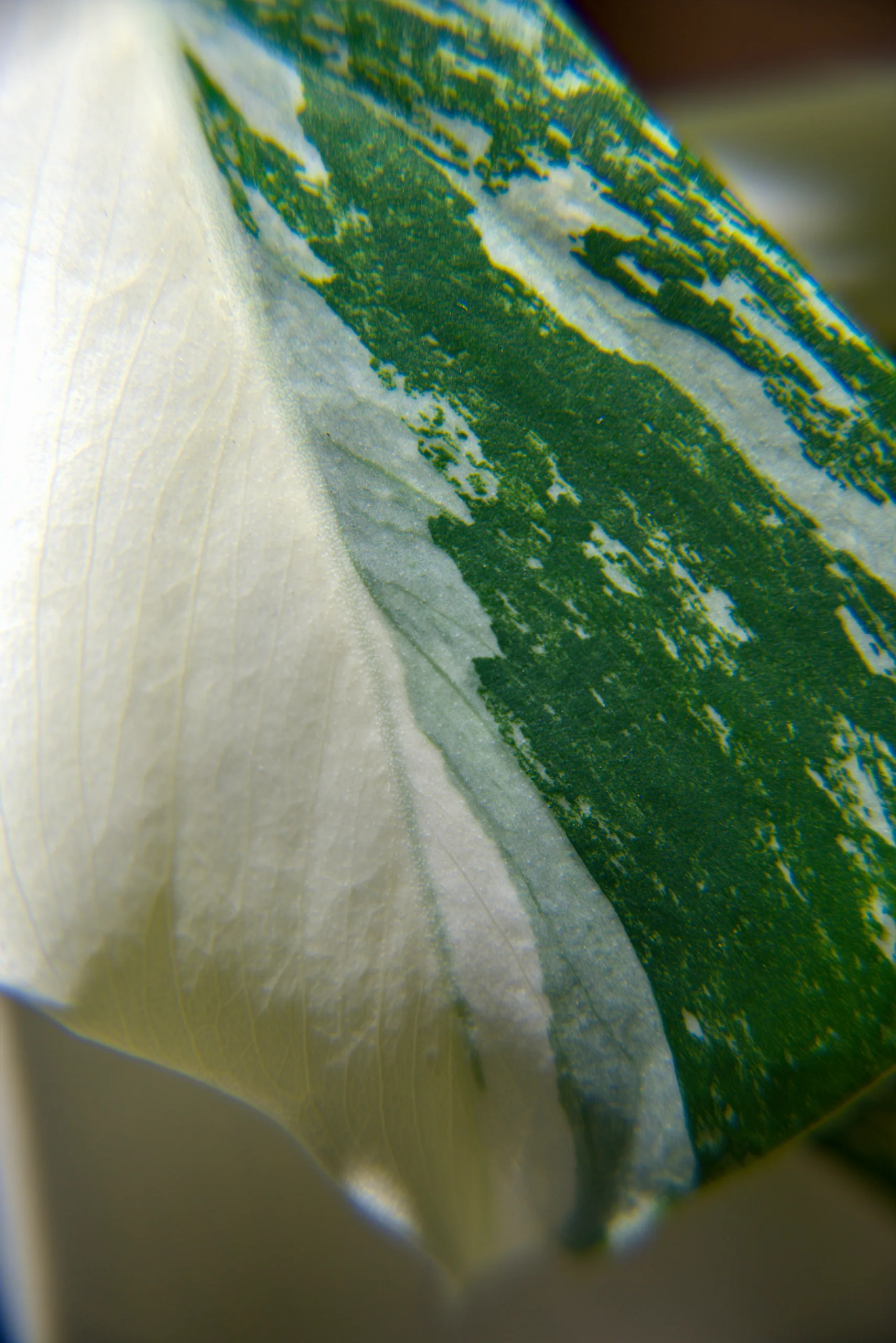
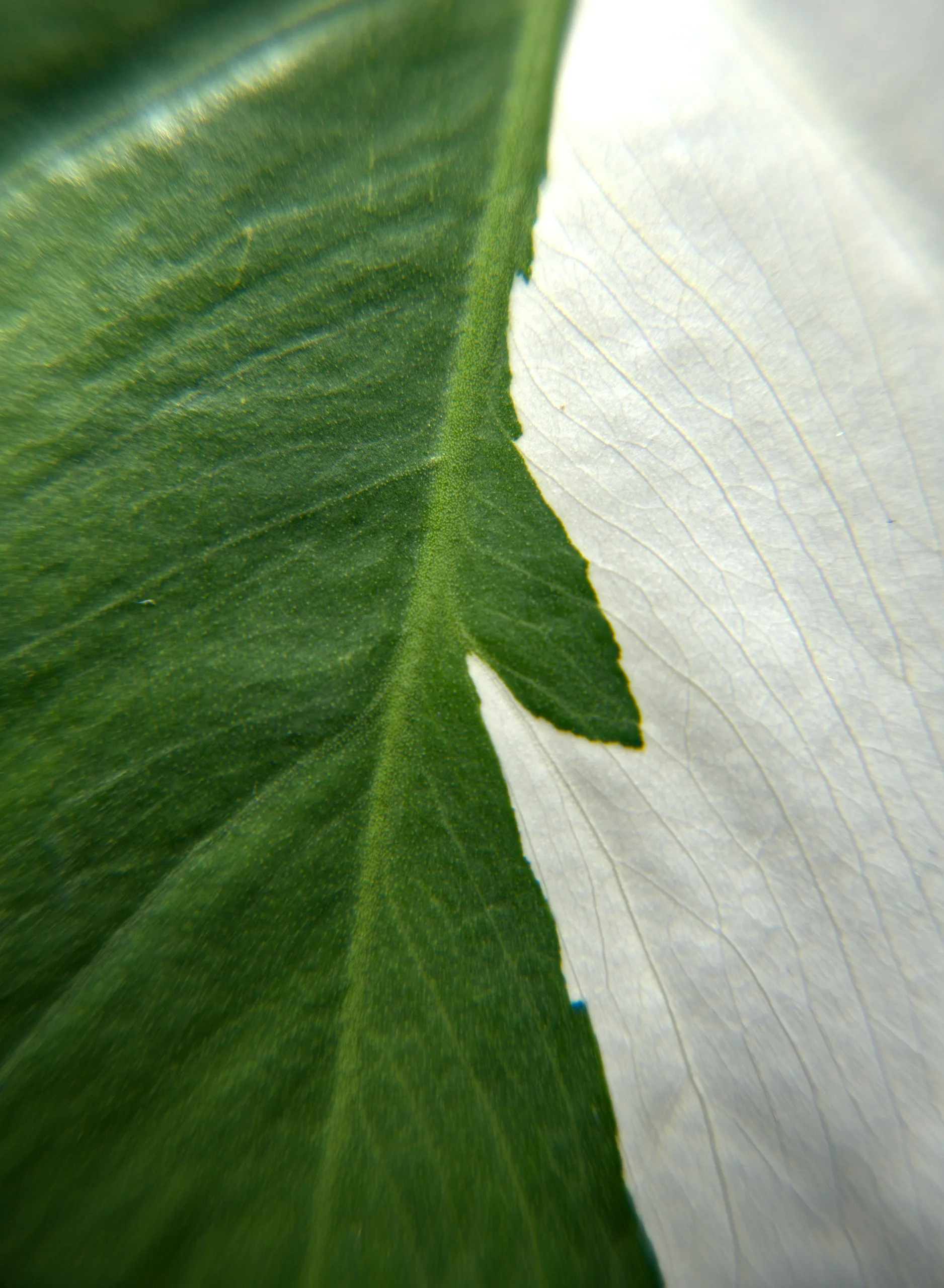
Where it comes from
Nowhere, in the sense this section usually means. Monstera deliciosa is a described species with a documented range — southern Mexico to Guatemala1 — but the albo is a variegatedvariegationPatches of leaf with little or no chlorophyll, so they read as white, cream or yellow. The pale tissue cannot feed itself, which is why a variegated plant grows more slowly than a plain one.Glossary mutation of it, kept alive by cuttings and nothing else. There is no habitat to reason from. Where the Monstera deliciosa page can tell you the plant is a seedling version of something twenty metres up a tree, this one can only say that the green parts behave that way and the white parts do not behave at all.
Nobody seems to know when or where the mutation first turned up. The dates and nurseries repeated around the houseplant web are not attached to anything I could follow, and the most thorough grower guide I found lists the origin as “unsure”,2 so this page does not repeat them.
Naming and description
The name it is usually sold under — Monstera deliciosa var. borsigiana albo-variegatavariegationPatches of leaf with little or no chlorophyll, so they read as white, cream or yellow. The pale tissue cannot feed itself, which is why a variegated plant grows more slowly than a plain one.Glossary — is a trade label, not a botanical name, and it carries a disagreement worth knowing about. Kew treats Monstera borsigiana, described in 1862, and the variety Engler made of it in 1908 as synonymssynonymA botanical name that is no longer the accepted one for a plant, usually because the same species was described twice. Old books and plant labels are full of them.Glossary of plain M. deliciosa.34 The argument is a century and a half old: Engler kept them apart on thinner stems and smaller, less-perforated leaves, later botanists could not tell them apart, and one read the small form as a juvenile stage that grades into the large one.2 Growers still use “borsigiana” for a smaller, faster-climbing form, and the difference may be there in the pot; it is not a name Kew accepts.
Horticultural authorities write the plant as a cultivarcultivarA plant selected and propagated by people rather than described from the wild. Written in single quotes after the species — Monstera deliciosa 'Thai Constellation' — and never italicised.Glossary of the species — Monstera deliciosa ‘Albo-VariegatavariegationPatches of leaf with little or no chlorophyll, so they read as white, cream or yellow. The pale tissue cannot feed itself, which is why a variegated plant grows more slowly than a plain one.Glossary’ — which is how this page names it.56 The RHSRHSThe Royal Horticultural Society. Its plant register and its Award of Garden Merit are among the few horticultural authorities worth citing.Glossary lists ‘VariegatavariegationPatches of leaf with little or no chlorophyll, so they read as white, cream or yellow. The pale tissue cannot feed itself, which is why a variegated plant grows more slowly than a plain one.Glossary’, the cream-and-marbled cultivarcultivarA plant selected and propagated by people rather than described from the wild. Written in single quotes after the species — Monstera deliciosa 'Thai Constellation' — and never italicised.Glossary, separately and gives it an Award of Garden MeritAward of Garden MeritAn RHS mark given to plants that perform reliably in ordinary conditions. It is about growing well, not about rarity.Glossary;7 the albo is the other one, white rather than cream, and arriving in sectorssectorA block of tissue descended from one group of cells — the whole-half-leaf kind of variegation, as opposed to an even speckling.Glossary — whole blocks and half-leaves with no chlorophyll in them — rather than as an even dusting.
Fun facts
- The white parts are a cost, not a feature. White sectorssectorA block of tissue descended from one group of cells — the whole-half-leaf kind of variegation, as opposed to an even speckling.Glossary have no working chloroplastschloroplastThe compartment inside a plant cell that does photosynthesis. White leaf tissue has none that work, which is why it cannot pay its own way.Glossary and are fed by the green ones;8 a heavily variegatedvariegationPatches of leaf with little or no chlorophyll, so they read as white, cream or yellow. The pale tissue cannot feed itself, which is why a variegated plant grows more slowly than a plain one.Glossary plant is running a full plant’s metabolism on a fraction of the leaf. That is why variegatedvariegationPatches of leaf with little or no chlorophyll, so they read as white, cream or yellow. The pale tissue cannot feed itself, which is why a variegated plant grows more slowly than a plain one.Glossary cultivarscultivarA plant selected and propagated by people rather than described from the wild. Written in single quotes after the species — Monstera deliciosa 'Thai Constellation' — and never italicised.Glossary want more light than the plain species,6 and why a plant that goes almost entirely white will starve.
- Every cutting is a gamble on which cells you took. The variegationvariegationPatches of leaf with little or no chlorophyll, so they read as white, cream or yellow. The pale tissue cannot feed itself, which is why a variegated plant grows more slowly than a plain one.Glossary is a chimerachimeraA plant built from cell layers of different genetics, one carrying a mutation and one not. Most stable variegation is a chimera, which is why it cannot be grown from seed.Glossary: the plant is built from cell layers, some carrying the mutation and some not, and a bud inherits whatever those layers hold at that point on the stem.910 Take cuttings from nodesnodeThe point on a stem where a leaf attaches and new roots and shoots can form. A cutting without one is a leaf on a stick: it cannot grow.Glossary that show white in or around the nodenodeThe point on a stem where a leaf attaches and new roots and shoots can form. A cutting without one is a leaf on a stick: it cannot grow.Glossary, and cut out all-green shoots promptly, because green outgrows variegatedvariegationPatches of leaf with little or no chlorophyll, so they read as white, cream or yellow. The pale tissue cannot feed itself, which is why a variegated plant grows more slowly than a plain one.Glossary.11 A cutting from an all-green run stays green for good; one from an all-white run cannot feed itself.
- It does not come true from seed. In a layered chimerachimeraA plant built from cell layers of different genetics, one carrying a mutation and one not. Most stable variegation is a chimera, which is why it cannot be grown from seed.Glossary the gametes come from one cell layer, and in a white-over-green plant that layer is the green one, so the seedlings are plain.1213 It has only ever spread as cuttings, and shoots regenerated from a single layer — which is what some tissue-culturetissue cultureGrowing plants from a few cells in sterile jars of nutrient gel. It is how a rare cultivar becomes a supermarket plant, and why prices for some of them collapse.Glossary routes do — can lose the chimerachimeraA plant built from cell layers of different genetics, one carrying a mutation and one not. Most stable variegation is a chimera, which is why it cannot be grown from seed.Glossary outright.13 That is a large part of why it has stayed expensive.
Care
Plant care1 thing below differs from general Monstera care.
- Light differs from general Monstera care
-
Needs noticeably more light than the plain species — the white sectors photosynthesise nothing, so the plant is working with less leaf than it looks like it has. Bright but indirect: the usual advice that white tissue scorches more easily is repeated everywhere and documented nowhere I could find, so treat it as caution rather than fact.
General Monstera care: Bright indirect. An east window, or a few feet back from a south or west one. Direct midday sun scorches the leaves; deep shade produces long internodes, small leaves and no fenestration.
- Water
- Water thoroughly once the top 2-5 cm of mix has dried, then let it drain completely. They tolerate a short dry spell far better than they tolerate sitting wet.
- Humidity
- Moderate to high. Numbers are hard to source; what is documented is that dry air browns the leaf edges. The link people draw between low humidity and fewer fenestrations is not — light is what decides that.
- Temperature
- 64-84 °F (18-29 °C). Growth stops around 50 °F (10 °C), and chilling damage — wilting, water-soaked patches — starts below about 50 °F (10 °C) without any frost. Keep them off cold glass and out of winter draughts.
- Substrate
- Chunky and free-draining — roughly equal parts orchid bark, perlite and coir. Straight potting compost holds too much water against the roots.
- Fertilizer
- A balanced feed at half strength every second or third watering through spring and summer. Little or none through winter.
- Propagation
- Stem cuttings with at least one node, ideally with an aerial root attached. Roots readily in water, sphagnum or straight into a chunky mix.
- Dormancy
- No true dormancy, but growth slows markedly in low light and cool temperatures. Cut back watering to match.
- Common problems
-
- Yellowing lower leaves are usually too much water or too little light, and rarely too little water
- Crisp brown edges point at dry air, or salts accumulated from feeding
- New leaves opening without fenestration usually means not enough light
- Spider mites and thrips establish quickly in dry air — check the undersides
- Every part carries calcium oxalate crystals: toxic to cats, dogs and children if chewed, and the sap can irritate skin
These photographs also live in the gallery .