Orchidaceae
Paphiopedilum
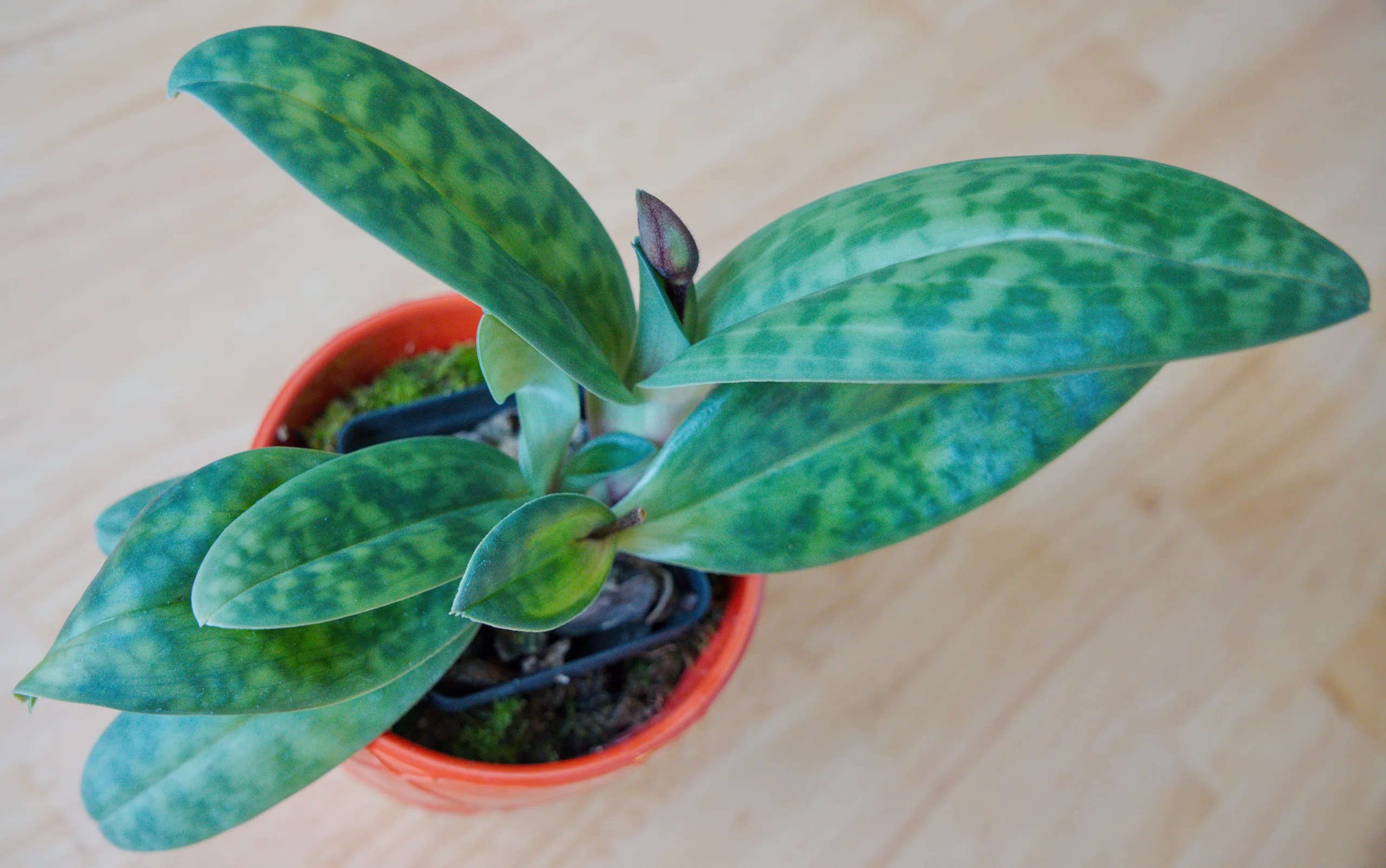
Slipper orchids: a low rosette of strap-shaped leaves and usually one flower to a stem, with a deep pouch, a broad dorsal sepal held over it and two petals spreading sideways. The leaves sort the genus in two for culture — mottled ones are warm growers, plain green ones are mostly cool, with the strap-leaved multiflorals a warm exception — and getting that fork wrong is the usual way one is lost. The whole genus has been on CITES Appendix I since 1990, which is why a supermarket plant has paperwork behind it.
Native to Southern China to tropical Asia
Species
How Paphiopedilum generally wants to be treated
Species pages start from this and record only where they differ.
- Light
- Bright and shaded rather than bright and direct — 10,750 to 21,500 lux, which the American Orchid Society also puts as two to three hours of shaded sun a day. An east, north or west window suits it. The RHS shades it through summer and moves it into unshaded light for the winter.
- Water
- Keep the mix moist and never sopping. There is no dry rest in this genus: ease off through winter with the light, but do not let the bark dry right out. Water at the pot rather than over the plant — the RHS says to avoid overhead watering and wetting the leaves.
- Humidity
- 40 to 50 per cent is the floor, with air movement whenever it is higher; the mottled-leaved types want more than that. Do not mist. Stand the pot on a tray of damp pebbles instead, clear of the water.
- Temperature
- 68-86 °F (20-30 °C) by day and not below 65 °F (18 °C) at night — this is the warm half of the genus. The Missouri Botanical Garden allows nights down to 60 °F (16 °C), so treat 65 °F (18 °C) as the safe floor rather than a cliff. The plain green cool-growing types want 50-77 °F (10-25 °C) and a winter minimum near 50 °F (10 °C); do not borrow their numbers for a mottled-leaved plant.
- Substrate
- Medium or fine fir bark with perlite, coarse sand or sphagnum — an orchid mix, not compost. Pot small, just large enough for the roots.
- Fertilizer
- A weak balanced feed, 5-5-5 to 10-10-10, regularly and year round, or a proprietary orchid feed every two to three weeks at the packet rate, eased off in winter. Flush the pot through with rain or distilled water every month or two: bark plus regular feeding accumulates salts, and the roots are what pay for it.
- Propagation
- Division after flowering — separate an offshoot that has roots of its own from a large clump. That is the only method the RHS gives; there is no leaf cutting here.
- Dormancy
- None described by any of the culture sheets. It grows year round, and watering and feeding ease off through winter with the light rather than stopping.
- Common problems
-
- Cold, for a mottled-leaved plant given a green-leaved plant's winter numbers — the single most common way to lose one
- Salt building up in the bark from regular feeding; flush the pot through with rain or distilled water
- Water sitting on the leaves or in the crown. The RHS says not to mist and not to water overhead
- Letting the mix dry right out, on the assumption that an orchid wants it
- Repotting on the plant's schedule rather than the bark's. Repot about every two years, when the medium breaks down and not when the pot looks full, and do it after flowering
In the collection
- Lady slipper orchid Paphiopedilum Maudiae-type hybrid