Alocasia micholitziana 'Frydek'
Frydek variegata · Green velvet alocasia
- Family
- Araceae
- Native to
- Philippines (Luzon)
- Habit
- Rhizomatous perennial
My plant
Where it comes from
Unlike the philodendron hybrids here, this one has a described species behind it and a range on record. Kew accepts Alocasia micholitziana Sander, published in The Gardeners’ Chronicle in 1912, and gives its native range as the Philippines, on Luzon — one island, which is a good deal more precise than the “Southeast Asia” the hobby tends to repeat. Kew lists no synonymssynonymA botanical name that is no longer the accepted one for a plant, usually because the same species was described twice. Old books and plant labels are full of them.Glossary.1 It grows in montanemontaneOf the cool, humid forest belt on a mountainside, above the lowland tropics. Plants from it dislike hot dry rooms.Glossary forest at roughly 1,200 to 1,500 metres,1 which is cooler and more even than the lowland tropics and fits its reputation for disliking hot, dry rooms.
‘Frydek’ is a cultivarcultivarA plant selected and propagated by people rather than described from the wild. Written in single quotes after the species — Monstera deliciosa 'Thai Constellation' — and never italicised.Glossary of that species, and everything about the cultivarcultivarA plant selected and propagated by people rather than described from the wild. Written in single quotes after the species — Monstera deliciosa 'Thai Constellation' — and never italicised.Glossary happened in cultivation. Which came first is contested. This page used to say the variegatedvariegationPatches of leaf with little or no chlorophyll, so they read as white, cream or yellow. The pale tissue cannot feed itself, which is why a variegated plant grows more slowly than a plain one.Glossary form was a sportsportA shoot that appears on a plant carrying a mutation the rest does not have. Propagated on its own, it becomes a new cultivar.Glossary of a green ‘Frydek’; the most detailed account I could find — a hobby reference, unsourced at the primary level — has it the other way round: the plain green plant was named ‘Green Velvet’ in the 1980s and later sold as ‘Maxkowskii’, and the name ‘Freydyk’ was first attached in the late 1990s to a variegatedvariegationPatches of leaf with little or no chlorophyll, so they read as white, cream or yellow. The pale tissue cannot feed itself, which is why a variegated plant grows more slowly than a plain one.Glossary plant, then misspelled into ‘Frydek’ by a tissue-culturetissue cultureGrowing plants from a few cells in sterile jars of nutrient gel. It is how a rare cultivar becomes a supermarket plant, and why prices for some of them collapse.Glossary lab.2 The RHSRHSThe Royal Horticultural Society. Its plant register and its Award of Garden Merit are among the few horticultural authorities worth citing.Glossary independently lists A. micholitziana ‘Freydyk’ as a variegatedvariegationPatches of leaf with little or no chlorophyll, so they read as white, cream or yellow. The pale tissue cannot feed itself, which is why a variegated plant grows more slowly than a plain one.Glossary plant.3 Nothing I could open settles it, so take the dates as reported.
Naming and description
micholitziana honours Wilhelm Micholitz, the collector who worked for the Sander nursery that published the species — which is why the species name and the publisher’s name go together.4 The fuller account, came a year later in Curtis’s Botanical Magazine.4
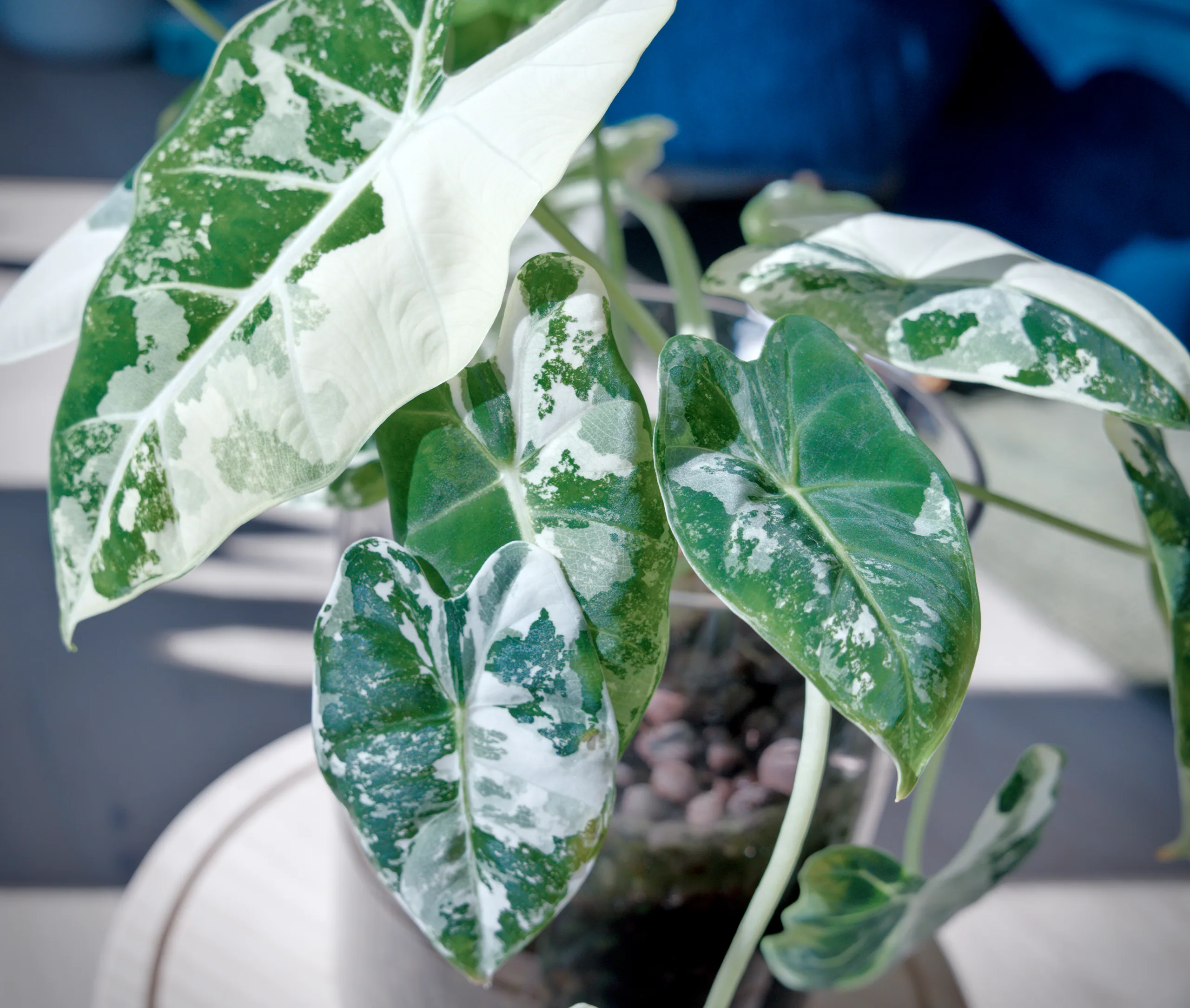
The plain plant is worth describing first: deep matt green, so dark it reads as black in poor light, with a texture closer to velvet than to leaf and bright white main veins running out to each lobe. It is smaller and more upright than its reputation suggests — about half a metre, carrying four to seven leaves at a time.1
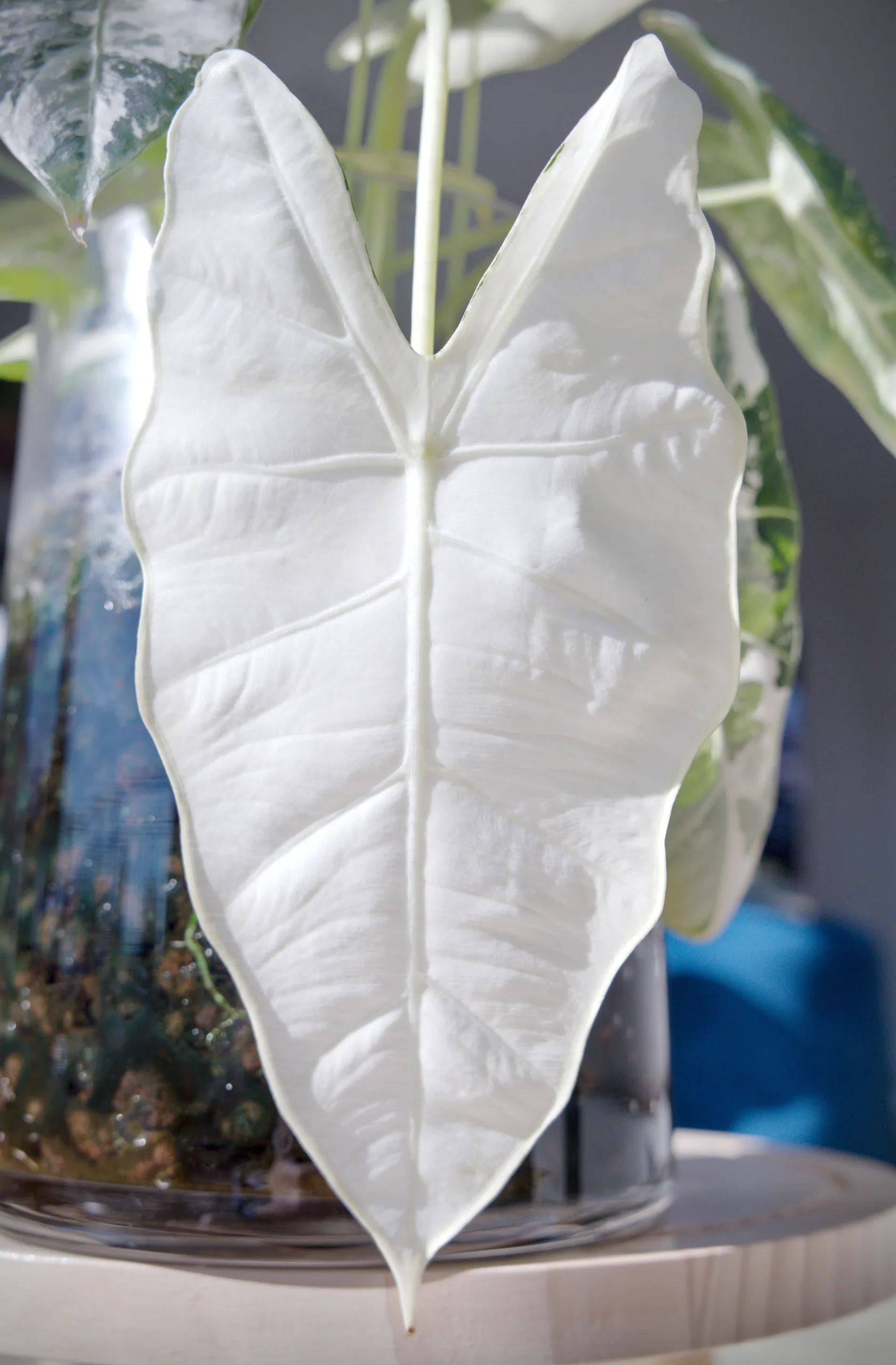
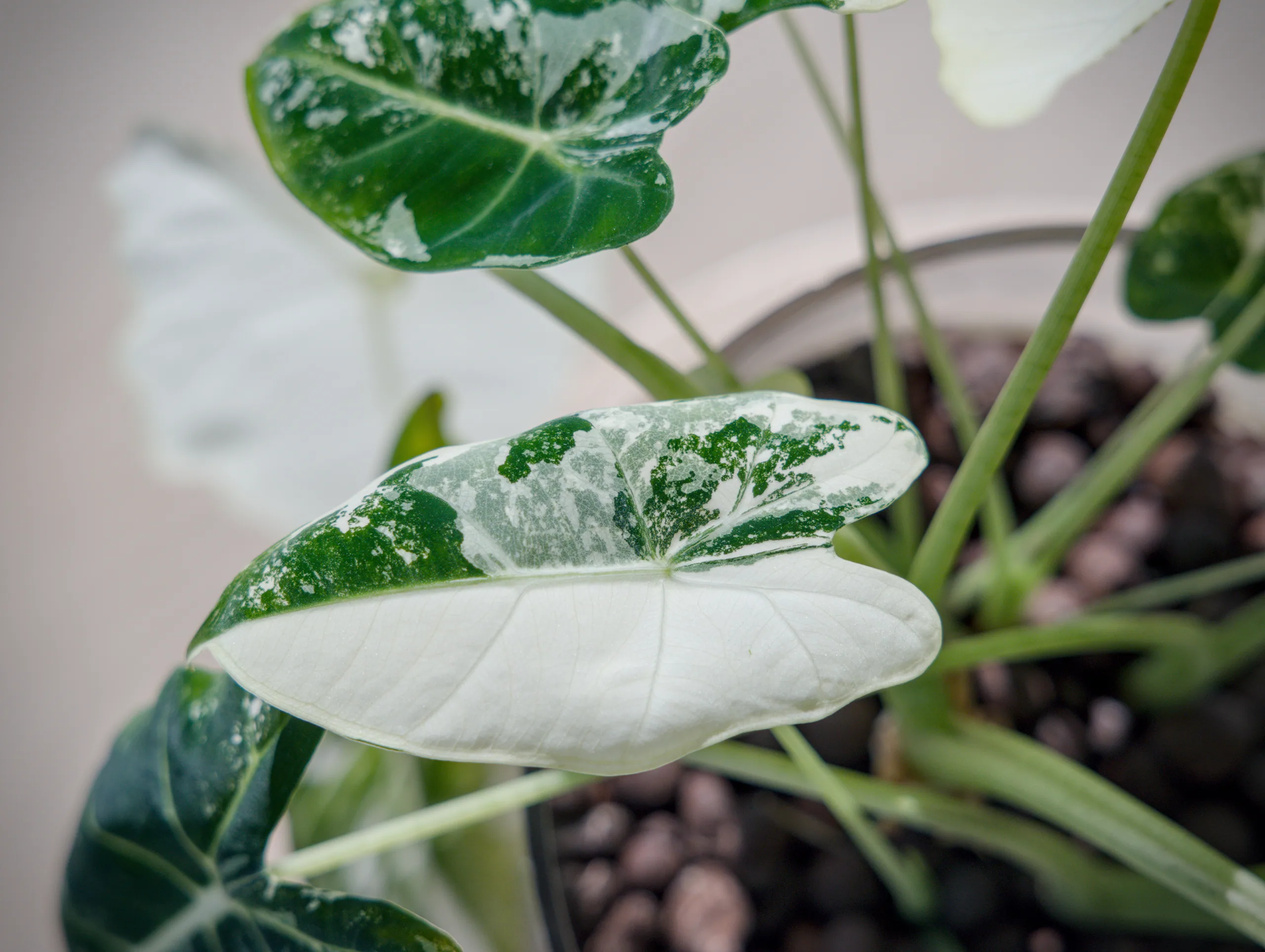
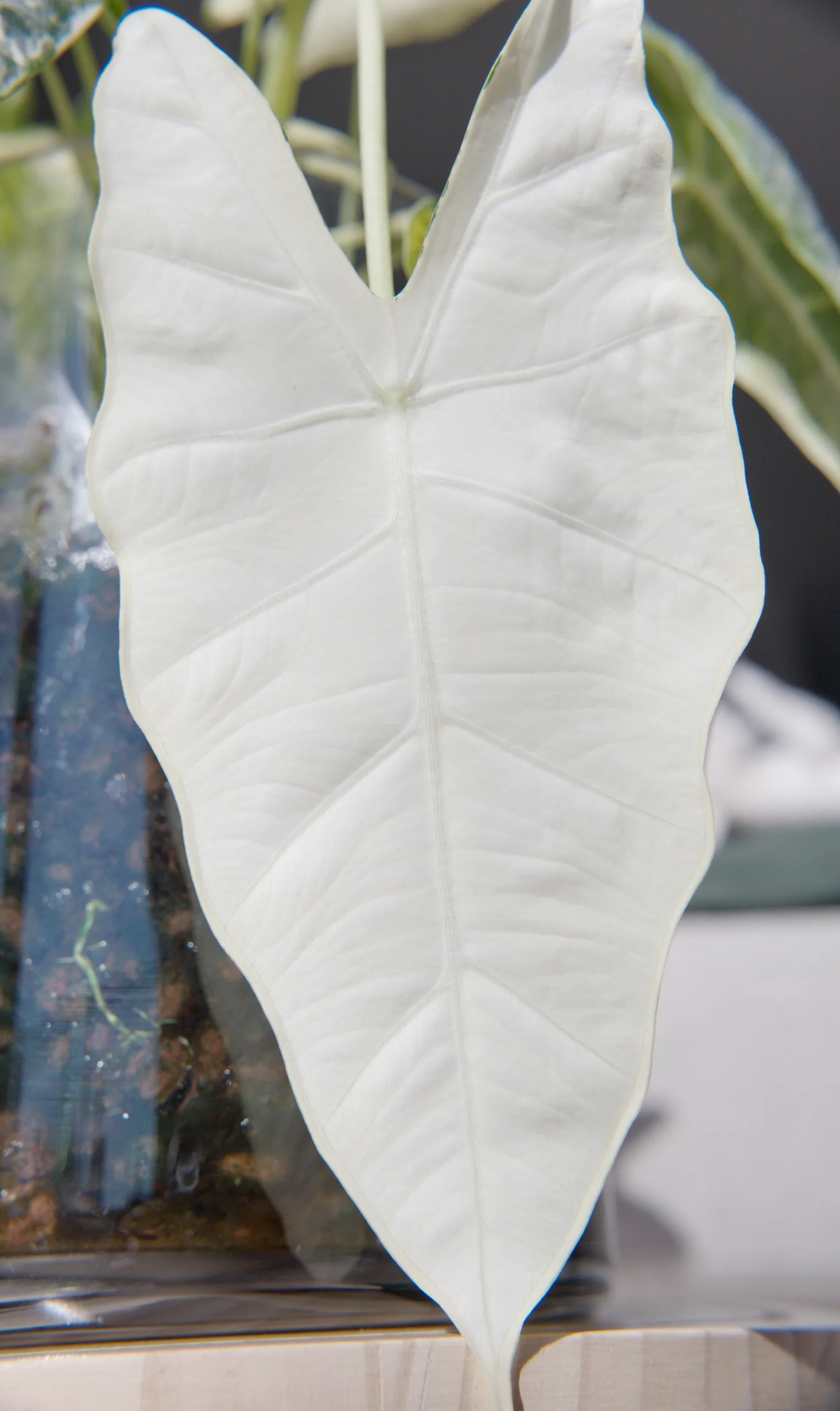
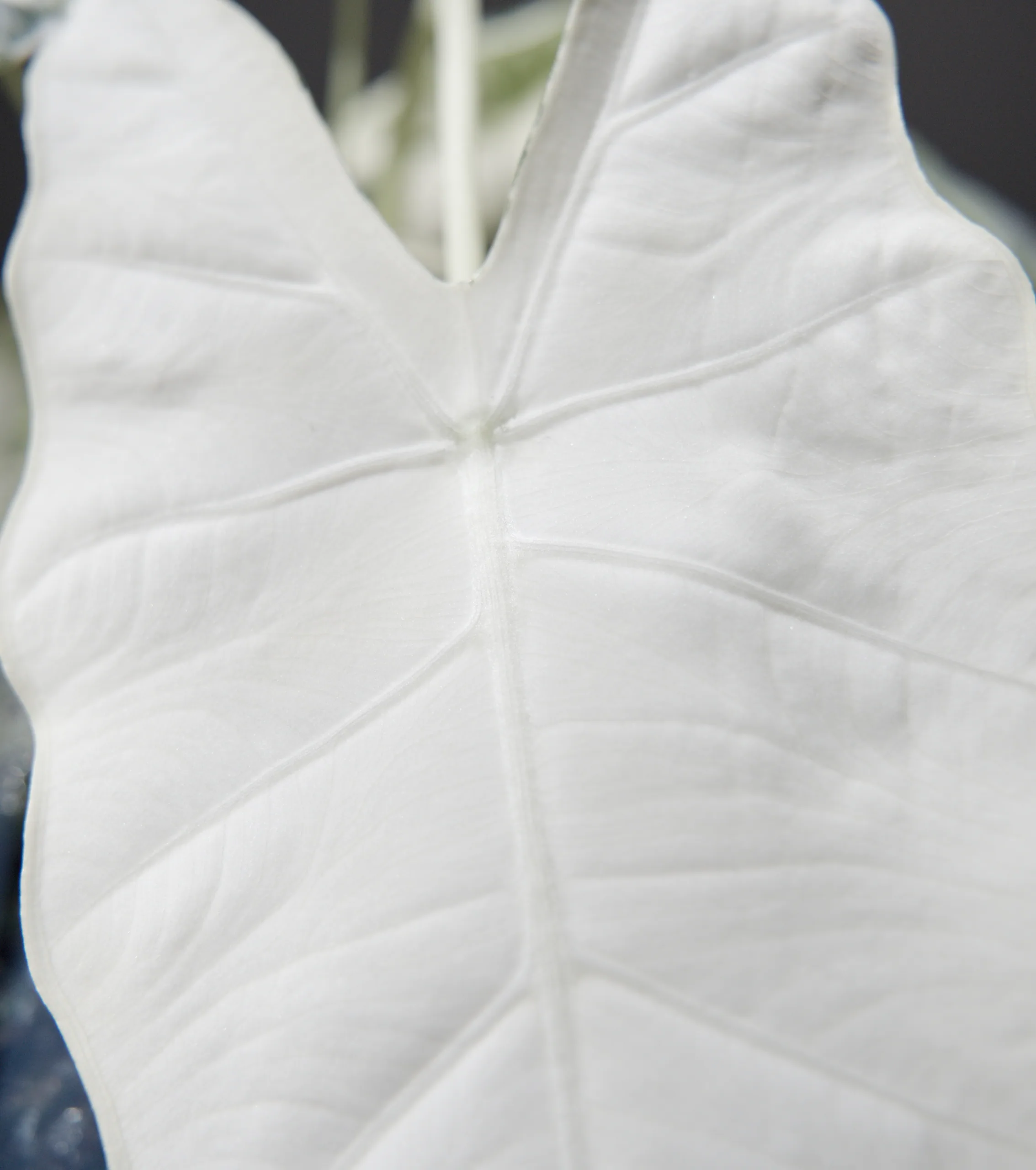
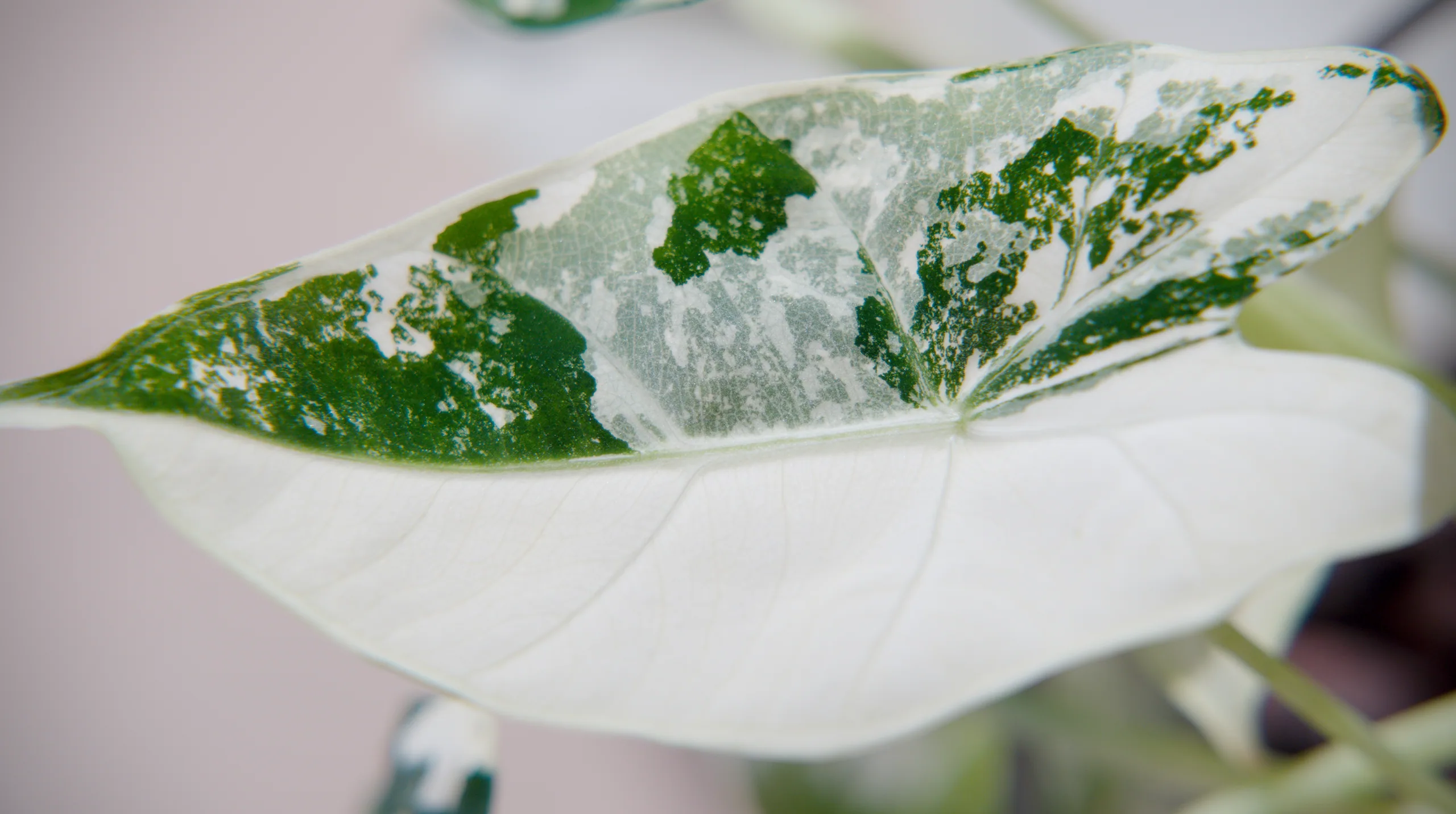
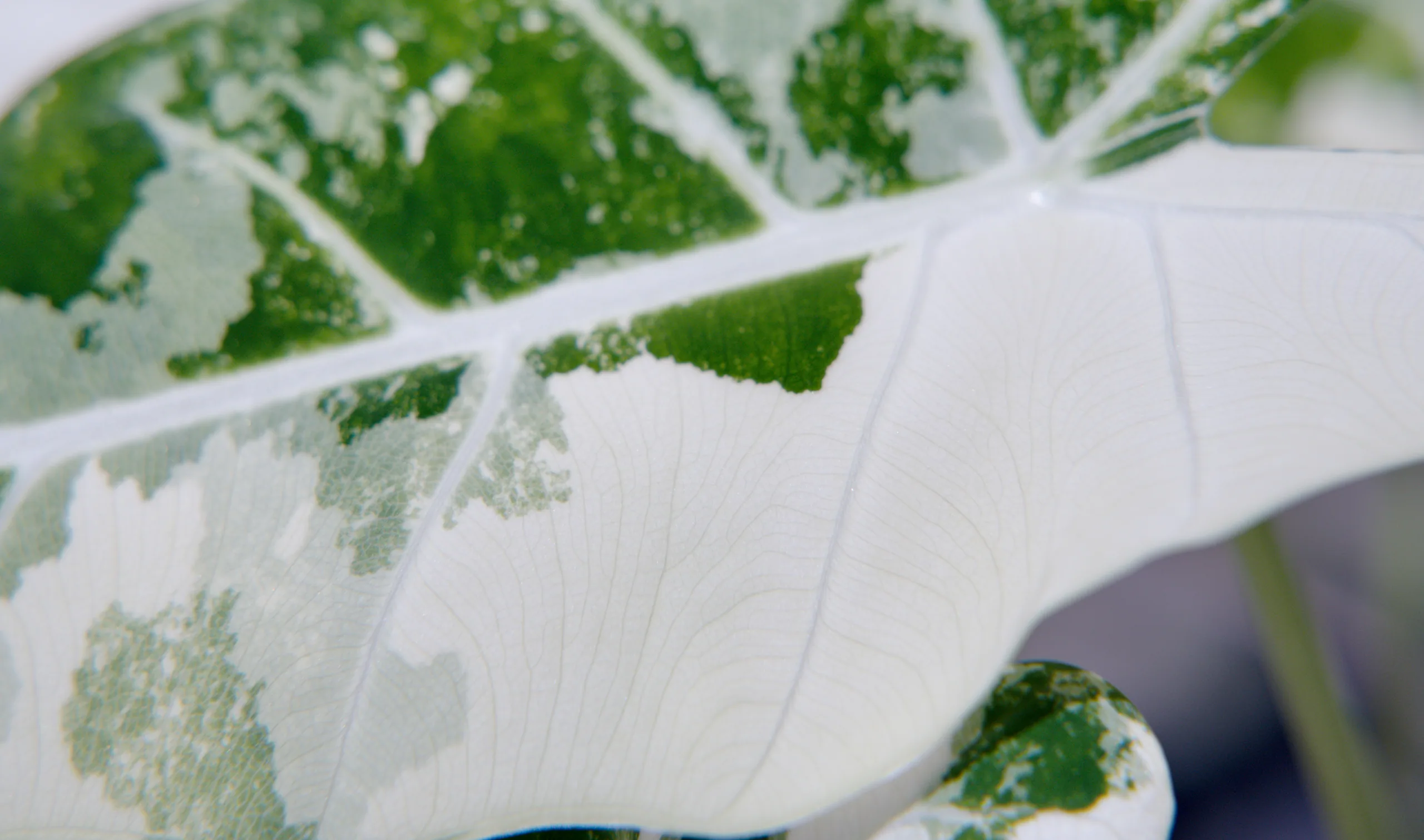
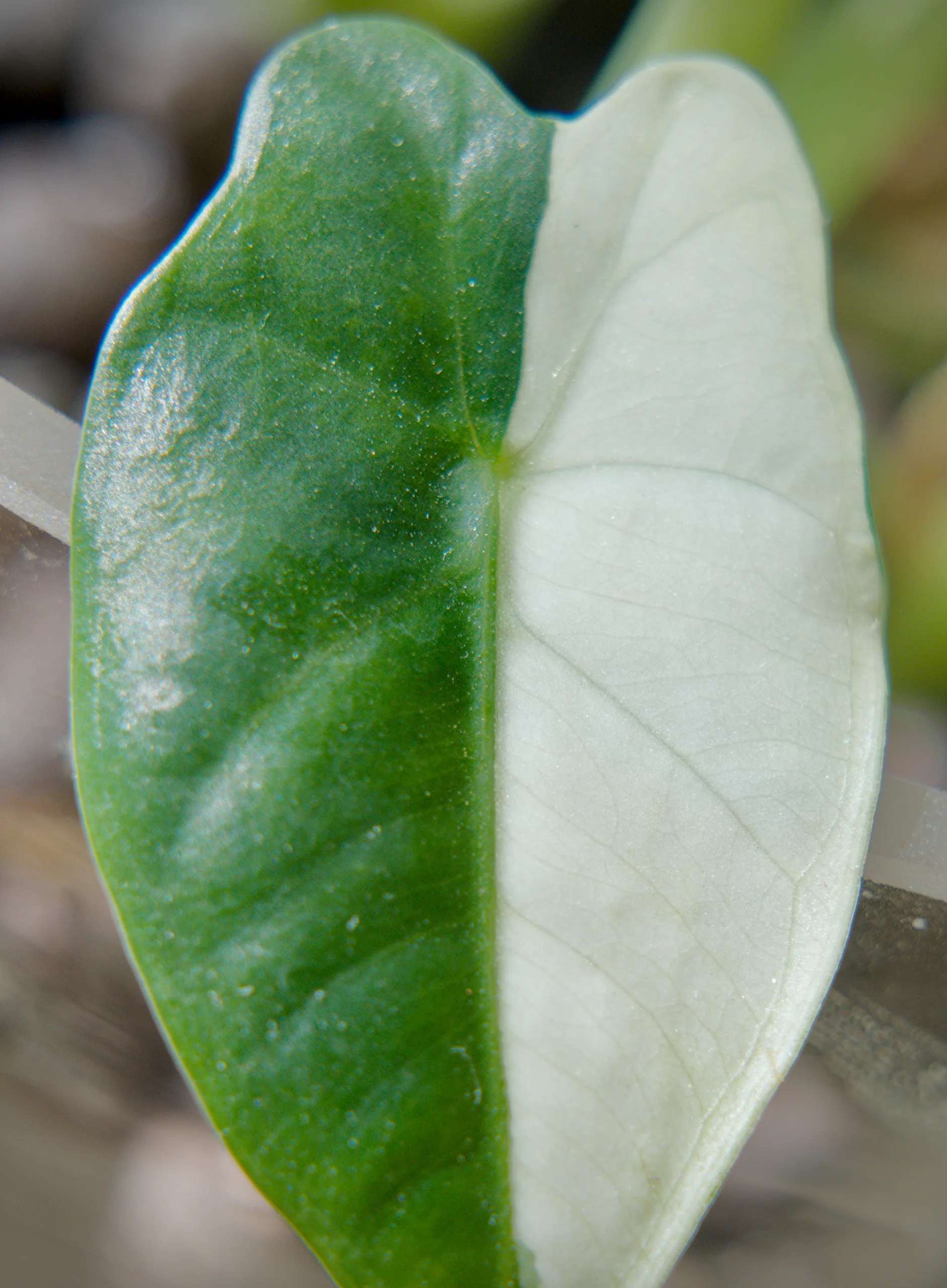
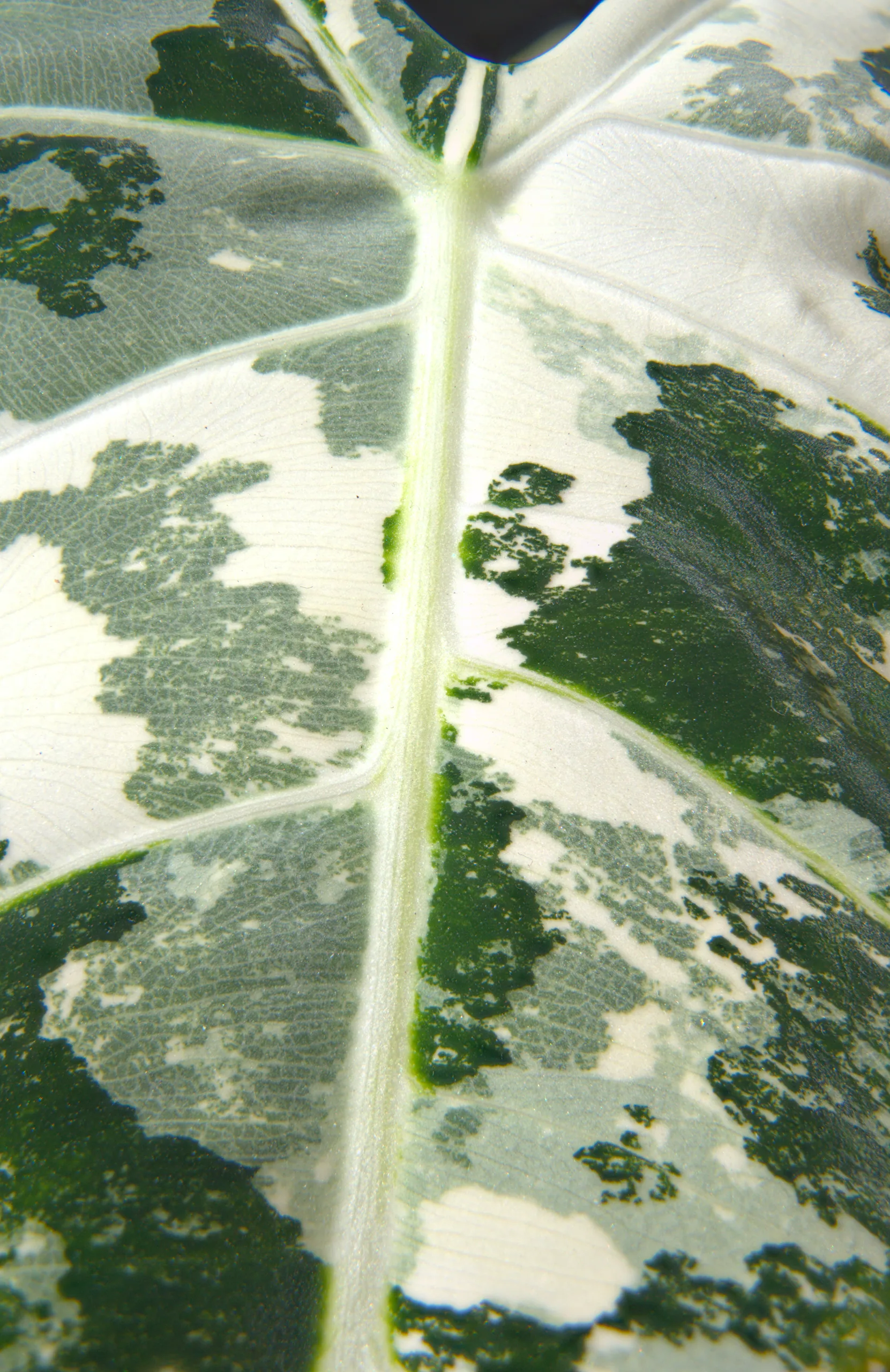
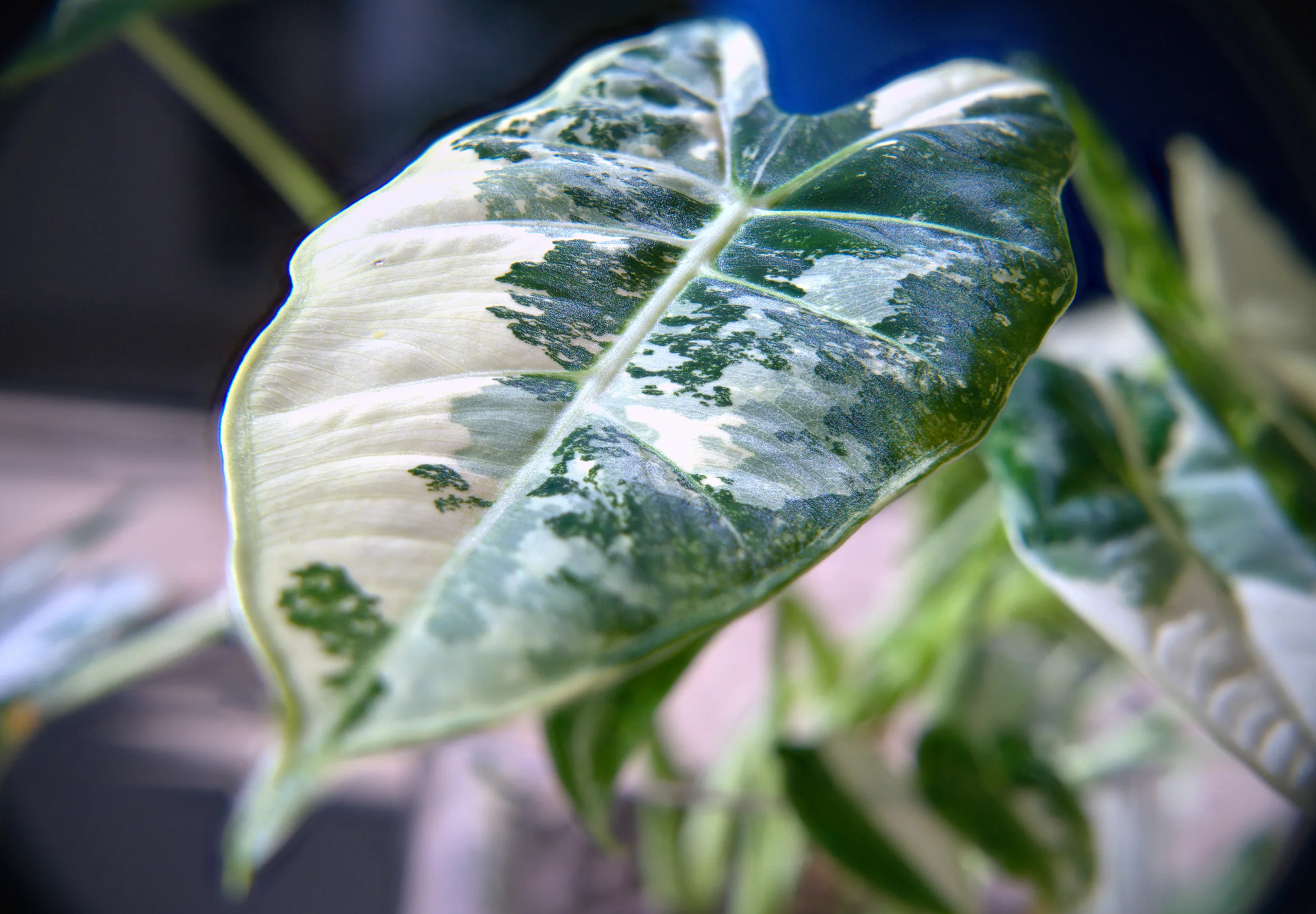
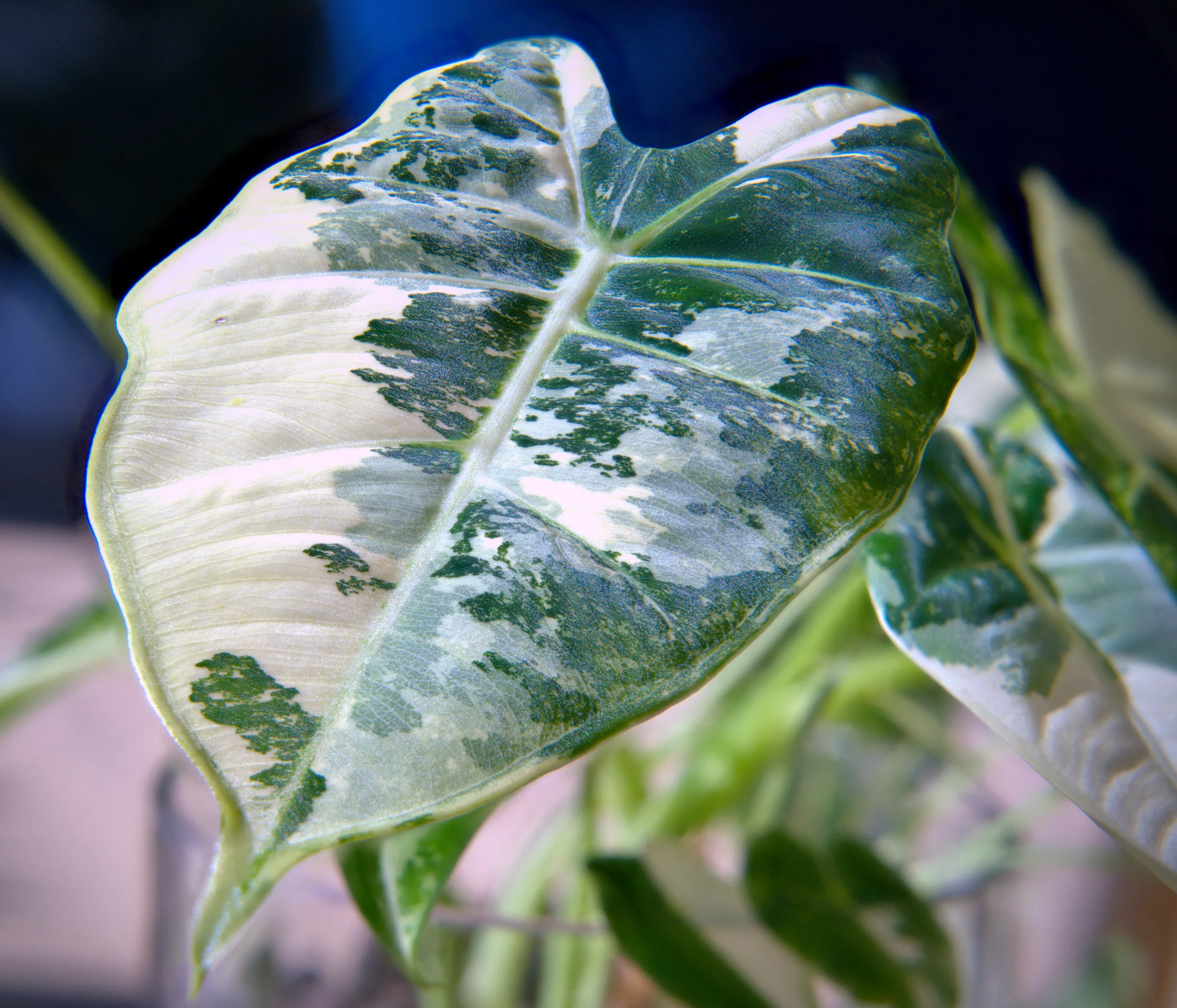
The variegatedvariegationPatches of leaf with little or no chlorophyll, so they read as white, cream or yellow. The pale tissue cannot feed itself, which is why a variegated plant grows more slowly than a plain one.Glossary form adds sectorssectorA block of tissue descended from one group of cells — the whole-half-leaf kind of variegation, as opposed to an even speckling.Glossary of cream to pale green, distributed unpredictably: whole halves of a leaf on some, fine marbling on others. Like the Monstera albo, this is variegationvariegationPatches of leaf with little or no chlorophyll, so they read as white, cream or yellow. The pale tissue cannot feed itself, which is why a variegated plant grows more slowly than a plain one.Glossary carried in cell layers rather than a pattern the plant reproduces faithfully, so no two leaves match and a division can inherit more or less of it than the plant it came from.5
Fun facts
- The velvet is structure, not pigment. The upper skin of a velvet leaf is made of domed, lens-shaped cells that focus incoming light down into the leaf instead of bouncing it back, which is what makes the surface look matt and deep and the veins look lit. That was measured in rainforest shade plants including a velvet-leaf anthurium, and it only reads as velvet when the leaf is dark to begin with.67 Water left sitting on the leaf tends to leave marks; why is not something I could find a source for.
- VariegatedvariegationPatches of leaf with little or no chlorophyll, so they read as white, cream or yellow. The pale tissue cannot feed itself, which is why a variegated plant grows more slowly than a plain one.Glossary tissue is a cost here more than on most plants. An alocasia already runs a demanding plant on a handful of leaves at a time, and cream tissue photosynthesises little. A heavily variegatedvariegationPatches of leaf with little or no chlorophyll, so they read as white, cream or yellow. The pale tissue cannot feed itself, which is why a variegated plant grows more slowly than a plain one.Glossary one is doing the same job on a fraction of the leaf it appears to have.8
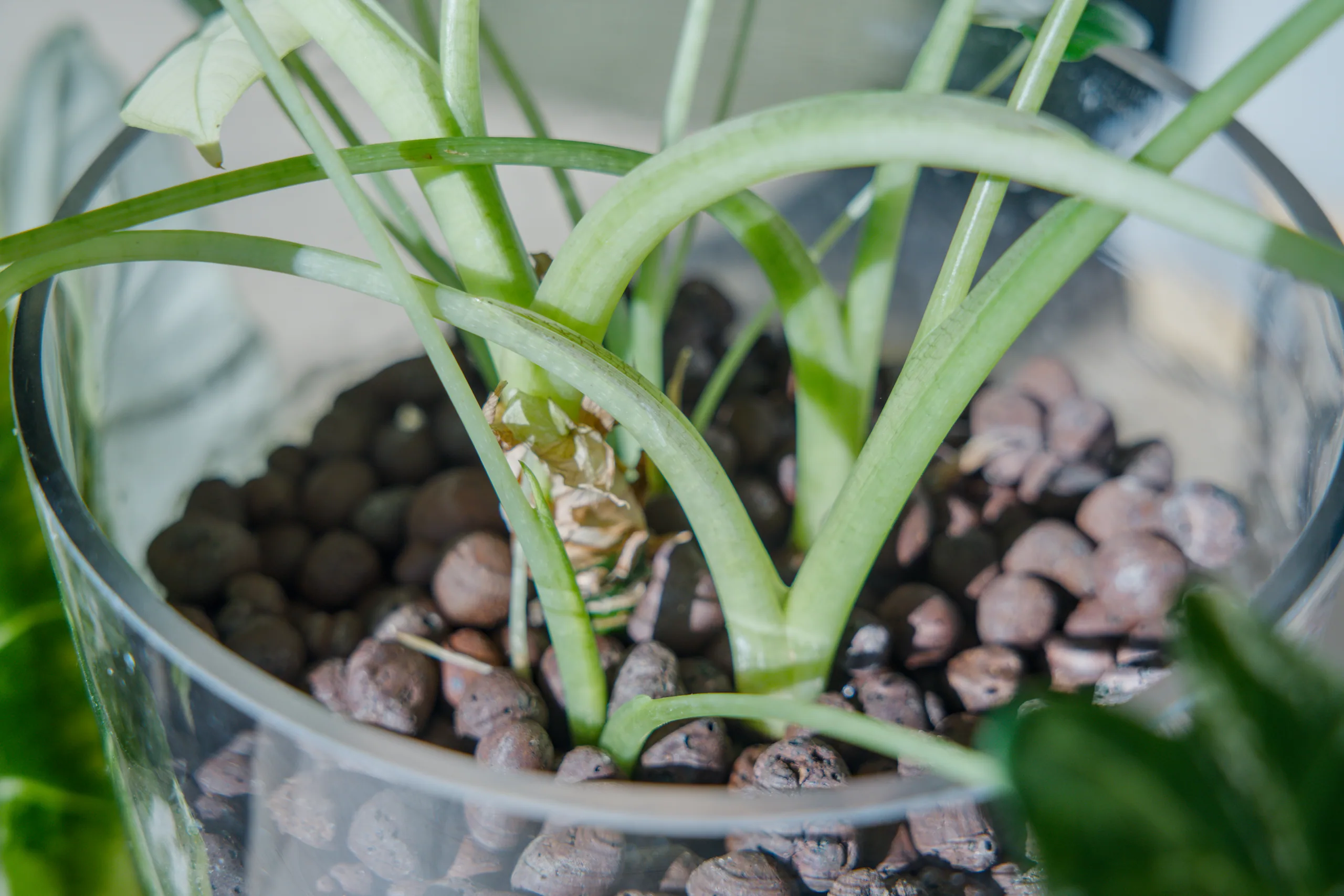
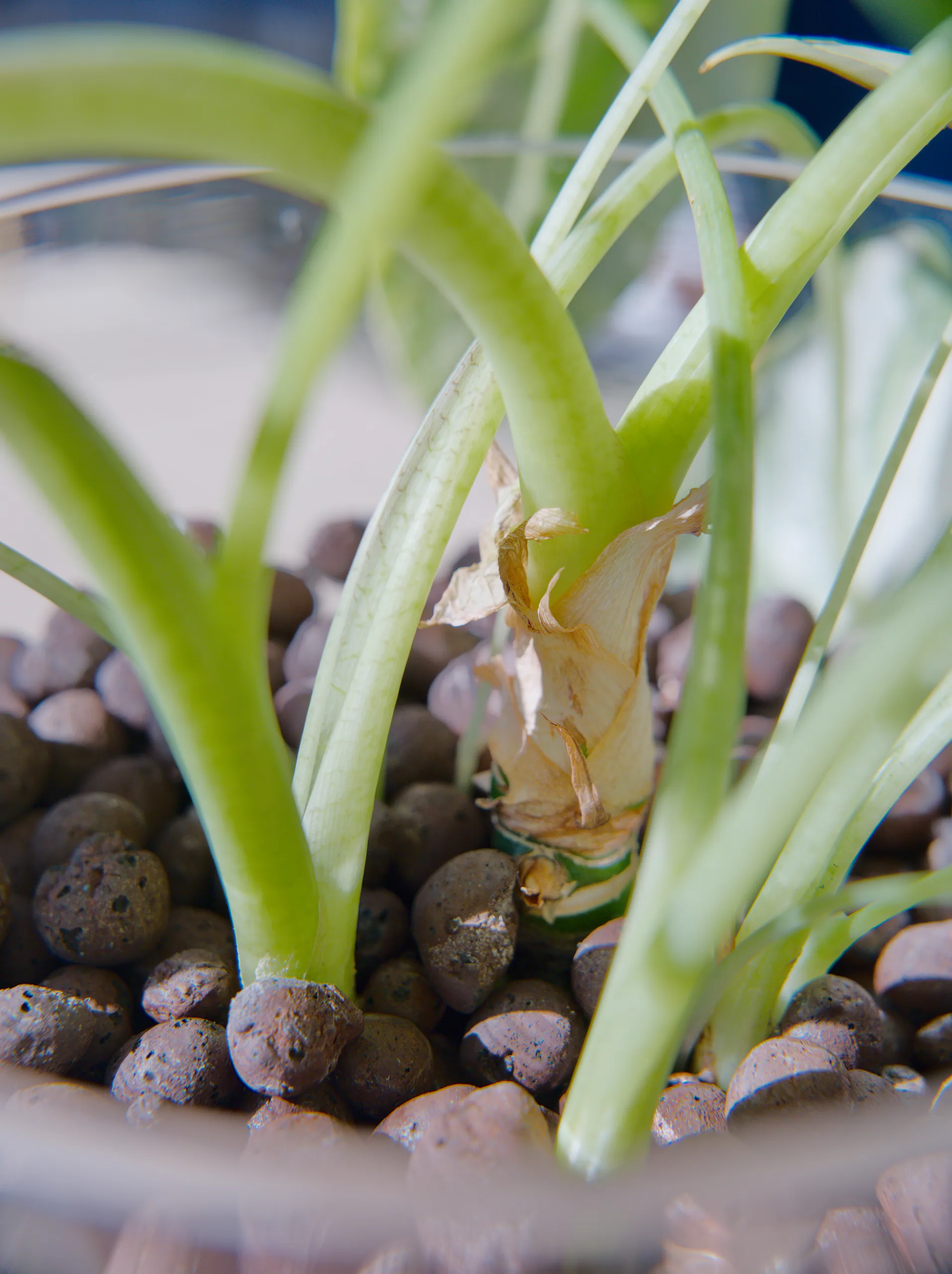
- DormancydormancyA rest, not a decline. In a cool, dark winter some plants drop their leaves and live off an underground stem until warmth returns. Watering one as though it were sick is how it dies.Glossary is not decline — but it is not automatic either. The genusgenusThe rank above species: a group of species close enough to share a name. Monstera and Philodendron are genera; the first word of a botanical name is the genus.Glossary ranges from seasonally dormantdormancyA rest, not a decline. In a cool, dark winter some plants drop their leaves and live off an underground stem until warmth returns. Watering one as though it were sick is how it dies.Glossary to evergreen;9 in a cool, dark winter a plant may drop its leaves and rest on its thick underground stem — a rhizomerhizomeA thickened stem that creeps along or under the surface, storing food and putting up leaves as it goes. It is a stem, not a root.Glossary, not the cormcormA short swollen underground stem that stores food between seasons. Much of what the hobby calls an Alocasia corm is really a rhizome.Glossary the hobby calls it — and grow back from the base when warmth returns.1011 The RHSRHSThe Royal Horticultural Society. Its plant register and its Award of Garden Merit are among the few horticultural authorities worth citing.Glossary lists ‘Freydyk’ as evergreen, which is what it will be in a warm, bright room. Either way, the plant that looks dead in November is usually fine underground — see the Alocasia care defaults and the general plant care page for what to do and, mostly, what not to.
- It is toxic and can hurt. All parts carry calcium oxalatecalcium oxalateNeedle-shaped crystals carried through the tissue of most aroids. They are the whole of the toxicity to cats, dogs and children: painful rather than poisonous.Glossary crystals: painful if eaten, and an irritant to skin and eyes.312
Care
Plant care- Light
- Bright indirect, and more of it than most people give them. They will not tolerate direct midday sun, but too little light produces weak petioles that cannot hold the leaves up.
- Water
- Water once the top few centimetres have dried through the growing season, and cut back sharply in dormancy — overwatering a resting plant is the main route to rot. Never waterlogged, never bone dry.
- Humidity
- Medium to high. Dry air browns the leaves and, more reliably than anything else, brings spider mites.
- Temperature
- 64-84 °F (18-29 °C) in growth, and not below about 61 °F (16 °C) while growing. Winter floor 50 °F (10 °C): below that, or in cooler and drier conditions generally, they drop leaves and rest, which is normal rather than fatal.
- Substrate
- Airy but moisture-retentive — bark and perlite with enough coir or sphagnum that it does not dry out in a day.
- Fertilizer
- A balanced feed at half strength every third watering through spring and summer. Nothing at all once growth stops.
- Propagation
- Offsets and the small tubers that form on the rhizome, separated at repotting. They root in damp sphagnum in a closed container.
- Dormancy
- Expected in a cool, dark winter — though a plant kept warm and bright may stay evergreen. It drops leaves and rests on the rhizome. Keep the mix barely damp, stop feeding, and do not repot; most losses happen when a resting plant is treated as a sick one.
- Common problems
-
- Sudden leaf loss in autumn is usually dormancy, not death — check the rhizome before discarding anything
- Spider mites are the defining pest of this genus; inspect leaf undersides weekly in dry air
- Drooping petioles that do not recover after watering usually mean rot below the soil
- Guttation — water beading at the leaf edge — is normal and not a symptom
- Every part carries calcium oxalate crystals: painful if eaten, and an irritant to skin and eyes
These photographs also live in the gallery .