Araceae
Alocasia
Grown on a thick underground stem — a rhizome, though the hobby calls its offsets corms — and one of only two genera here that go properly dormant rather than merely slowing down; the Indian kale is the other. Most of the reputation for being difficult comes from underwaterings or people treating a resting plant as a dead one.
Native to Tropical and subtropical Asia to eastern Australia
Species
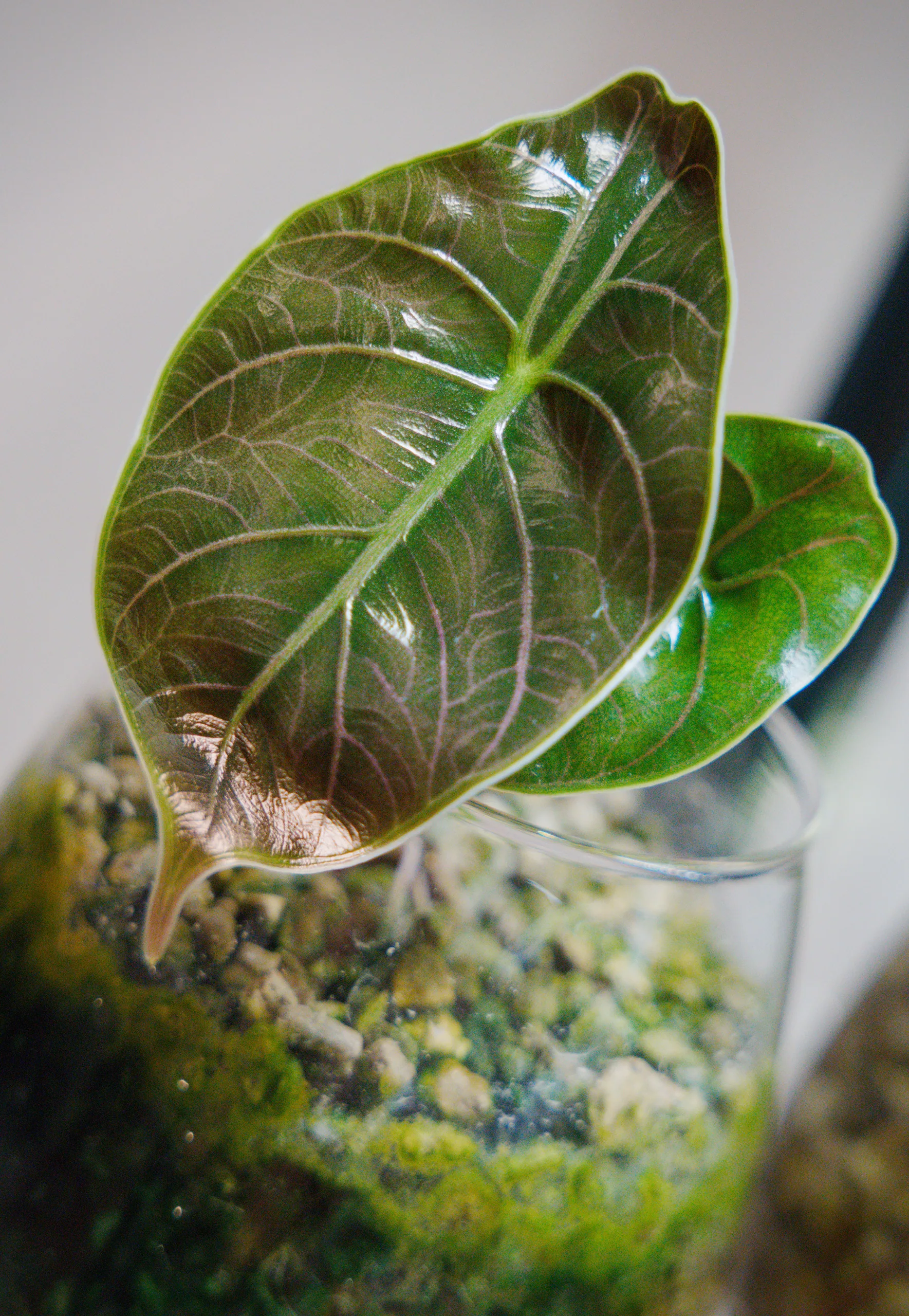
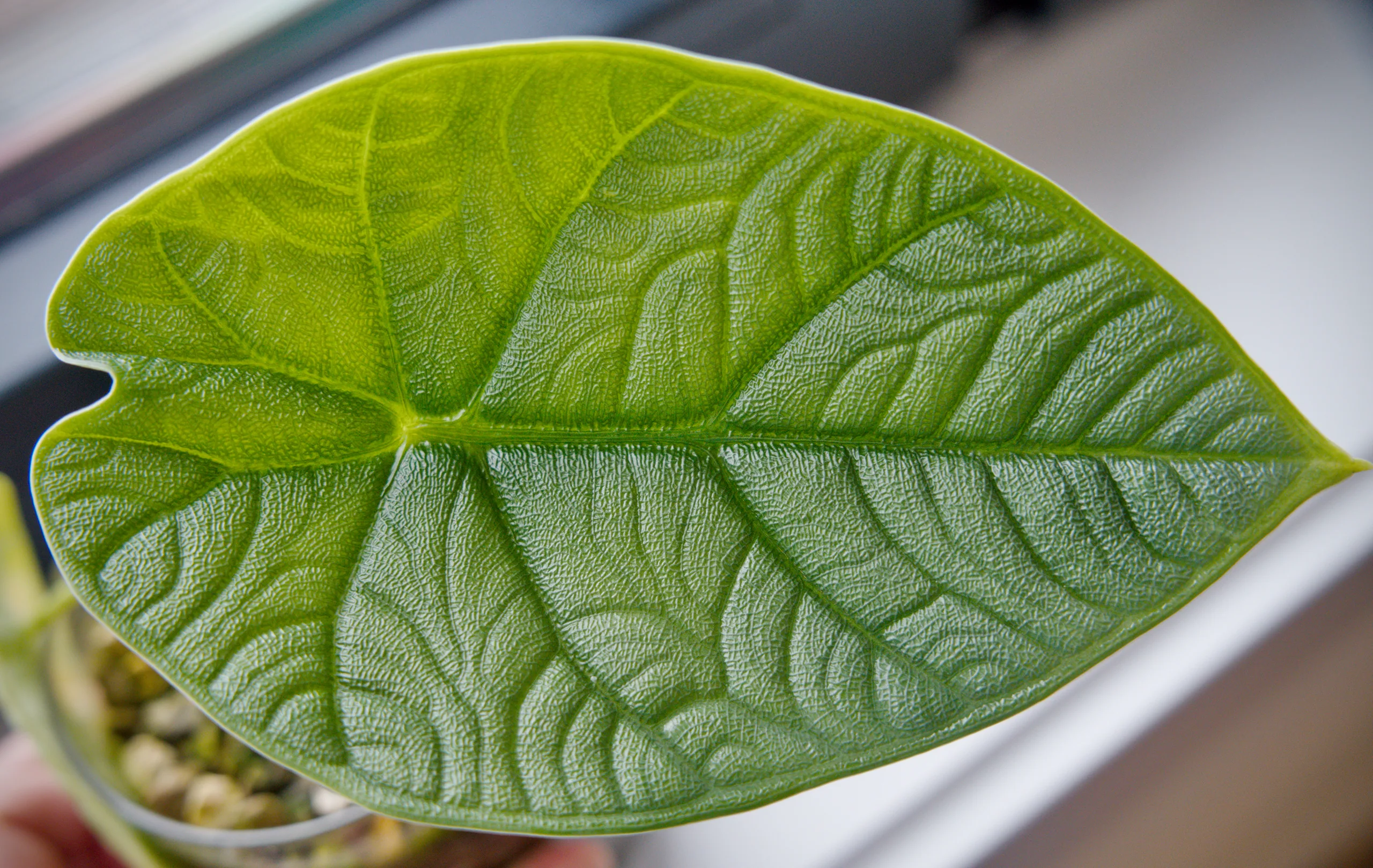
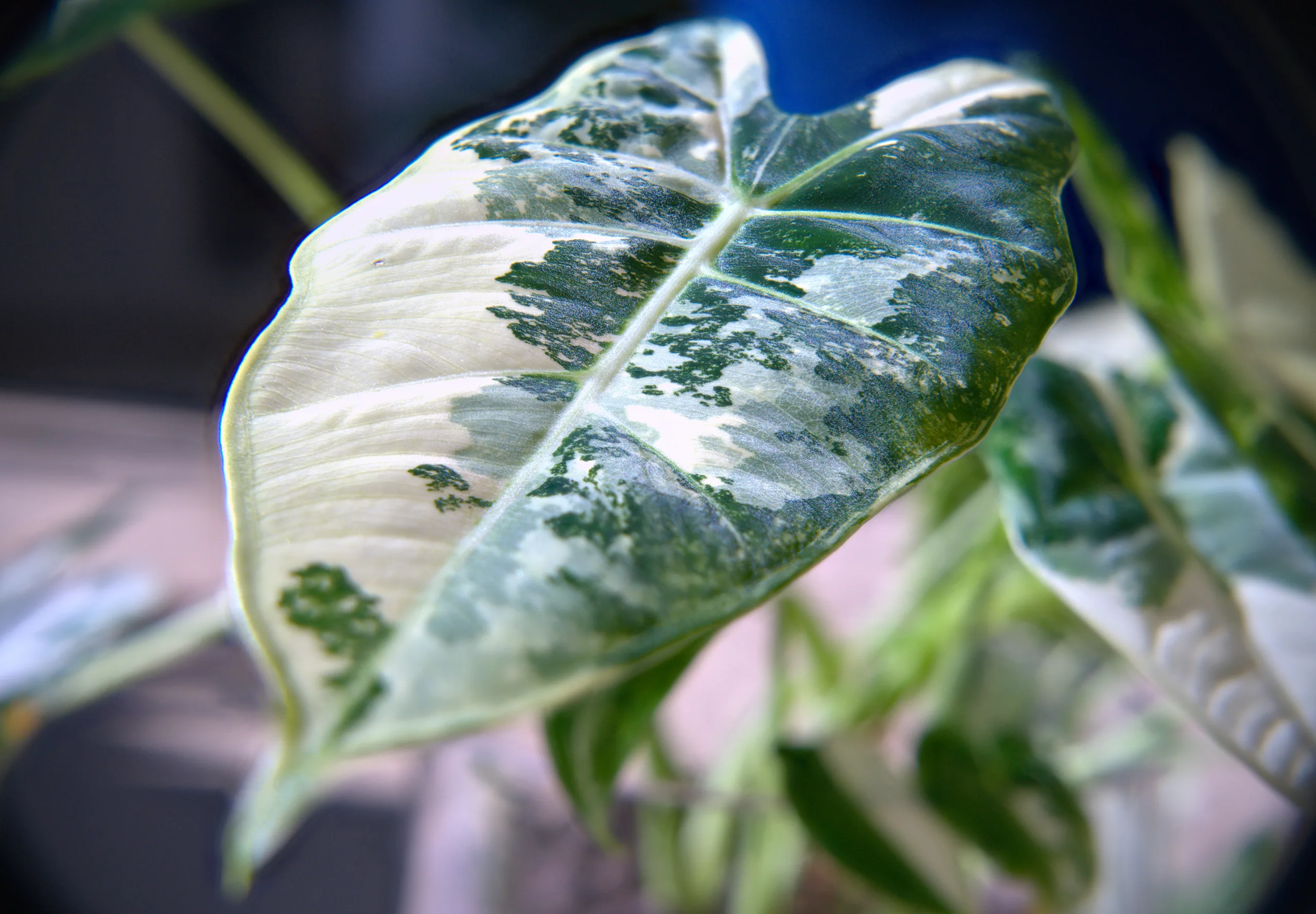
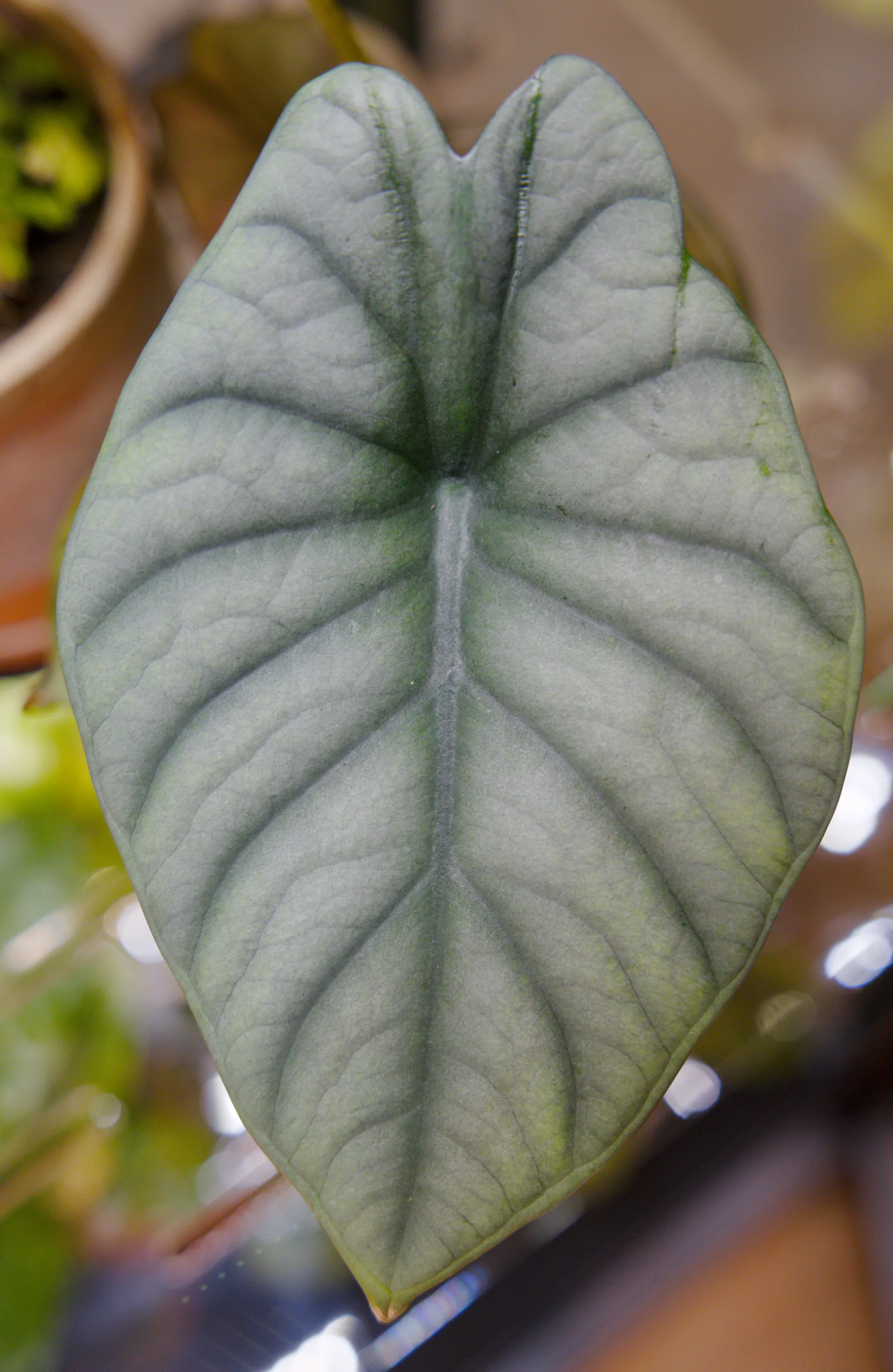
How Alocasia generally wants to be treated
Plant careSpecies pages start from this and record only where they differ.
- Light
- Bright indirect, and more of it than most people give them. They will not tolerate direct midday sun, but too little light produces weak petioles that cannot hold the leaves up.
- Water
- Water once the top few centimetres have dried through the growing season, and cut back sharply in dormancy — overwatering a resting plant is the main route to rot. Never waterlogged, never bone dry.
- Humidity
- Medium to high. Dry air browns the leaves and, more reliably than anything else, brings spider mites.
- Temperature
- 64-84 °F (18-29 °C) in growth, and not below about 61 °F (16 °C) while growing. Winter floor 50 °F (10 °C): below that, or in cooler and drier conditions generally, they drop leaves and rest, which is normal rather than fatal.
- Substrate
- Airy but moisture-retentive — bark and perlite with enough coir or sphagnum that it does not dry out in a day.
- Fertilizer
- A balanced feed at half strength every third watering through spring and summer. Nothing at all once growth stops.
- Propagation
- Offsets and the small tubers that form on the rhizome, separated at repotting. They root in damp sphagnum in a closed container.
- Dormancy
- Expected in a cool, dark winter — though a plant kept warm and bright may stay evergreen. It drops leaves and rests on the rhizome. Keep the mix barely damp, stop feeding, and do not repot; most losses happen when a resting plant is treated as a sick one.
- Common problems
-
- Sudden leaf loss in autumn is usually dormancy, not death — check the rhizome before discarding anything
- Spider mites are the defining pest of this genus; inspect leaf undersides weekly in dry air
- Drooping petioles that do not recover after watering usually mean rot below the soil
- Guttation — water beading at the leaf edge — is normal and not a symptom
- Every part carries calcium oxalate crystals: painful if eaten, and an irritant to skin and eyes
In the collection
- Amazonica Polly Alocasia × amazonica 'Polly'
- Azlanii Alocasia azlanii
- Dragon Scale Alocasia baginda 'Dragon Scale'
- Dragon's Breath Alocasia heterophylla 'Dragon's Breath'
- Frydek Variegata Alocasia micholitziana 'Frydek'
- Nebula Alocasia nebula
- Scalprum Alocasia scalprum